- What is laughing gas and how does it help children feel calm during dental visits?
- How does nitrous oxide work in the body and how quickly does it wear off?
- When is nitrous oxide recommended for kids and when might it not be the right choice?
- What should parents expect before, during, and after a nitrous oxide visit?
- Is laughing gas safe for children and what do leading organizations recommend?
- What side effects can occur and how are they managed?
- How do dental offices keep nitrous oxide use safe for children and staff?
- What do California and national rules require for nitrous oxide in pediatric dentistry?
- How does laughing gas compare with other pediatric sedation options?
- How can you talk with your child about their first visit with laughing gas?
- What smart questions can parents ask a pediatric dentist about nitrous oxide?
- Who are we and how does Kidz Modern Dentistry support safe gentle care with nitrous oxide in Laguna Niguel, Laguna Hills, and Aliso Viejo?
- Where can you review the sources for this article?
What is laughing gas and how does it help children feel calm during dental visits?
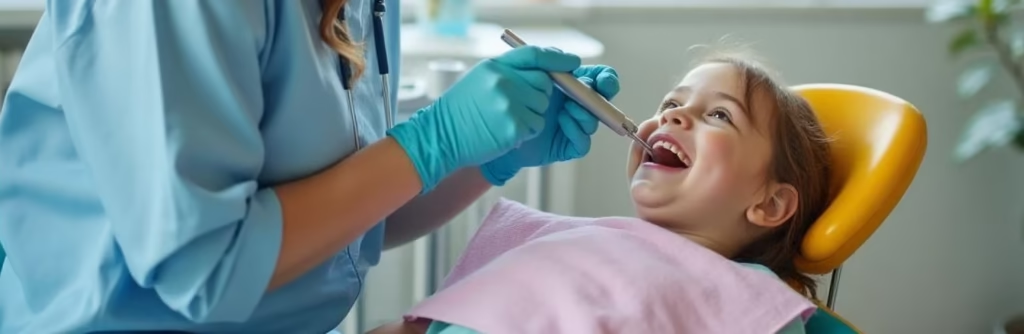
Nitrous oxide, often called laughing gas, is a blend of nitrous oxide and oxygen that your child breathes through a small mask placed over the nose. It is used in pediatric dentistry to help children relax, feel less worried, and better tolerate care while staying awake and able to respond. In clinical terms, this is considered minimal sedation when used appropriately, which means children remain responsive to verbal direction and protective reflexes are maintained [1] [5].
Parents often ask if this approach is gentle enough for younger children. Nitrous oxide has a long track record in pediatric dental care and is supported by professional guidelines for appropriate cases, equipment, and monitoring. It can be particularly helpful for children who feel anxious, have a strong gag reflex, or need longer treatments that are tough to complete with reassurance alone [1] [2].
If you have been exploring your options and have questions about Sedation dentistry, our team can explain how nitrous oxide fits into a thoughtful, stepwise plan for comfort based on your child’s age, medical history, and treatment needs [2] [4].
How does nitrous oxide work in the body and how quickly does it wear off?
Nitrous oxide reduces anxiety and discomfort by acting on receptors in the brain that influence pain and fear pathways. It provides analgesia and anxiolysis and does not require needles. The gas is not metabolized in any significant way by the body, so effects begin within a few minutes and fade just as quickly when it is turned off and your child breathes oxygen afterward [8] [1].
Here is what that means for your child during an appointment:
- Fast onset Children usually feel calmer within a few minutes of breathing the mixture through a comfortable nasal mask [1].
- Titrated to effect The dentist gradually adjusts the concentration while continuously observing your child’s comfort and responsiveness [1] [4].
- Oxygen support Nitrous oxide is always given with oxygen. Professional guidance advises maintaining oxygen concentration at or above about one third of the gas mixture, which supports safety and comfort [1].
- Rapid recovery Once treatment is finished, your child breathes 100 percent oxygen for several minutes. Most children feel back to normal very quickly and can leave the office alert and comfortable [1] [8].
Because nitrous oxide acts quickly and exits the body rapidly through the lungs, it is considered a flexible option for many routine pediatric dental procedures [1] [2].
When is nitrous oxide recommended for kids and when might it not be the right choice?
Recommendations are always individualized, but there are common scenarios where nitrous oxide can help a child have a better experience in the dental chair:
- Anxiety or fear Children who are worried about sights, sounds, or sensations can relax enough to accept care [2].
- Strong gag reflex Nitrous oxide often reduces gagging, which allows better cooperation for X rays, impressions, or restorative care [1].
- Longer treatments Restorations or multiple procedures are easier to complete when a child is more at ease [1].
- Special health care needs Some children with sensory sensitivities or developmental conditions tolerate care more readily with inhalation sedation [2].
There are also times when nitrous oxide is not recommended or needs extra caution:
- Nasal congestion Since the gas is inhaled through the nose, severe congestion can limit its effectiveness [1].
- Ear or sinus conditions Recent ear infection or middle ear surgery may be a reason to postpone or select an alternative approach [1].
- Vitamin B12 or folate concerns Untreated B12 deficiency or certain metabolic conditions may increase risk with nitrous oxide and require careful evaluation and medical consultation [8].
- Recent eye surgery with intraocular gas Some eye surgeries place gas in the eye that can expand with nitrous oxide exposure, so this requires medical clearance [8].
- Other medical issues Children with significant respiratory disorders or complex medical histories need individualized planning with their dentist and pediatrician [3] [4].
Your pediatric dentist will review your child’s health history and preferences, and together you can decide whether nitrous oxide or a different comfort option is the best fit [2].
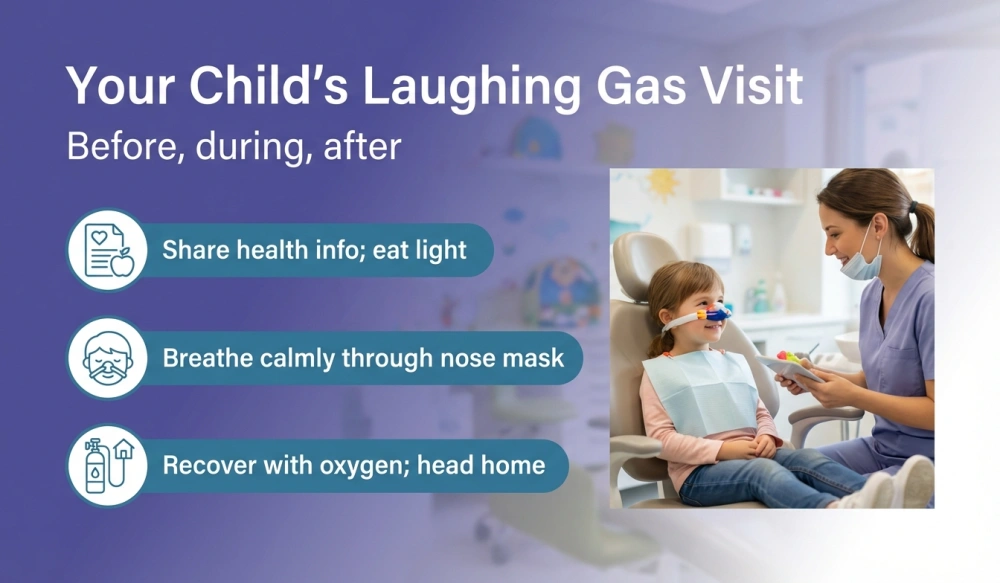
What should parents expect before, during, and after a nitrous oxide visit?
What happens before the appointment?
Your child’s dentist or team member will review medical history, allergies, and recent illnesses to confirm that inhalation sedation is appropriate that day. For minimal sedation with nitrous oxide, formal fasting is not usually required, though a light meal is commonly advised to reduce nausea risk. Always follow the specific instructions provided by your dental team [3] [1].
You can help by bringing a current list of medications, noting any recent colds or congestion, and sharing any past experiences that went well for your child. A favorite small toy or comfort item can be welcome too.
What will you and your child see during the visit?
- Friendly mask A soft mask sits gently over the nose while your child breathes normally.
- Calm feelings Most children feel light, relaxed, and less aware of worries within a few minutes [1].
- Ongoing monitoring The dentist and team continuously observe breathing, color, and responsiveness, and use monitors when appropriate, consistent with professional guidelines [3] [4].
- Team communication Your child can respond to questions and signals. If they want a short break, they can raise a hand and the team will pause.
What should you expect after the visit?
When treatment ends, your child breathes oxygen for several minutes and typically returns to their normal self quickly. Many children go back to school or regular activities the same day. Your dentist will share any home instructions, such as eating light meals at first if the child feels a little queasy. If your child experiences unusual symptoms or persistent nausea, call the office for guidance [1] [3].
Is laughing gas safe for children and what do leading organizations recommend?
When delivered by trained professionals using proper equipment and monitoring, nitrous oxide has a strong safety record in pediatric dentistry. The American Academy of Pediatric Dentistry describes nitrous oxide oxygen inhalation as a proven behavior guidance technique for many children. It emphasizes appropriate patient selection, titration to effect, and the use of supplemental oxygen before and after the procedure [1] [2].
The American Dental Association provides standards for training and safety in minimal and moderate sedation used by dentists. These include education, emergency preparedness, and monitoring consistent with the level of sedation intended [4]. A joint report from the American Academy of Pediatrics and the American Society of Anesthesiologists describes best practices for monitoring and management of pediatric patients during and after sedation, including careful documentation and readiness to respond to rare emergencies [3] [5].
Families in Laguna Niguel, Laguna Hills, and Aliso Viejo often ask how these standards apply in a local office. Pediatric dentists follow these national guidelines and also meet state specific requirements, including permits and equipment standards, which are described later in this article for California [9].
What side effects can occur and how are they managed?
Most children tolerate nitrous oxide very well. When side effects occur, they are usually brief and mild. Your dental team will watch carefully and adjust or stop treatment if needed. Here are possibilities to know about:
- Nausea or vomiting This can happen in a small number of children and is often reduced by avoiding heavy meals before the visit. If it occurs, the team can pause and provide supportive care [1] [8].
- Dizziness or lightheadedness These feelings typically resolve quickly once oxygen is administered at the end of treatment [1].
- Headache Some children report a mild headache, which often improves with rest and hydration [8].
- Very rare complications In unusual circumstances, such as unrecognized vitamin B12 deficiency or certain metabolic issues, nitrous oxide can interfere with vitamin pathways and cause problems. Providers screen for risk factors and consult with physicians when needed [8].
Your child’s dentist will review benefits and risks and obtain consent before using nitrous oxide. If anything feels off to your child during the visit, they can signal to pause. The goal is always comfortable, cooperative care tailored to your child’s needs [2] [3].
How do dental offices keep nitrous oxide use safe for children and staff?
Dental teams use a combination of equipment, room design, and training to maintain a safe environment whenever nitrous oxide is used. These steps protect your child and also reduce occupational exposure for the clinical team.
- Scavenging systems Masks and hoses are designed to capture exhaled gas and send it to vacuum systems that remove it from the room [6] [7].
- Good mask fit A well fitting nasal hood reduces leaks and improves both effectiveness and safety [6].
- Ventilation and maintenance Rooms are ventilated and equipment is inspected and maintained to minimize leaks [6] [8].
- Monitoring exposure The National Institute for Occupational Safety and Health recommends keeping ambient nitrous oxide levels below a specific limit during administration. Practices may use periodic air monitoring to verify controls are working as intended [6] [7].
- Training and emergency readiness Teams maintain training in patient monitoring and basic life support consistent with professional standards [3] [4].
These controls support both patient comfort and staff health and align with federal workplace safety guidance and professional dental standards [4] [6] [8].
What do California and national rules require for nitrous oxide in pediatric dentistry?
In California, dentists who provide nitrous oxide oxygen inhalation analgesia or minimal sedation must meet education and permit requirements established by the Dental Board of California. Offices must also maintain appropriate equipment, scavenging systems, and monitoring consistent with the level of sedation provided [9].
Nationally, practicing dentists follow standards from organizations such as the American Dental Association and align with the sedation continuum described by the American Society of Anesthesiologists. These standards clarify training, patient selection, and monitoring for minimal sedation through general anesthesia [4] [5].
If your family lives in Laguna Niguel, Laguna Hills, or Aliso Viejo, you can expect your pediatric dentist to follow both national standards and California specific rules, with transparent consent and documentation for every visit [3] [9].
How does laughing gas compare with other pediatric sedation options?
Every child and every procedure is different, so your dentist will discuss which comfort strategy makes sense. Here is a simple comparison to guide conversations with your care team.
How does nitrous oxide differ from oral or IV sedation?
- Nitrous oxide Minimal sedation. Children remain awake and responsive. Onset and recovery are fast, with oxygen given at the end. Useful for anxiety relief, gag reflex control, and many routine procedures [1] [2].
- Oral sedation May produce minimal to moderate sedation depending on medication and dose (not offered at Kidz Modern Dentistry, which uses in-office IV sedation or general anesthesia when more than laughing gas is needed). Onset and recovery are longer and children need closer monitoring. This is considered when a child needs more support than nitrous oxide alone can provide [3] [4].
- IV sedation or general anesthesia Used for complex needs, extensive treatment, or when other options are not feasible. Delivered by specially trained providers with advanced monitoring. Recovery time is longer and planning is more involved [3] [5].
In many cases, a stepwise approach begins with the least invasive comfort methods first. If those are not sufficient, your dentist may discuss in-office IV sedation or general anesthesia with an anesthesia team, depending on the procedure and your child’s health status [2] [3].
How can you talk with your child about their first visit with laughing gas?
Simple, honest language helps most children feel confident. You know your child best, but these ideas are often helpful:
- Use positive words Describe the nose mask as a small scented pillow that helps breathing feel calm.
- Practice breathing Invite your child to practice slow breaths at home so the mask feels familiar.
- Set expectations Explain that they will be awake and can ask for a pause by raising a hand.
- Bring comfort items A favorite stuffed friend or blanket can help with transitions into the chair.
- Plan something routine afterward A relaxed family routine after the appointment reassures kids that everything is okay.
If your child is highly anxious or has had challenges with past visits, let your dental team know in advance. Together you can build a plan that includes extra time, child friendly language, and the right comfort steps.
What smart questions can parents ask a pediatric dentist about nitrous oxide?
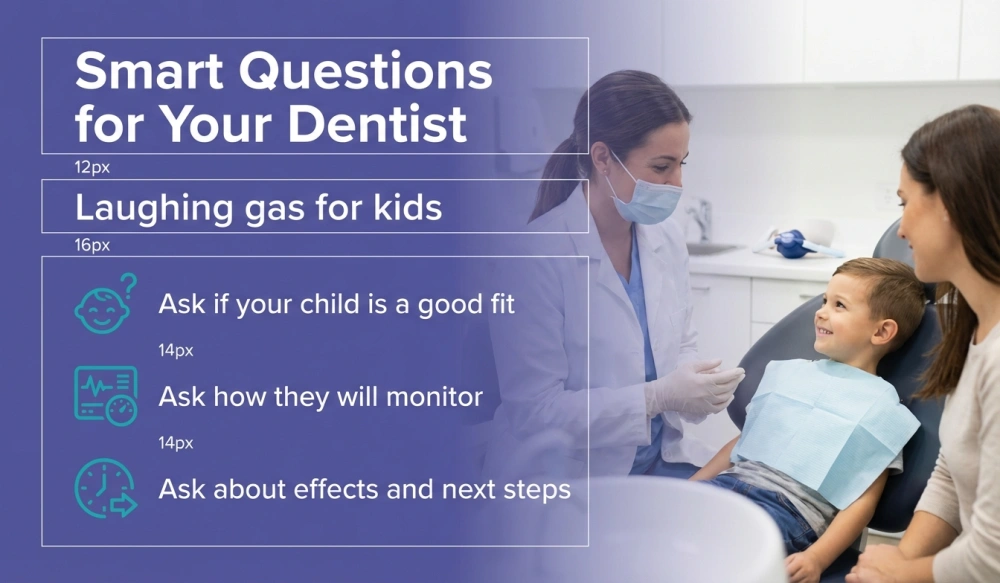
- Is my child a good candidate Which factors in their health history make nitrous oxide a good fit or suggest a different option [1] [3]?
- How will you monitor my child What observations and equipment do you use during minimal sedation [3] [4]?
- What training do you and your team have How do your credentials align with professional and state requirements for inhalation sedation [4] [9]?
- What are the common side effects How do you reduce nausea risk and what should I watch for at home [1] [8]?
- What alternatives are available If nitrous oxide is not enough, what are the next steps and when would you consider them [2] [3]?
- How do you handle my child’s specific needs For example, sensory sensitivities, strong gag reflex, or special health care needs [2]?
Who are we and how does Kidz Modern Dentistry support safe gentle care with nitrous oxide in Laguna Niguel, Laguna Hills, and Aliso Viejo?
At Kidz Modern Dentistry, we focus on helping children build positive memories around dental visits. For many families in Laguna Niguel, Laguna Hills, and Aliso Viejo, nitrous oxide is a simple and effective tool that can make a big difference during treatment. We combine evidence based techniques with a calm, friendly environment designed just for kids.
Our approach is built around clarity, comfort, and collaboration. We start by learning about your child’s health, strengths, and fears. When nitrous oxide is appropriate, we explain each step in child friendly language and invite you to be part of the process. We maintain training and equipment consistent with national standards and California requirements, and we document every visit carefully for your peace of mind [3] [4] [9].
We are here for same day needs as well. If a child wakes up with a toothache or has a dental injury, we can often see you quickly and talk through comfort options that may include nitrous oxide. Our goal is to support your child through both routine care and unexpected concerns.
- Local and convenient Serving families across Laguna Niguel, Laguna Hills, and Aliso Viejo in Orange County, California.
- Child centered comfort A sensory aware environment with tell show do communication and gentle pacing.
- Skilled team Training aligned with ADA, AAPD, and state guidelines for minimal sedation and emergency readiness [1] [3] [4] [9].
- Clear plans Stepwise comfort options that start with the least invasive methods and build only if needed [2].
- Track record Families tell us their children feel more at ease, tolerate treatment better, and leave proud of their success.
- Access to care Same day appointments for urgent needs when available and easy scheduling for routine visits.
We welcome questions about all comfort options, including nitrous oxide. Sedation dentistry in Laguna Niguel can be a helpful bridge for kids who feel unsure about the dentist, and we are happy to discuss whether it is a good fit for your child and your family’s goals [1] [2].
To talk with our team or schedule a visit, call Kidz Modern Dentistry at +1 949 273 0110. We are here to help your child smile with confidence and comfort.
Where can you review the sources for this article?
- Use of Nitrous Oxide for Pediatric Dental Patients AAPD
- Behavior Guidance for the Pediatric Dental Patient AAPD
- Guidelines for Monitoring and Management of Pediatric Patients During and After Sedation American Academy of Pediatrics
- Guidelines for the Use of Sedation and General Anesthesia by Dentists American Dental Association
- Continuum of Depth of Sedation American Society of Anesthesiologists
- Nitrous Oxide Topic Page National Institute for Occupational Safety and Health
- Controlling Exposures to Nitrous Oxide During Anesthetic Administration NIOSH Publication
- Nitrous Oxide StatPearls NCBI Bookshelf
- Anesthesia and Sedation Permits Dental Board of California
- Waste Anesthetic Gases Occupational Safety and Health Administration
Common Questions About This Topic
Find answers to frequently asked questions related to this article.