
- Why Are Parents Rethinking Silver Fillings?
- What Are Colored Anticavity Fillings for Kids?
- How Are Tooth-Colored Fillings Different From Silver Amalgam?
- Why Are Tooth-Colored Fillings Considered Better for Children?
- How Common Are Cavities in Children Today?
- Are Mercury-Free Fillings Safer for Kids?
- What Happens During a Tooth-Colored Filling Appointment?
- How Long Do Composite Fillings Last in Kids?
- How Do You Care for a Child’s New Filling?
- Are Tooth-Colored Fillings Covered by Insurance?
- How Can Parents Help Prevent Cavities Altogether?
- When Should You Call a Pediatric Dentist?
- About Kidz Modern Dentistry
- References
Why Are Parents Rethinking Silver Fillings?
If you grew up in the 1980s or 1990s, you probably remember the flash of metal in the back of someone’s mouth every time they laughed. Silver fillings were once the standard treatment for cavities, and many of us still carry them today. But pediatric dentistry has come a long way, and parents now have safer, more natural-looking options for their children. If your child has been diagnosed with a cavity, you may be wondering whether the old silver material is still the right choice, or whether something modern would serve them better.
The short answer is that most pediatric dentists today recommend tooth-colored composite fillings for children, and there are some compelling reasons why. From appearance to safety, from how much healthy tooth structure must be removed to how the filling actually bonds to the tooth, the modern approach is built around protecting growing smiles. This guide walks you through everything parents in Laguna Niguel, California need to know about colored anticavity fillings for kids, including how they compare to amalgam, what the U.S. Food and Drug Administration says about mercury exposure in young children, and how to keep your child’s teeth healthy long after the filling is placed.
What Are Colored Anticavity Fillings for Kids?
Colored anticavity fillings, more commonly called tooth-colored or composite fillings, are dental restorations made from a tooth-shaded resin material. The composite is a blend of plastic resin and finely ground glass or ceramic particles. When a pediatric dentist places one, they remove the decayed portion of the tooth, gently clean and prepare the cavity, then layer the composite material into the space. A special curing light hardens each layer, bonding the filling directly to the natural tooth.
The result is a restoration that blends so seamlessly with the surrounding enamel that most people cannot tell a filling is even there. For a child who is self-conscious about smiling, raising their hand in class, or laughing with friends, that visual difference matters. But the appeal of tooth-colored fillings goes far beyond cosmetics. According to the American Dental Association, composite resins bond chemically to tooth structure, which can help reinforce a tooth weakened by decay [1].
Why Are They Called “Anticavity” Fillings?
Some composite materials used in pediatric dentistry release small amounts of fluoride over time, which can help discourage new decay around the edges of the filling. Combined with the tight bond that composite forms with enamel, this is why parents often hear them described as “anticavity” restorations. They are designed not only to repair a cavity but also to support the long-term health of the tooth.
How Are Tooth-Colored Fillings Different From Silver Amalgam?
The conversation about silver fillings vs tooth-colored fillings comes down to four main differences: materials, appearance, how they attach to the tooth, and how much healthy tooth needs to be removed.
- Material composition: Dental amalgam is a mixture of liquid mercury and a powdered alloy of silver, tin, and copper. About half of every amalgam filling is mercury by weight, according to the FDA [2]. Composite fillings contain no mercury at all.
- Appearance: Amalgam is silver-gray and darkens over time. Composite is matched to the natural shade of your child’s tooth.
- Attachment to the tooth: Amalgam is held in place mechanically, which often requires the dentist to shape the tooth to lock the filling in. Composite chemically bonds to the enamel and dentin, which means less drilling.
- Tooth preservation: Because composite bonds directly, the dentist can remove only the decayed tissue and leave more of the healthy tooth intact.
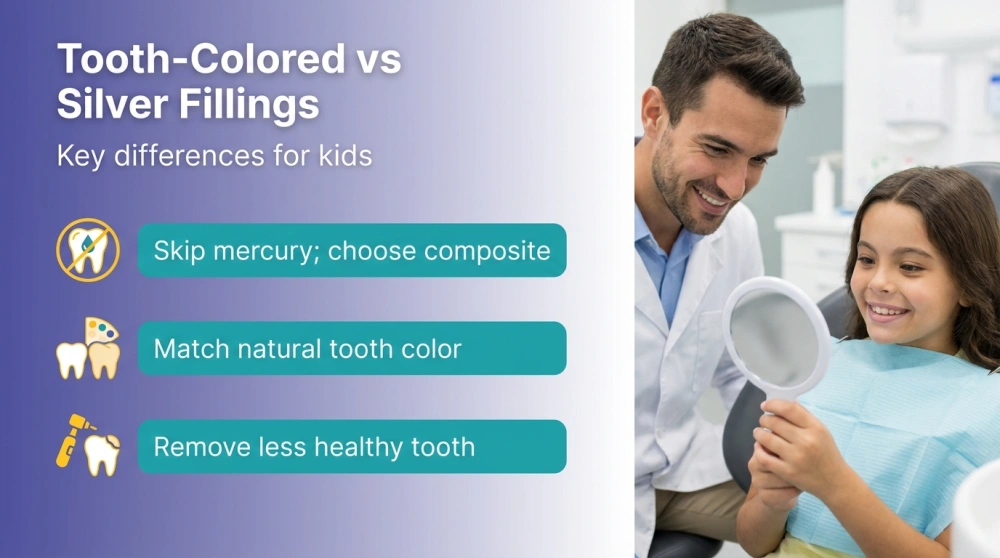
For growing children whose teeth and jaws are still developing, preserving as much natural tooth structure as possible is important. Pediatric tooth-colored fillings allow dentists to take a more conservative approach during the procedure.
Why Are Tooth-Colored Fillings Considered Better for Children?
Parents are not imagining things when they feel that something has shifted in pediatric dentistry. Several health and dental organizations now recommend non-amalgam materials for children whenever clinically appropriate. The FDA, in its 2020 safety communication, identified children younger than six as a high-risk group for mercury exposure from dental amalgam and encouraged the use of non-amalgam restorations such as composite resins and glass ionomer cements when suitable [2].
What Are the Specific Benefits Parents Notice?
- Natural appearance: The filling is virtually invisible, so children do not feel different when they smile or talk.
- Stronger bond: Composite materials adhere directly to the tooth, which can help reduce the risk of fractures around the filling site.
- Mercury-free formulation: Many parents prefer mercury-free fillings for children, particularly given current FDA guidance for high-risk groups.
- Conservative preparation: Less healthy tooth structure is removed, preserving more of the natural tooth.
- Faster placement in many cases: Composite hardens immediately under a curing light, meaning kids can usually eat soon after their visit.
- Repairable if damaged: If a small chip occurs, composite can often be patched without replacing the entire restoration.
How Common Are Cavities in Children Today?
Tooth decay remains one of the most common chronic diseases of childhood. According to the U.S. Centers for Disease Control and Prevention, about 1 in 5 children aged 5 to 11 years has at least one untreated decayed tooth, and tooth decay is roughly four times more common than asthma among adolescents [3]. The National Institute of Dental and Craniofacial Research reports that 45.8 percent of children and adolescents aged 2 to 19 had dental caries in their primary or permanent teeth in recent national survey data [4].
That means parents in Laguna Niguel and beyond are far from alone if their child has needed a filling. Catching decay early and treating it with a conservative material like composite is one of the most effective ways to protect long-term oral health. Cavity fillings for kids are not a sign of failure; they are an opportunity to repair the tooth and reset the path forward.
Why Are Baby Teeth Worth Filling at All?
A common question parents ask is whether it is really necessary to fill a cavity in a baby tooth that will fall out anyway. The American Academy of Pediatric Dentistry emphasizes that primary teeth hold space for permanent teeth, support proper chewing and speech development, and contribute to a child’s confidence [5]. Untreated decay in a baby tooth can cause pain, infection, and damage to the developing permanent tooth underneath. Fillings keep a child comfortable and protect the smile that is on its way.
Are Mercury-Free Fillings Safer for Kids?
This is one of the questions parents ask most often, and it deserves a careful answer. The FDA has stated that the available evidence does not show that mercury exposure from dental amalgam leads to adverse health effects in the general population. However, the agency also notes that developing neurological systems in fetuses and young children may be more sensitive to the neurotoxic effects of mercury vapor, and there is very limited clinical data on long-term outcomes in children under six [2].
Because of this uncertainty, the FDA specifically recommends that the following high-risk groups consider non-amalgam options when appropriate: pregnant women, women planning pregnancy, nursing mothers, infants, children under six, and individuals with neurological disease, kidney disease, or known sensitivities to amalgam components [2]. The Environmental Protection Agency also addresses environmental concerns related to mercury in dental waste, which is a separate but related reason many practices have moved away from amalgam [6].
For children, choosing a tooth-colored composite eliminates mercury exposure from the filling itself entirely. That peace of mind, combined with the cosmetic and structural advantages, is why many families seek out kids composite dental fillings rather than traditional amalgam.
Should Existing Silver Fillings Be Removed?
The FDA does not recommend removing intact amalgam fillings simply to switch materials, because the removal process itself temporarily increases mercury vapor exposure and can damage healthy tooth structure [2]. If your child already has an amalgam filling that is working well, your pediatric dentist can monitor it during routine visits. The conversation about colored anticavity fillings is most relevant when a new cavity is diagnosed or when an old filling has failed and needs to be replaced.
What Happens During a Tooth-Colored Filling Appointment?
Knowing what to expect can help both you and your child feel more relaxed before the visit. The entire appointment usually takes 30 to 60 minutes per tooth, depending on the size of the cavity and your child’s comfort level.
What Are the Steps of the Procedure?
- Gentle numbing: The pediatric dentist applies a topical gel before administering local anesthetic so the area is fully comfortable.
- Decay removal: Using small handpieces or air abrasion, the dentist carefully removes only the decayed portion of the tooth.
- Etching and bonding: A mild acid prepares the enamel, and a bonding agent is applied to help the composite adhere.
- Layered placement: The composite material is placed in thin layers, each cured with a special blue light.
- Shaping and polishing: The dentist sculpts the filling to match the natural contours of the tooth and polishes it smooth.
- Bite check: Your child gently bites down so the dentist can confirm the filling feels comfortable.
For children who feel anxious, many practices, including ours, offer kid-friendly sedation options that keep them calm and cooperative. The American Academy of Pediatric Dentistry provides detailed guidelines for behavior management and sedation in young patients to keep procedures safe [7].
How Long Do Composite Fillings Last in Kids?
Modern composite materials have improved dramatically over the past two decades. With proper care, tooth-colored fillings in children typically last between 5 and 10 years, and sometimes longer in primary teeth that may exfoliate naturally before the filling wears out. Research published through the National Library of Medicine has shown that composite restorations in pediatric patients can perform comparably to amalgam in many clinical situations, particularly when placed by an experienced pediatric dentist using current bonding techniques [8].
Several factors affect how long a filling lasts:
- Size and location of the cavity: Smaller fillings on chewing surfaces tend to last longer than large fillings between teeth.
- Daily oral hygiene: Brushing twice a day with fluoride toothpaste and flossing helps prevent new decay around the filling.
- Diet: Frequent sugary snacks and acidic drinks can wear down restorations over time.
- Habits: Grinding, nail biting, or chewing ice can stress fillings.
- Routine checkups: Regular visits allow your dentist to catch wear early and refresh or repair as needed.
How Do You Care for a Child’s New Filling?
Aftercare for a tooth-colored filling is refreshingly simple, especially compared to older materials that required your child to wait hours before eating. Because composite hardens immediately under the curing light, kids can usually eat shortly after their numbness wears off, typically within an hour or two.
What Should Parents Watch For?
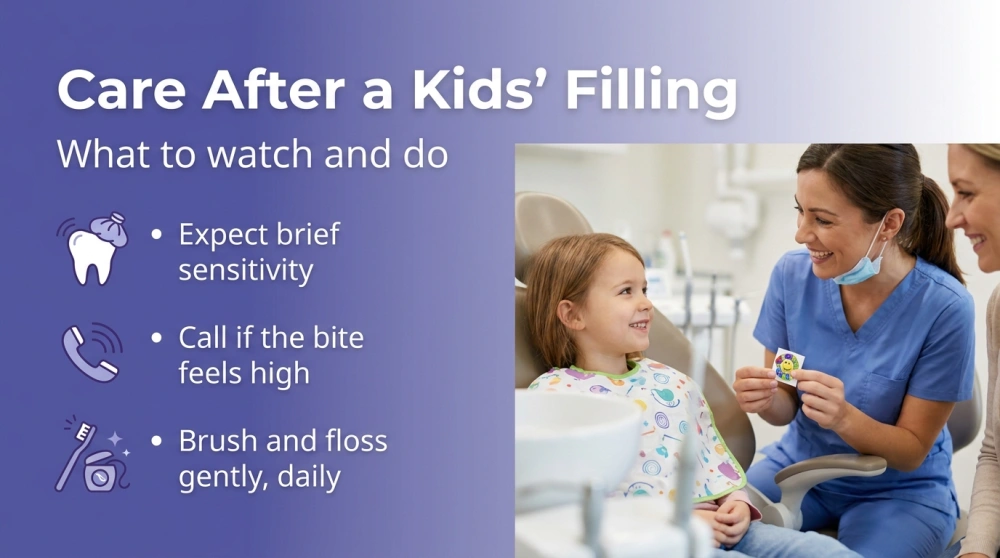
- Mild sensitivity: Some children notice temperature sensitivity for a few days. This usually resolves on its own.
- Bite alignment: If your child says the filling feels “tall” when they bite down after the numbness wears off, call the office for a quick adjustment.
- Brushing technique: Encourage gentle, thorough brushing twice a day with a soft-bristled brush.
- Flossing: Floss daily, especially around teeth that have fillings between them.
- Limit sticky candy: Caramels, taffy, and similar sweets can pull at fillings and feed cavity-causing bacteria.
- Mouthguards for sports: If your child plays contact sports, a custom mouthguard helps protect both teeth and restorations.
The CDC and American Academy of Pediatrics both recommend that children visit the dentist at least twice a year for cleanings and exams, which gives the dental team a chance to monitor existing fillings and intervene early if anything changes [9].
Are Tooth-Colored Fillings Covered by Insurance?
Most dental insurance plans cover composite fillings, particularly on front teeth where the cosmetic benefit is undeniable. For back teeth, some plans pay the equivalent of an amalgam filling and ask the family to cover the difference for composite. Because composite materials and techniques have become the clinical standard in pediatric dentistry, many insurers now provide full coverage for kids on both front and back teeth.
If you have questions about your specific benefits, our administrative team can verify coverage and provide a clear estimate before treatment begins. There should be no surprises when it comes to your child’s care, and we want you to feel comfortable with the plan.
How Can Parents Help Prevent Cavities Altogether?
Even though composite fillings are gentler and more natural looking than amalgam, prevention is always the goal. The American Dental Association and the CDC recommend a combination of home care and professional support to keep cavities away [9].
What Daily Habits Make the Biggest Difference?
- Brush twice a day: Use a pea-sized amount of fluoride toothpaste for children ages 3 and up, and a rice-grain amount for younger kids.
- Floss daily: Cavities often start between teeth where brushes cannot reach.
- Limit sugar exposure: It is the frequency of sugar, not just the amount, that drives decay. Sipping juice all afternoon is harder on teeth than a single dessert.
- Choose water over sugary drinks: Water with fluoride supports enamel and rinses away food particles.
- Apply dental sealants: Thin protective coatings on the chewing surfaces of molars can reduce cavity risk by about 80 percent in the first two years, according to the CDC [10].
- Schedule regular checkups: Twice yearly visits help catch issues early when treatment is simpler.
Families looking for compassionate preventive care or pediatric tooth-colored fillings in Laguna Niguel can build all of these habits into a long-term plan with their pediatric dental team.
When Should You Call a Pediatric Dentist?
Knowing when to pick up the phone can save your child unnecessary discomfort. Reach out to a pediatric dentist if you notice any of the following:
- Visible spots or holes: White, brown, or black spots on a tooth can indicate early decay.
- Sensitivity to temperature or sweets: Sudden reactions to cold drinks or sugary foods may signal a cavity.
- Pain when chewing: Discomfort while eating often points to a tooth that needs attention.
- A chipped or broken filling: Old or damaged restorations should be evaluated promptly.
- Swelling or a bump on the gum: This may indicate infection and warrants a same-day call.
- It has been more than six months: Even without symptoms, a routine checkup catches problems before they grow.
Trust your instincts as a parent. If something seems off about your child’s mouth or behavior around eating, an evaluation is always worthwhile.
About Kidz Modern Dentistry
At Kidz Modern Dentistry, we focus exclusively on caring for young patients, from the very first tooth through the teenage years. Our practice serves families throughout Laguna Niguel, California and the surrounding South Orange County communities, including Aliso Viejo, Mission Viejo, Dana Point, San Juan Capistrano, and Laguna Hills. We believe that a positive dental experience early in life sets the tone for a lifetime of healthy smiles.
Our team takes a child-first approach to every visit. That starts with a calm, welcoming environment designed to put kids at ease, and it continues with the way we talk through every step of a procedure in language they can understand. We use modern composite materials and adhesive techniques for restorative work, which means we can offer mercury-free fillings, conservative cavity preparation, and natural-looking results. For children who feel anxious or who need more involved treatment, we offer kid-friendly sedation options administered with strict adherence to American Academy of Pediatric Dentistry safety guidelines.
Our services include preventive cleanings and exams, fluoride and sealant treatments, digital low-radiation X-rays, tooth-colored restorations, pediatric crowns, pulp therapy, space maintainers, silver diamine fluoride treatment, frenectomies, custom mouthguards, and same-day care for pediatric dental emergencies. We also provide adaptive care for children with special needs, because every child deserves a comfortable and respectful dental experience.
If your family is looking for a kids dentist Laguna Niguel parents trust, we invite you to schedule a visit. Our combined years of pediatric experience, our commitment to ongoing education in the latest evidence-based techniques, and our genuine love for working with children all come together to make Kidz Modern Dentistry a place where kids actually want to come back. You can reach our team directly at +1 (949) 273-0110 to ask questions, verify insurance, or book an appointment.
References
- Dental Filling Options – American Dental Association
- Dental Amalgam Fillings – U.S. Food and Drug Administration
- Cavities in Children – Centers for Disease Control and Prevention
- Dental Caries in Children – National Institute of Dental and Craniofacial Research
- Frequently Asked Questions for Parents – American Academy of Pediatric Dentistry
- Mercury in Dental Amalgam – U.S. Environmental Protection Agency
- Oral Health Policies and Clinical Recommendations – American Academy of Pediatric Dentistry
- Clinical Performance of Composite Restorations in Primary Teeth – National Library of Medicine
- Oral Health Prevention – Centers for Disease Control and Prevention
- Dental Sealants Prevent Cavities – Centers for Disease Control and Prevention
Common Questions About This Topic
Find answers to frequently asked questions related to this article.
