- What is considered late teething in babies?
- When do babies usually get their first tooth and what is a normal timeline?
- Why might a one year old still have no teeth?
- Which signs suggest I should schedule a dental exam now?
- What happens during an infant dental exam and first visit?
- Are dental X rays safe for babies and when might they be recommended?
- How do health nutrition and growth influence tooth eruption?
- Could genetics or family history explain delayed tooth eruption?
- What do California and national guidelines say about safety and care?
- What can I do at home while waiting for teeth to erupt?
- Will late teething affect speech eating or orthodontic development?
- What questions should I ask a pediatric dentist at the visit?
- How do we plan follow up if teeth are still delayed after the first visit?
- How does Kidz Modern Dentistry support families in Laguna Niguel who have questions about late teething?
- Where can I read the sources and guidelines referenced?
What is considered late teething in babies?
If your child reaches the first birthday without a visible tooth, it is natural to wonder if something is wrong. In most cases, variation in timing is part of normal development. Pediatric guidelines note that the first primary tooth commonly appears around the middle of the first year, yet a wide window is still considered typical [1] [8]. Late teething generally refers to tooth eruption that occurs later than the commonly observed age ranges, but a thorough evaluation helps distinguish normal variation from a true delay.
We use the term delayed tooth eruption more specifically when teeth emerge significantly later than expected relative to age and developmental milestones, and when other contributing health factors are present [7]. A pediatric dental exam can clarify whether your child’s timing falls within normal limits or if additional steps are advisable.
Parents often ask whether the absence of teeth means something is wrong with growth or nutrition. For many children, it simply reflects individual timing. Still, checking in with a pediatric dentist offers personalized guidance, reassurance, and a plan for monitoring [2].
When do babies usually get their first tooth and what is a normal timeline?
Typical eruption windows for primary teeth span months rather than weeks. The lower front teeth often appear first, followed by the upper front teeth and the molars, but order can vary without signaling a problem. Authoritative charts and guidance show that many children erupt the first tooth around six months, and some children start closer to the first birthday or shortly after [1] [8]. A tooth that appears between about six and fourteen months can fall within a normal range, and even later timing can still be normal.
Because each child is unique, your pediatric dentist will consider the overall growth pattern, family history, and oral findings rather than relying on a single age cutoff. Regular checkups beginning by age one help ensure timely guidance, preventive care, and early detection of concerns if they arise [2] [13].
Parents sometimes compare timelines among siblings. While family patterns can be similar, it is common for one child to erupt teeth earlier or later than a sibling. The wide normal range is why clinicians rely on comprehensive exams and not only the calendar.
Why might a one year old still have no teeth?
Most often, having no teeth at one year is a normal variation. That said, several factors can influence eruption timing. A careful health and dental history helps identify what is relevant for your child.
- Normal individual variation Some children simply erupt later without any underlying issue [1] [8].
- Family patterns If parents or siblings erupted later, your child may follow a similar pattern [7].
- Prematurity or low birth weight Earlier life factors can be associated with delayed eruption in some children, and your dentist may review neonatal and growth history as part of the assessment [14].
- Nutritional or endocrine factors Conditions such as hypothyroidism or nutritional issues can influence eruption timing, especially when other signs are present [7].
- Genetic or developmental conditions Certain syndromes or developmental differences can affect dental development and eruption sequence [7].
Remember that identifying the cause is often less important than setting an appropriate monitoring plan and focusing on daily care. A pediatric dentist can determine whether observation, preventive steps, or additional evaluation is the best next move for your child [2].
Which signs suggest I should schedule a dental exam now?
Even if your child has no teeth yet, a visit by the first birthday is a widely recommended milestone. Schedule sooner if any of the following apply:

- First birthday reached with no erupted tooth An infant exam establishes a baseline and supports healthy habits from the start [2] [13].
- Changes in gum tissue or swelling Localized swelling, unusual bumps, or discoloration warrant a dental evaluation.
- Feeding or growth concerns If pediatricians or parents note feeding challenges or other developmental questions, collaborative care is helpful.
- History of prematurity or complex medical conditions A pediatric dentist can coordinate with your child’s medical team to tailor care [14].
- Parental concerns Your observations matter. If you are worried or have questions, a prompt visit is appropriate.
Many families find that an early appointment reassures them about timing and provides practical guidance for cleaning gums, managing comfort, and planning the next steps [2].
What happens during an infant dental exam and first visit?
An infant dental exam is gentle, brief, and focused on education. The dentist will review medical and family history, assess the mouth and jaws, and discuss nutrition, oral hygiene, and teething comfort strategies. This visit establishes the dental home and sets a plan for preventive care and follow up tailored to your child [2] [13].
In addition to assessing the gums and any emerging teeth, your dentist will look at how the jaws are growing and whether soft tissues look healthy. The goal is to identify what is going well and where a small change at home might prevent problems later. This visit is also the place to ask about fluoride, toothbrush technique, and how to protect your child’s mouth as teeth emerge [12].
We emphasize Infant oral health as a foundation that continues well beyond the first tooth. Early visits help parents make confident choices and reduce the chance of future cavities by starting prevention while habits are forming [2] [6].
Are dental X rays safe for babies and when might they be recommended?
Dental X rays are used selectively in infants and young children. Clinicians follow national guidelines that recommend imaging only when it is likely to affect diagnosis or treatment, and the decision is based on individual risk and clinical findings [4] [9]. For a child with no erupted teeth and no symptoms, imaging is often not necessary at the first visit. If there are signs of a problem, your dentist may consider a targeted image.
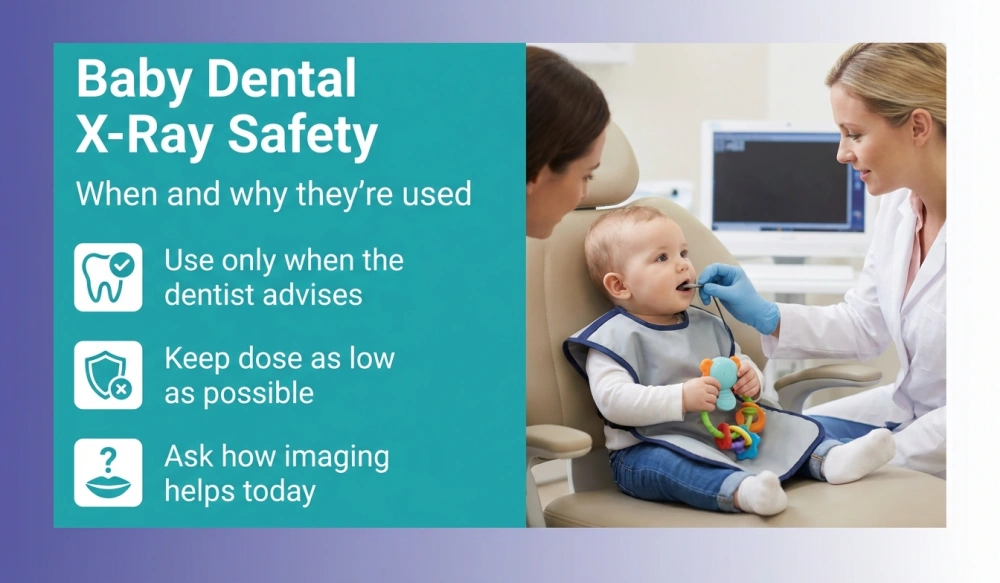
Safety protocols include using the lowest exposure that achieves a diagnostic image and shielding as appropriate, consistent with the principle of keeping radiation as low as reasonably achievable. Federal and professional guidance outline safe practices, equipment standards, and patient protection measures for dental offices [5] [9]. In California, providers also comply with state radiation safety regulations and inspection processes designed to protect patients [10].
If your dentist recommends a baby dental X ray, you will know why the image is needed, how it will help, and what steps are taken to keep exposure low. Asking questions is encouraged, and your dentist will review whether imaging can be deferred or if it is important for your child’s specific situation [4].
How do health nutrition and growth influence tooth eruption?
The eruption schedule is one piece of a larger picture that includes genetics, general health, and growth. Pediatric and dental professionals consider how your child is growing, sleeping, eating, and meeting developmental milestones. While most children with later eruption are completely healthy, certain health conditions can slow the timing of eruption changes. Examples include endocrine conditions such as hypothyroidism and some nutritional deficiencies among other possibilities [7].
At home, you can support healthy development by offering a balanced diet and following pediatric guidance on vitamin D and fluoride exposure when indicated. Your dentist will review brushing, the right amount of fluoride toothpaste, and whether fluoride varnish would be beneficial at a visit [12]. These steps protect the teeth that are on the way, and they also protect newly erupted teeth that are more vulnerable to cavities.
Teething symptoms can include drooling and gum tenderness, but high fever or severe illness is unlikely to be caused by teething alone. If your child seems very ill or has a temperature that concerns you, contact your pediatrician for medical advice rather than attributing it only to teething [3].
Could genetics or family history explain delayed tooth eruption?
Family history often provides insight. Many families notice patterns such as a parent or sibling who erupted later, and this can be reassuring when other findings are normal. Dentists also consider inherited conditions that influence dental development. While these are uncommon, it is important to review family history so your dentist can determine whether any additional evaluation is necessary [7] [14].
If your child reaches the first birthday without teeth and you know you or an older child had similar timing, share that information during the visit. Your dentist will compare the clinical exam with the history to decide whether watchful waiting or further steps are best at this stage.
Parents seeking guidance close to home can feel confident that pediatric providers in Orange County are familiar with the range of normal eruption patterns. If you prefer a local perspective, discussing these questions with a pediatric dentist Laguna Niguel can help personalize the plan for your child’s needs.
What do California and national guidelines say about safety and care?
National organizations such as the American Academy of Pediatric Dentistry and the American Dental Association offer guidance on first visits, prevention, and imaging. They recommend establishing a dental home by age one, focusing on prevention and caregiver education, and using radiography only when it will inform care for the individual child [2] [4] [9] [13].
In California, dental offices follow state radiation safety requirements overseen by the Department of Public Health. These rules layer with national guidance to promote safe equipment use, staff training, and patient protection steps for imaging [10]. Families in Laguna Niguel and throughout Orange County can expect practices to adhere to these standards. The Dental Board of California provides consumer resources and oversight for licensed dental professionals across the state as well [11].
For parents, the practical takeaway is simple. Ask your child’s dentist how national and state recommendations apply to your child. Your dentist will explain how these guardrails shape decisions about prevention, imaging, and follow up in plain language.
What can I do at home while waiting for teeth to erupt?
Even before the first tooth appears, gentle daily care makes a difference. You are building habits that protect teeth and gums during the first years of life, when the risk of early cavities can be highest if habits are not yet in place [6].
- Clean the gums daily Use a clean, damp cloth or a soft infant brush to wipe the gums after feeding and before bed.
- Use a tiny amount of fluoride toothpaste when a tooth appears A rice sized smear is the amount for children under three unless your dentist recommends different guidance for your child [12].
- Offer water in a cup Limiting sugary drinks and avoiding frequent sipping at night helps protect incoming teeth [6].
- Choose safe teething comfort A clean, cool teether or gently massaging the gums may soothe discomfort. Avoid gels that contain benzocaine or products not recommended by your pediatrician [3].
- Keep regular well child visits Coordination between your pediatrician and dentist supports whole child health and timely dental guidance.
These simple steps support Infant oral health in Laguna Niguel and everywhere. They also make the first dental visit smoother because your child is already used to gentle mouth care.
Will late teething affect speech eating or orthodontic development?
Later eruption by itself usually does not cause long term problems. Most children catch up naturally, and speech and eating progress according to overall developmental readiness. If there are speech or feeding questions, talk with your pediatrician and dentist. They may collaborate with other specialists when needed.
Your dentist will monitor spacing, bite development, and symmetry as teeth arrive. Even if eruption is late, the dentist can spot issues such as tooth number differences, eruption patterns that may need monitoring, or habits like prolonged thumb sucking that could influence bite development over time. Early guidance is often enough to keep development on track.
If the eruption pattern suggests future crowding or spacing concerns, your dentist will explain when an orthodontic evaluation might be helpful. Monitoring does not mean treatment is needed now. It means you will have clear checkpoints to reassess as your child grows [2].
What questions should I ask a pediatric dentist at the visit?
Bringing a short list of questions can help you get the most from the appointment. Consider these conversation starters:
- Does my child’s timing look like normal variation or should we consider any tests or imaging now [4] [9]?
- What are the best daily care steps for my child’s age and health, including fluoride and brushing [12]?
- When should we return for follow up and what milestones should I watch for at home [2]?
- How do we manage teething discomfort safely, and which products should we avoid [3]?
- Do you see any factors that suggest delayed eruption from a health or development standpoint that we should monitor closely [7] [14]?
Open communication builds confidence. Your dentist’s role is to explain options and help you decide what makes sense for your child now.
How do we plan follow up if teeth are still delayed after the first visit?
A typical plan includes a time frame for reassessment, such as a three to six month follow up, unless sooner evaluation is indicated by symptoms. Your dentist will suggest the timing based on your child’s risk for cavities, medical history, and the clinical findings from the exam [2].
If a follow up visit still shows no eruption, your dentist may consider additional steps such as a limited image or coordination with your pediatrician, especially if there are signs that suggest an underlying condition. Most of the time, observation remains the right choice and teeth appear soon after.
Throughout this process, maintaining focus on prevention is the best investment. Regular cleanings when age appropriate, fluoride as recommended, and coaching on nutrition and feeding can reduce the chance of early cavities once the teeth erupt [12]. For families seeking care in South Orange County, a pediatric dentist Orange County can provide convenient follow up and continuity that fits your schedule.
How does Kidz Modern Dentistry support families in Laguna Niguel who have questions about late teething?
Kidz Modern Dentistry serves children and families in Laguna Niguel, CA and nearby communities across Orange County. Our team welcomes infants and toddlers for their very first dental visit, including children who have not yet erupted a tooth. We listen first and then guide you through the next steps with clear recommendations tailored to your child.
- How our services relate to late teething We provide gentle infant exams, growth and eruption monitoring, and practical coaching on cleaning gums, fluoride use, and feeding habits that protect future teeth.
- Where we operate We care for families throughout Laguna Niguel and surrounding Orange County communities, offering convenient scheduling for busy parents.
- Our approach We emphasize calm visits, positive experiences, and clear communication. If imaging is ever needed, we explain why, how it helps, and the safety steps we take in line with national and California guidance.
- Tools and processes We use modern equipment and safety protocols, follow professional guidelines for radiography and prevention, and coordinate with pediatricians when helpful for whole child care.
- Leadership and experience Our pediatric team brings years of combined experience supporting families through questions about eruption timing, comfort strategies, and preventive care, always with a child centered focus.
- Personalized service You have direct access to qualified pediatric professionals who take time to answer your questions and build a plan that fits your child.
- Track record Families share that early visits reduce worry, improve home care routines, and make future checkups easier for their children by building trust from the beginning.
We are here as neighbors and partners in your child’s oral health journey. If you would like to talk through your child’s teething timeline or schedule an infant dental exam, contact Kidz Modern Dentistry at +1 949 273 0110. We are happy to help you decide on the right timing for a visit and what to expect when you come in.
Our care philosophy centers on Infant oral health and practical prevention that meets families where they are. Whether you are preparing for the first tooth or already seeing several, we will help your child build healthy habits that last.
Where can I read the sources and guidelines referenced?
- Eruption Charts – American Dental Association
- Periodicity of Examination and Preventive Services – American Academy of Pediatric Dentistry
- Teething Symptoms and Relief – American Academy of Pediatrics HealthyChildren
- Prescribing Dental Radiographs for Infants and Children – American Academy of Pediatric Dentistry
- Dental Radiography – U.S. Food and Drug Administration
- Children’s Oral Health – Centers for Disease Control and Prevention
- Delayed Tooth Eruption – Merck Manual Professional
- Teething and Tooth Eruption – National Institute of Dental and Craniofacial Research
- Dental X Rays Oral Health Topic – American Dental Association
- Radiologic Health Branch – California Department of Public Health
- Consumer Resources – Dental Board of California
- Policy on Use of Fluoride – American Academy of Pediatric Dentistry
- Policy on the Dental Home – American Academy of Pediatric Dentistry
- Delayed Tooth Eruption – StatPearls NCBI Bookshelf
Common Questions About This Topic
Find answers to frequently asked questions related to this article.