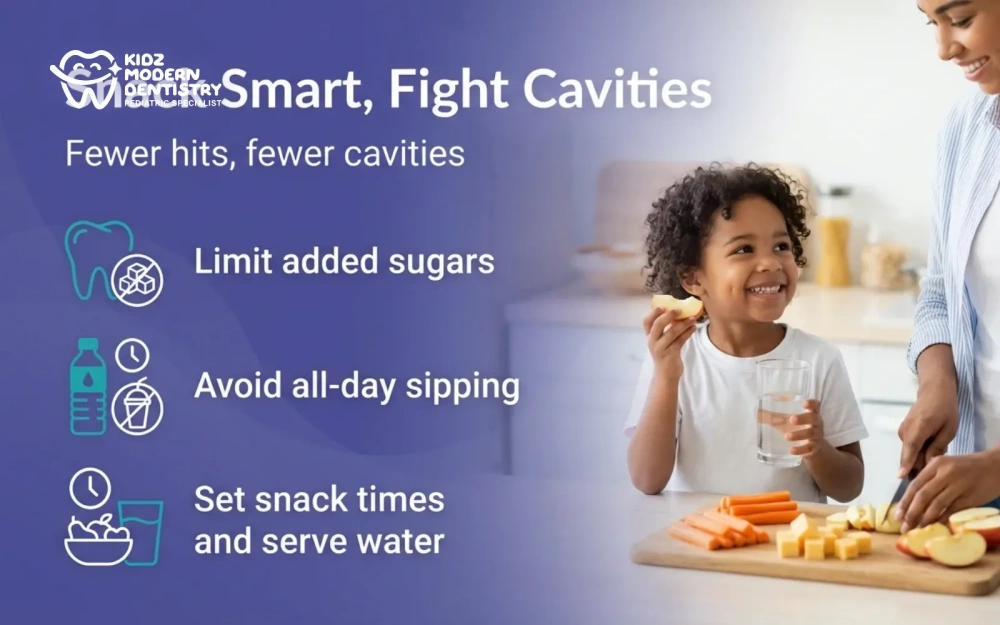
- What is the connection between nutrition and cavities in children?
- How does sugar intake and snack frequency influence tooth decay risk?
- Which nutrients help strengthen kids teeth and why?
- What drinks and snacks are better choices for a children’s dental diet?
- How can pediatric nutrition counseling support kids cavity prevention?
- What strategies help parents manage picky eaters without raising caries risk?
- How do oral hygiene and diet work together to prevent cavities?
- What local water and fluoride guidance applies in Orange County California?
- When should families see a pediatric dentist for dietary advice?
- What questions should you ask during a nutrition focused dental visit?
- Are there evidence based in office treatments that complement nutrition counseling?
- What does a week of tooth friendly meals and snacks look like?
- How do Laguna Niguel and nearby communities fit into a cavity prevention plan?
- What are the next steps if your child already has early decay?
- Why choose Kidz Modern Dentistry for pediatric nutrition counseling and cavity prevention?
- Where can you find the sources cited in this article?
What is the connection between nutrition and cavities in children?
Tooth decay in children is a diet driven disease that starts when bacteria in dental plaque feed on fermentable carbohydrates and produce acids that dissolve the mineral in tooth enamel. Over time repeated acid attacks create soft spots that become cavities. This process is called the caries process and it is strongly influenced by what children eat and how often they eat it [5]. That is why nutrition and cavities in children are closely linked. When we talk about kids cavity prevention we are really talking about a daily routine that combines smart food choices, consistent oral hygiene, and timely professional care.
Parents in Laguna Niguel, Aliso Viejo, Laguna Hills, Mission Viejo, Laguna Beach, and San Juan Capistrano often ask whether one sweet treat now and then causes cavities. Occasional sweets with a balanced meal are less risky than sipping or snacking on sugary items repeatedly across the day. Frequency of exposure matters because teeth need time to recover between acid challenges through the natural process of remineralization supported by saliva and fluoride [1][6].
Pediatric nutrition counseling gives families a practical roadmap that aligns what children eat with how their teeth grow, strengthening the enamel they have and protecting the new teeth that erupt in the school years. Guidance is tailored to age, health history, and caries risk, and it complements pediatric dentist dietary advice during routine checkups [1].
How does sugar intake and snack frequency influence tooth decay risk?
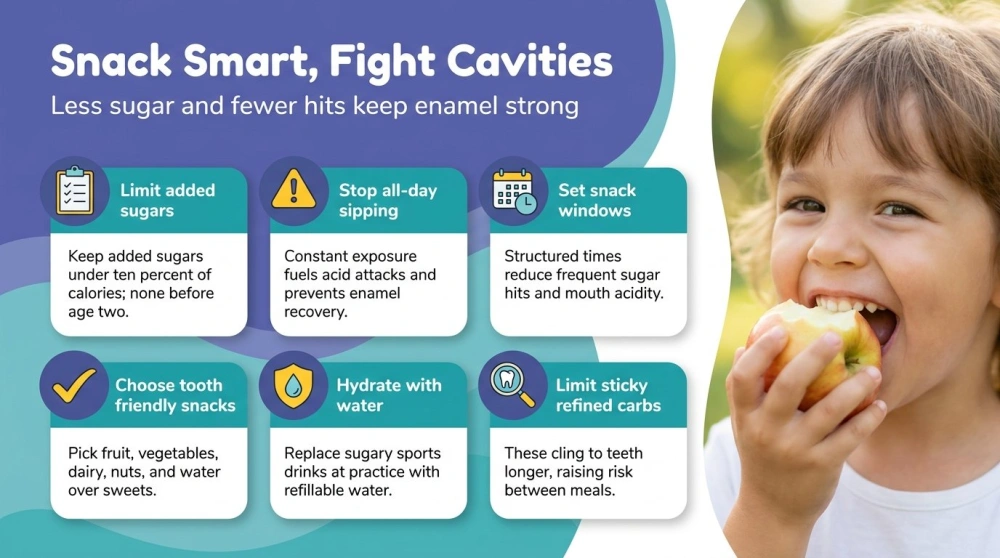
Two diet patterns increase risk the most. The first is frequent intake of added sugars such as sugary drinks, candies, pastries, and sweetened snacks. The second is sipping or grazing for long periods between meals. Both patterns keep acids active on the tooth surface longer, which tips the balance toward demineralization and eventual cavity formation [3][1].
Authoritative health bodies recommend limiting added sugars to reduce caries risk. For children older than two years, the Dietary Guidelines for Americans advise less than 10 percent of daily calories from added sugars, and no added sugars at all for children younger than two years [2]. The World Health Organization supports keeping added sugar intake low and notes that lower intakes are associated with lower caries occurrence across the lifespan [3].
Snack patterns also matter. Snack frequency and caries risk increase together when foods are sticky or highly refined and when drinks contain sugars or starches. Sipping sugar sweetened beverages through the day is especially harmful because it replenishes sugars for mouth bacteria continuously [3][5]. Choosing set snack times and offering tooth friendly options like fruits, vegetables, dairy, nuts, and water can break this cycle [1].
For families balancing sports schedules in Mission Viejo or after school activities in Laguna Hills, aim to offer structured snack breaks and pack a water bottle. Water, especially fluoridated water for kids, supports hydration and strengthens teeth while avoiding prolonged sugar exposure [6].
Which nutrients help strengthen kids teeth and why?
A child’s enamel is a living mineral structure that can lose and regain minerals every day. Several nutrients support this balance and the development of strong teeth.
- Fluoride helps remineralize enamel and makes it more resistant to acid. It also affects bacterial metabolism in ways that reduce acid production. Community water fluoridation and fluoride toothpaste are well supported strategies for reducing cavities in children [6][10].
- Calcium and phosphate are the building blocks of enamel and dentin. Adequate dietary calcium supports tooth development and ongoing remineralization. Children can meet calcium needs with dairy products, fortified plant milks, leafy greens, and calcium set tofu [13].
- Vitamin D supports calcium absorption and bone mineralization, which includes the jaw bones that support teeth. Sunlight, fortified milk, and some fish provide vitamin D, though many children rely on fortified foods to meet needs [14].
- Fiber rich foods such as vegetables, fruits, and whole grains increase chewing, stimulate saliva flow, and help clear food debris. Saliva buffers acids and brings minerals to the tooth surface, which supports natural repair [1].
Balanced meals that pair carbohydrates with proteins and fats also slow down how quickly sugars become available to mouth bacteria. This is one reason why sweets with meals are typically less risky than sweets between meals. Counseling can help parents plan these combinations for a children’s dental diet that fits cultural preferences and budget [1][2].
What drinks and snacks are better choices for a children’s dental diet?
When building a cavity smart pantry, start with what children drink. Beverages are often the largest source of added sugars and the easiest to improve.
- Make water the default. Tap water is recommended for everyday hydration. In many communities water contains optimal fluoride that helps protect teeth [6].
- Serve milk with meals. Plain milk or fortified unsweetened alternatives provide calcium and vitamin D. Avoid sweetened flavored milks as daily staples [2][13].
- Limit fruit juice. The American Academy of Pediatrics recommends no juice for infants, limited portions for older children, and always as part of a meal rather than in a bottle or sippy cup carried around during the day [4].
Healthy snacks for teeth are simple, satisfying, and low in added sugars. Good options include cheese and whole grain crackers, apple slices with peanut butter, yogurt with fresh berries, carrot sticks with hummus, roasted chickpeas, and a handful of nuts for older children who can safely chew them. If sweets are offered, make them part of a mealtime and follow with water to help rinse away sugars [1][2].
In Laguna Niguel and nearby Aliso Viejo and Laguna Beach, many families are on the go. Create a snack bin at home with ready to eat options and keep a reusable water bottle in backpacks. Consistency supports kids cavity prevention by lowering unplanned sugary grazing.
How can pediatric nutrition counseling support kids cavity prevention?
Pediatric nutrition counseling focuses on realistic changes that reduce caries risk without creating food stress at home. A trained dental professional or a team that collaborates with registered dietitians can help parents map out patterns that drive decay and then replace those patterns with protective routines [1].
During a counseling visit we review growth, medical history, medications that may reduce saliva, current meal and snack patterns, sports or activities that affect eating, and access to fluoridated water. We also review oral hygiene routines and how they interact with diet. Practical steps might include timing sweets with meals, switching sports drinks to water for practice, choosing after dinner snacks that are low in sugars, and reinforcing fluoride toothpaste use twice daily [10].
Families in Mission Viejo, Laguna Hills, and San Juan Capistrano often find that small, consistent tweaks add up. The goal is not perfection. The goal is a routine that children can actually follow and that lowers daily acid challenges to teeth without removing the joy from food.
What strategies help parents manage picky eaters without raising caries risk?
Picky eating is common and it can intersect with oral health if children rely on sweetened yogurts, crackers, or juice for calories. Counseling for picky eaters emphasizes gentle exposure to new foods and a structure that reduces grazing. Here are strategies that work for many families.
- Use a meal and snack schedule. Offer food at predictable times so children arrive at the table ready to eat. Between scheduled times offer water only to reduce constant sugar exposure, a key driver of snack frequency and caries risk [1][3].
- Pair preferred and new foods. Serve one safe choice with each meal and add small tastes of new items alongside it. Repeated exposure helps, without pressure to finish.
- Shift to lower sugar versions. Convert sweetened yogurt to plain yogurt with fresh fruit, switch juice to whole fruit with water, and choose whole grain crackers with cheese instead of cookies.
- Model the menu. Parents who demonstrate tooth friendly eating patterns help children normalize those choices.
- Leverage texture and temperature. Crunchy vegetables like cucumbers and bell peppers, chilled fruit, and cheese sticks can be both fun and protective for teeth.
If mealtimes are stressful or if growth concerns arise, ask your pediatrician or a registered dietitian for added support. Dental and nutrition teams can coordinate to balance oral health with overall nutrition and growth goals [2].
How do oral hygiene and diet work together to prevent cavities?
Diet and hygiene are teammates. Food choices influence how often acids challenge the enamel. Brushing and fluoride help repair and protect after those challenges. For young children, caregivers should brush twice daily with a smear or pea sized amount of fluoride toothpaste depending on age and help with flossing as teeth contact each other. Fluoride toothpaste is a cornerstone of caries prevention in all age groups because it strengthens enamel and reduces decay risk [10].
Pediatricians and family physicians also play a role. The US Preventive Services Task Force recommends that primary care clinicians apply fluoride varnish to the teeth of all infants and children starting at the eruption of the first tooth, which often happens before the first dental visit. This provides early protection in partnership with the dental home [8].
In the dental office, dental sealants for kids protect the deep grooves of permanent molars, where many childhood cavities begin. Sealants act as a protective barrier and have strong evidence for preventing decay in these vulnerable areas [9].
What local water and fluoride guidance applies in Orange County California?
Fluoride in community drinking water is an important public health measure. The US Public Health Service recommends a fluoride concentration of 0.7 milligrams per liter for preventing tooth decay while minimizing the risk of fluorosis, and many public water systems target this level [7]. The Centers for Disease Control and Prevention provides resources that explain how fluoridation works and why it is safe and effective for children [6].
In California, the Department of Public Health tracks community water fluoridation status and provides updates for local systems. Families in Laguna Niguel, Aliso Viejo, Laguna Hills, Mission Viejo, Laguna Beach, and San Juan Capistrano can consult state resources to understand local water fluoride levels. If water is not fluoridated or if your household uses primarily bottled or filtered water, ask your pediatric dentist about fluoride toothpaste use, varnish applications, and other options that support enamel health [12].
For daily use at home, encourage your child to drink tap water when available. For sports and outdoor activities across Orange County, pack a refillable water bottle to replace sugary sports drinks with water as the go to option [6].
When should families see a pediatric dentist for dietary advice?
Dental organizations recommend that children establish a dental home by their first birthday or within six months after the first tooth erupts. Early visits allow the team to counsel on feeding, bottle and sippy cup habits, fluoride, and the transition to family meals, all of which shape caries risk. Ongoing visits every six months or as recommended allow the team to adjust advice as children grow and as school, sports, and social factors change [1].
In Laguna Niguel and surrounding communities, consider scheduling before the school year to set routines and again midyear to check progress. Pediatric dentist dietary advice is most effective when it is timely, personalized, and paired with consistent home care and smart snack planning.
What questions should you ask during a nutrition focused dental visit?
- Which foods are raising my child’s risk the most? Ask for a review of your child’s meal and snack pattern to identify the highest impact changes first [1].
- How can we limit added sugars without power struggles? Request strategies for choice architecture at home, such as setting snack windows and offering water between meals [2].
- Is our water fluoridated? Ask how to check local levels and how to adjust your routine if you rely on bottled or filtered water [6][12].
- What is the right amount of fluoride toothpaste for my child’s age? Confirm smear versus pea sized guidance and review brushing technique [10].
- Should my child receive fluoride varnish or sealants now? Discuss timing for in office prevention based on age and caries risk [8][9].
- How do we handle snacks for sports and school? Plan portable options and hydration strategies that keep risk low during busy days.
- What follow up support is available? Ask about check ins, printed guides, or referrals to a dietitian if needed.
Are there evidence based in office treatments that complement nutrition counseling?
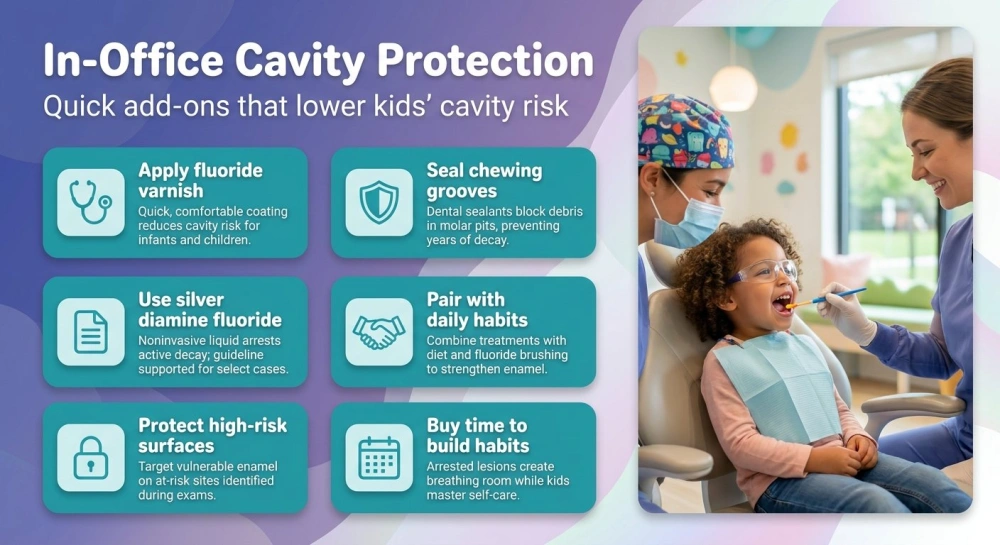
Yes. Prevention is strongest when daily habits at home are paired with professional care that protects at risk tooth surfaces.
- Fluoride varnish. A highly concentrated fluoride applied to teeth that hardens on contact with saliva. It is quick, comfortable, and recommended in medical and dental settings for infants and young children to reduce cavity risk [8].
- Sealants for molars. A protective coating placed on the chewing grooves of permanent molars to block bacteria and food from settling in deep pits. High quality evidence shows sealants reduce decay in these sites for years when placed and maintained properly [9].
- Silver diamine fluoride. For specific cases, SDF can arrest active decay on certain tooth surfaces and is useful for very young children or those with special health care needs. Evidence based guidelines support SDF as a noninvasive option in a comprehensive caries management plan [11].
These tools do not replace careful diet planning. Instead they buy time, protect vulnerable enamel, and allow children to mature into stronger self care routines while you keep working on nutrition at home.
What does a week of tooth friendly meals and snacks look like?
Consider this flexible example to spark ideas. Adjust for your child’s allergies, appetite, and cultural foods. Keep water available throughout the day and offer milk with meals as desired. Aim for vegetables or fruit at every meal and choose whole foods most of the time.
- Breakfast ideas: Scrambled eggs with spinach and whole grain toast. Plain yogurt topped with fresh berries and a sprinkle of nuts for children able to chew them safely. Oatmeal cooked with milk and sliced banana.
- Lunch ideas: Turkey or hummus sandwich on whole grain bread with cucumber slices. Cheese and whole wheat pita with cherry tomatoes. Leftover chicken with brown rice and steamed broccoli.
- Dinner ideas: Baked salmon, sweet potato, and green beans. Stir fry tofu with mixed vegetables over quinoa. Bean and cheese tacos with lettuce and salsa on corn tortillas.
- Snack ideas: Apple slices with peanut butter. Carrot sticks with hummus. Cheese stick and whole grain crackers. Cottage cheese with pineapple. Roasted chickpeas.
- Treats with meals: A small cookie or a scoop of ice cream on a weekend night served with dinner and followed by water, not as a stand alone snack.
Remember that you do not need to be perfect. Consistency over time is what matters. Keep brushing twice daily with fluoride toothpaste and use floss as teeth contact. Combine a smart menu with steady hygiene and regular dental checkups for a strong defense against cavities [10].
How do Laguna Niguel and nearby communities fit into a cavity prevention plan?
Families in Laguna Niguel, Aliso Viejo, Laguna Hills, Mission Viejo, Laguna Beach, and San Juan Capistrano share an active, outdoor lifestyle and busy school calendars. Building a plan that fits your routine is essential for kids cavity prevention. Consider these local friendly tips.
- Plan for sports. Pack water instead of sports drinks for practice and games. If snacks are needed, choose fruit, cheese, or nuts rather than sticky sweets.
- Road trip ready. Keep a small cooler in the car with water, cut vegetables, and yogurt for after school activities across Orange County.
- Leverage local produce. Farmers markets and grocery stores offer seasonal fruits and vegetables that are fun to explore with kids and supportive of a children’s dental diet.
- Use city schedules. Align dental checkups with school breaks in Laguna Niguel and surrounding districts to keep prevention on track.
With thoughtful preparation, families can support nutrition and cavities in children across the week while still enjoying the many activities our communities offer.
What are the next steps if your child already has early decay?
If your child has early signs of decay, diet changes still help. You can reduce new lesions and support remineralization by shifting to water as the default drink, limiting added sugars, brushing with fluoride toothpaste twice daily, and following your dentist’s plan for varnish, sealants, or other care as needed [2][8][9].
Professional guidance can make the plan easier. Ask for pediatric nutrition counseling that addresses your child’s habits, school schedule, and preferences. If your family is in Laguna Niguel or nearby, you can also discuss how local water sources fit into your prevention plan and whether any filters in your home alter fluoride content [6][12].
Our team can help coordinate home routines with preventive visits and age appropriate treatments. Pediatric preventive dental care in Laguna Niguel is one way families can connect daily choices with professional support in a single, child friendly plan.
Why choose Kidz Modern Dentistry for pediatric nutrition counseling and cavity prevention?
At Kidz Modern Dentistry we focus on prevention, comfort, and clarity so you feel confident guiding your child’s oral health at home. Our approach connects what your child eats with how their teeth grow, then turns that insight into a simple plan you can use every day. We welcome families from Laguna Niguel, Aliso Viejo, Laguna Hills, Mission Viejo, Laguna Beach, and San Juan Capistrano.
- Care that connects the dots. We combine dietary review, caries risk assessment, and age specific coaching with clinical prevention such as fluoride varnish and sealants when indicated. You leave with clear next steps tailored to your child.
- Child centered visits. Our environment and communication style are designed for children of all ages, including those who feel nervous at the dentist. When needed, kid friendly sedation options are available and discussed carefully so you can make informed choices.
- Responsive support. Same day emergencies are available for urgent needs, and our team helps you navigate scheduling around school and activities so prevention stays on track.
- Collaborative guidance. We coordinate with pediatricians and, when helpful, registered dietitians to support nutrition and cavities in children with a consistent message across your care team.
- Tools that fit busy lives. We provide take home checklists, brushing and snack planners, and text friendly reminders to help your family build new habits one step at a time.
- Local insight. Our clinicians understand the routines common in Orange County, from youth sports to long commutes, and we help you adapt hydration and snack strategies that work in real life.
Our goal is to help you protect your child’s smile with reliable information and gentle, effective care. To schedule a visit or ask a question, call us at +1 9492730110 We look forward to meeting your family and supporting healthy routines that last.
Where can you find the sources cited in this article?
- Policy on Dietary Recommendations for Infants Children and Adolescents – American Academy of Pediatric Dentistry
- Dietary Guidelines for Americans 2020 to 2025 – US Department of Health and Human Services and US Department of Agriculture
- Guideline Sugars intake for adults and children – World Health Organization
- Fruit Juice in Infants Children and Adolescents Current Recommendations – American Academy of Pediatrics
- Tooth Decay Overview and Risk Factors – National Institute of Dental and Craniofacial Research
- Community Water Fluoridation Basics – Centers for Disease Control and Prevention
- US Public Health Service Recommendation for Fluoride Concentration in Drinking Water for the Prevention of Dental Caries – Public Health Reports
- Prevention of Dental Caries in Children Younger Than 5 Years Screening and Interventions – US Preventive Services Task Force
- Pit and fissure sealants for preventing dental decay in permanent teeth – Cochrane Library
- Fluoride Toothpaste Guidance for Children – American Dental Association
- Evidence based clinical practice guideline on nonrestorative treatments for carious lesions in primary and permanent teeth – Journal of the American Dental Association
- Community Water Fluoridation in California – California Department of Public Health
- Calcium Fact Sheet for Consumers – National Institutes of Health Office of Dietary Supplements
- Vitamin D Fact Sheet for Consumers – National Institutes of Health Office of Dietary Supplements
Common Questions About This Topic
Find answers to frequently asked questions related to this article.
