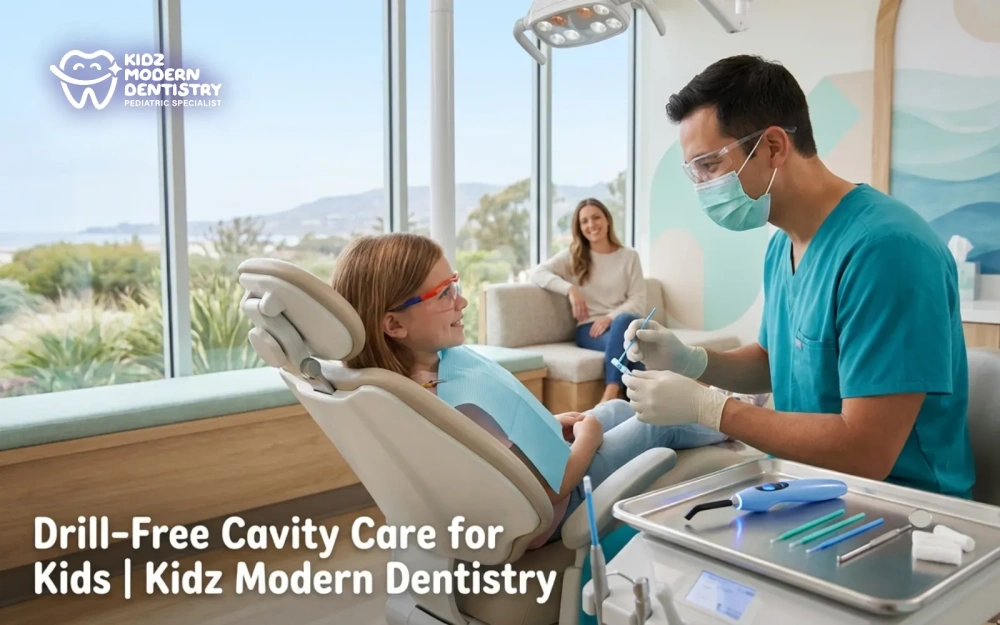
- What does drill free cavity care mean for kids?
- How does enamel remineralization protect and repair early tooth decay?
- When is a small cavity a candidate for noninvasive treatment?
- How does ICON resin infiltration work on early lesions and white spots?
- How does silver diamine fluoride stop early cavities without shots or drills?
- What are the differences between SDF, resin infiltration, fluoride varnish, and sealants?
- What should parents expect during a no shot visit for early cavity care?
- How do diet, saliva, and fluoride help rebuild enamel over time?
- What do leading professional guidelines say about these treatments?
- What California rules and ethical standards apply to pediatric minimally invasive care?
- How can parents prevent future cavities after conservative treatment?
- How do we personalize care for families in South Orange County?
- Why choose Kidz Modern Dentistry for gentle early cavity treatment?
- Where can you review the sources for this article?
What does drill free cavity care mean for kids?
Drill free cavity care focuses on stopping very early tooth decay and strengthening weakened enamel without injections or drilling. For many children with small, noncavitated lesions, we can focus on sealing, remineralizing, or infiltrating the enamel to halt progression and support natural repair. This approach is part of minimally invasive dentistry and often pairs professional treatments such as resin infiltration, silver diamine fluoride, fluoride varnish, and sealants with personalized home care. It is designed to be comfortable, kid friendly, and aimed at preserving healthy tooth structure while supporting long term oral health.
You might hear terms like no shot dentistry or drill free cavity treatment used to describe these options. While not every cavity qualifies, careful diagnosis can identify when conservative care is a good choice. Professional guidelines recognize evidence based nonrestorative caries management for specific early lesions in primary and young permanent teeth, especially when families are ready to reinforce prevention at home [2].
How does enamel remineralization protect and repair early tooth decay?
Enamel has a remarkable ability to regain minerals lost during the earliest stages of tooth decay. After exposure to sugars, bacteria in dental plaque make acids that pull minerals like calcium and phosphate out of enamel. Saliva helps buffer these acids and bring minerals back. Fluoride makes this cycle more favorable by promoting the formation of fluorapatite, a stronger mineral phase that resists future acid attacks [8]. When we pair professional fluoride therapies with daily home care and smart nutrition, many early white spot lesions can stabilize and appear less chalky over time.
Remineralization works best when the enamel surface is still intact. That is why early detection matters. If a lesion has not broken through the surface, professional treatments can tip the balance toward repair. For children, this can mean protecting baby teeth until they are ready to fall out naturally and supporting the health of growing permanent teeth.
When is a small cavity a candidate for noninvasive treatment?
Not every cavity is the same. Early stage lesions are often found on smooth surfaces between teeth or as white spots along the gumline. We look for lesions that are noncavitated, meaning the surface is intact with no hole, and that show limited depth on dental images. We also assess risk factors such as diet, fluoride exposure, saliva flow, and home hygiene to predict how likely a lesion is to grow. When risk is moderate to low and the lesion is shallow, conservative options are often appropriate [2].
Children with anxiety, sensory considerations, or special health care needs may particularly benefit from drill free strategies that avoid numbing. Parents also appreciate that these treatments often preserve more tooth structure. The goal is to stop disease in a gentle, child centered way and then build a strong prevention plan for the future [6].
How does ICON resin infiltration work on early lesions and white spots?
ICON resin infiltration is a microinvasive technique used to treat early enamel lesions and some white spot defects. Instead of removing tooth structure, a very low viscosity resin flows into the porous enamel and sets, creating a barrier that blocks acids and bacteria from continuing to demineralize the area. This can slow or stop lesion progression and may also improve the look of white spots by changing the way light reflects through the enamel pores [9].
During treatment, we isolate the tooth, gently prepare the surface with a conditioning gel, and apply the infiltrant resin under careful timing and illumination. The process is typically quiet and comfortable for children. Research suggests resin infiltration can reduce the progression of early proximal lesions and help cosmetically blend certain white spots, especially after orthodontic treatment [9].
ICON resin infiltration does not replace excellent home care. It is part of a plan that includes fluoride toothpaste, routine checkups, and tailored guidance so the improved enamel stays healthy over time [2].
How does silver diamine fluoride stop early cavities without shots or drills?
Silver diamine fluoride, often called SDF, is a liquid applied to specific spots of early decay to arrest disease and strengthen enamel. Silver helps fight cavity causing bacteria and fluoride supports remineralization. Clinical research shows SDF can arrest many active lesions in primary teeth when applied appropriately and monitored over time [5]. SDF is typically quick to place, painless, and does not require numbing.
SDF treatment can be an excellent choice for very young children, those with dental anxiety, and families seeking a gentle first step to control disease while we build strong daily habits. One important consideration is that SDF permanently darkens the treated decay. This darkening is a visual sign that the lesion has been inactivated, and we always review whether the area is visible when smiling and what alternatives might suit your child best [1]. We also plan follow up applications and regular exams to confirm ongoing arrest and to decide if additional care is needed.
Regulatory notes help clarify expectations for families. In the United States, 38 percent SDF is cleared by the Food and Drug Administration as a treatment for dentin hypersensitivity. Its use to arrest dental caries is an accepted off label application supported by major professional organizations when used according to evidence based protocols with informed consent [7].
What are the differences between SDF, resin infiltration, fluoride varnish, and sealants?
Each option plays a distinct role in early cavity care. We choose the right combination based on lesion type, location, risk level, and cosmetic priorities. Here is how they differ in purpose and process, guided by current evidence and professional recommendations.
What does SDF do compared with other options?
- Primary goal Arrest active early decay on accessible surfaces without drilling [5].
- Comfort Quick topical application with no local anesthetic in most cases [1].
- Cosmetics Causes dark staining of treated lesions, which we discuss in advance [1].
- Follow up Periodic reapplication and monitoring are important for sustained arrest [1].
How does resin infiltration compare?
- Primary goal Penetrate and seal noncavitated enamel lesions, often between teeth or as white spots, to slow or stop progression [9].
- Comfort Microinvasive and typically comfortable for children.
- Cosmetics May blend certain white spots by altering light scattering in porous enamel [9].
- Follow up Standard checkups and home care reinforce stability over time [2].
Where do fluoride varnish and home fluoride fit?
- Primary goal Enhance remineralization and reduce risk across the entire mouth in children from the eruption of the first tooth, especially those at increased risk for cavities [3].
- Comfort Simple, quick topical application with temporary taste or texture changes.
- Cosmetics No staining of caries free enamel.
- Follow up Regular applications based on risk, plus daily fluoride toothpaste at home [3].
When are sealants recommended?
- Primary goal Seal deep grooves of permanent molars to physically block bacteria and food from starting decay, with strong evidence of effectiveness [4].
- Comfort Painless placement with cleaning, etching, rinsing, and sealing steps.
- Cosmetics Tooth colored and typically not visible when smiling.
- Follow up Periodic checks to repair or replace as needed to maintain protection [4].
What should parents expect during a no shot visit for early cavity care?

Your childs comfort is central to the visit. We begin with a friendly walkthrough of what will happen and use age appropriate language to reduce anxiety. For diagnosis, we rely on visual checks, careful cleaning to reveal hidden white spots, and digital images when needed. We discuss all appropriate options, including benefits, limitations, and any cosmetic considerations. Then we finalize a plan with you that may include one or more conservative treatments and a clear home routine.
At Kidz Modern Dentistry, many children complete early cavity visits without anesthesia. For children with heightened anxiety or special health care needs, we also offer behavior guidance techniques and pediatric sedation options consistent with national safety guidelines when indicated and with full consent [12]. Our goal is a calm experience so your child feels confident returning for preventive care.
How do diet, saliva, and fluoride help rebuild enamel over time?

The balance between demineralization and remineralization plays out every day. The more often teeth are exposed to sugary snacks and drinks, the more time enamel spends dissolving. Spacing meals and limiting sugary beverages can improve the balance. Saliva buffers acids and carries calcium and phosphate back to enamel, and fluoride in toothpaste and professional treatments speeds up mineral repair while making enamel more acid resistant [8].
What practical steps can families take this week?
- Brush with fluoride toothpaste Use a smear for children under three and a pea sized amount for ages three to six, with adult help and supervision.
- Reduce frequent sipping Choose water between meals and serve milk or juice with meals rather than all day.
- Offer tooth friendly snacks Cheese, yogurt without added sugar, nuts where age appropriate, crunchy vegetables, and whole fruits.
- Time the treats If sweets are offered, pair with meals and follow with water to clear sugars.
- Schedule preventive visits Professional fluoride varnish and risk based guidance can amplify your home success [3].
What do leading professional guidelines say about these treatments?
Professional bodies support conservative caries management for the right lesions. A widely cited clinical practice guideline from the American Dental Association recommends nonrestorative treatments based on lesion type and patient risk, including resin infiltration, fluoride varnish, and sealants for noncavitated lesions, as well as SDF for arresting active decay in primary teeth [2]. The American Academy of Pediatric Dentistry policy on SDF outlines indications, cautions, application frequency, and informed consent including discussion of staining and alternatives [1].
Evidence reviews consistently show that SDF can arrest many cavitated and noncavitated lesions in primary teeth, often outperforming other topical agents in head to head trials for arrest rates, with cosmetic tradeoffs to consider [5]. Fluoride varnish is strongly recommended by the United States Preventive Services Task Force for young children at increased risk, including applications beginning at the eruption of the first tooth [3]. Sealants show substantial risk reduction for molar decay when properly placed and maintained [4]. Resin infiltration has growing support for slowing progression of interproximal noncavitated lesions and improving the appearance of certain white spots [9].
What California rules and ethical standards apply to pediatric minimally invasive care?
In California, dentists follow state laws and board regulations that safeguard patient safety, informed consent, and professional conduct. Parents or legal guardians provide consent for minors after we review the nature of the procedure, alternatives, benefits, risks, and expected follow up. Clinicians practicing in California adhere to the Dental Practice Act and related regulations established by the Dental Board of California [11].
For treatments involving sedation, providers follow national monitoring and safety guidelines for pediatric patients and hold permits required by the state. These guidelines address preoperative evaluation, fasting instructions, equipment, trained personnel, and continuous observation during and after sedation to protect children at every step [12]. When we use SDF to manage early caries, we also review that its caries arrest use is off label under federal regulation and that professional bodies support its use with appropriate consent and documentation [7].
How can parents prevent future cavities after conservative treatment?
Drill free care works best when it lives inside a prevention routine that you and your child can keep up day to day. We tailor guidance to your familys schedule, food preferences, and any sensory needs so that healthy habits feel doable. Here are focus areas that make a measurable difference.
What daily routines support strong enamel?
- Brush twice daily with fluoride toothpaste Help your child brush well at night and in the morning. Angle bristles toward the gumline and reach every surface.
- Floss once daily where teeth touch Flossing is key for white spot areas between teeth where resin infiltration or SDF may have been used.
- Use a small open cup After age one, transition from bottles and avoid putting a child to bed with milk or juice.
- Keep water handy Fluoridated tap water supports the whole family and helps clear sugars between meals.
What professional visits help maintain results?
- Risk based checkups We adjust visit frequency based on your childs caries risk and progress.
- Fluoride varnish Regular applications help maintain remineralization momentum [3].
- Sealants for permanent molars Placed soon after eruption, sealants protect deep grooves as those teeth mature [4].
- Monitoring treated areas We confirm that SDF arrested lesions remain hard and that resin infiltrations are stable.
How do we personalize care for families in South Orange County?
Every child and family is unique. In Laguna Niguel and nearby communities like Aliso Viejo, Laguna Hills, Laguna Beach, Mission Viejo, and San Juan Capistrano, schedules can be busy and dietary needs vary. We listen first, then design a plan that fits your priorities. For a child who dislikes mint flavors, we recommend toothpaste options with gentle tastes. For families managing orthodontic care, we plan timing for white spot lesion treatment and coordinate with your orthodontist. For sports active kids, we reinforce hydration and mouthguard safety alongside cavity prevention.
We also consider access to fluoridated water and preferred beverages, which can differ by neighborhood. If your child attends a school where snacks are frequent, we suggest simple strategies like sending water and cheese sticks to balance acids. If your child is sensitive to textures, we explore toothbrush handles and bristle types that feel better and still clean well. Our role is to help you make small, steady changes that add up to healthier smiles.
Why choose Kidz Modern Dentistry for gentle early cavity treatment?
At Kidz Modern Dentistry, we focus on conservative, comfortable care for children from infancy through adolescence. We deliver education forward visits that help you understand each option and choose next steps with confidence. We provide same day emergency availability, kid friendly sedation when appropriate, and a comprehensive range of pediatric services with a calm, supportive approach.
Our team cares for families across Laguna Niguel and South Orange County, including Aliso Viejo, Laguna Hills, Laguna Beach, Mission Viejo, and San Juan Capistrano. We prioritize prevention first and use treatments like ICON resin infiltration, fluoride varnish, and sealants for kids when they can stop early lesions. When indicated for small cavities, we offer SDF treatment as part of a thoughtful plan that respects your childs comfort and your cosmetic preferences.
What sets our approach apart is how we blend evidence based protocols with child centered communication. We use tell show do, comforting distraction techniques, and parent guided choices to keep visits smooth. For children with anxiety or special health care needs, we individualize appointment length, sensory accommodations, and scheduling times. If a child requires sedation, we follow national monitoring guidelines and California regulations so safety remains our foundation [12][11].
Families often choose us for kids cavity treatment in Laguna Niguel because we explain options in plain language and never rush decisions. A common pathway for an early interproximal lesion might include resin infiltration combined with fluoride varnish and a home plan. For young children with multiple early spots, we may start with SDF to quickly control disease, then place sealants on new permanent molars as they erupt. We keep you informed at every step and track progress carefully between visits.
We believe access to your pediatric dentist should be simple. You can reach our team directly at +1 949 273 0110 to schedule or ask questions. We offer flexible appointments for families in school and activity seasons, and we coordinate with medical providers when your child has complex needs. We welcome second opinions and will happily review images or reports you bring to your visit.
Our clinicians bring years of combined pediatric experience, ongoing training, and a collaborative culture that supports thoughtful case review. Our office workflow uses digital imaging and secure communication tools to streamline visits and keep you connected. We share clear aftercare steps and check in as your child adapts to new habits. Parents tell us that this partnership helps their kids feel proud of their progress and more confident for future cleanings and checkups.
For families seeking gentle options to stabilize early decay, Laguna Niguel SDF treatment can be a practical bridge that buys time until a child can cooperate with other care or until baby teeth approach natural exfoliation. In other cases, ICON resin infiltration offers both protective and cosmetic benefits for select white spots. We discuss each option openly and build a plan that matches your goals and your childs unique needs.
Where can you review the sources for this article?
- Policy on the Use of Silver Diamine Fluoride for Pediatric Dental Patients – American Academy of Pediatric Dentistry
- Evidence Based Clinical Practice Guideline on Nonrestorative Treatments for Carious Lesions – American Dental Association
- Prevention of Dental Caries in Children Younger Than 5 Years – U.S. Preventive Services Task Force
- Pit and Fissure Sealants for Preventing Dental Decay in Permanent Teeth – Cochrane Library
- Efficacy of Silver Diamine Fluoride in Arresting Caries in Children – Journal of Dental Research
- Behavior Guidance for the Pediatric Dental Patient – American Academy of Pediatric Dentistry
- Silver Diamine Fluoride Oral Health Topic – American Dental Association
- Tooth Decay Overview and Prevention – National Institute of Dental and Craniofacial Research
- Resin Infiltration for Managing Proximal Noncavitated Dental Caries Lesions – Cochrane Library
- Resin Infiltration of Proximal Caries Lesions Meta analysis – Journal of Dentistry
- Dental Practice Act Laws and Regulations – Dental Board of California
- Guidelines for Monitoring and Management of Pediatric Patients During and After Sedation – American Academy of Pediatric Dentistry
Common Questions About This Topic
Find answers to frequently asked questions related to this article.
