
- What does saving a young permanent tooth involve?
- When does a child need a root canal or pulp therapy?
- How are young permanent teeth different and why does it matter?
- What are apexogenesis and apexification and how do they help?
- What is regenerative endodontics and is it safe for children?
- How is a pediatric root canal performed step by step?
- What should parents expect before during and after treatment?
- What happens during a dental emergency and how fast should we act?
- What pain relief and sedation options are available for kids?
- How do stainless steel crowns and other restorations protect treated teeth?
- How do we care for a treated tooth at home and between visits?
- What are the risks benefits and success rates for kids?
- How do dental insurance and consent work for pediatric endodontic care in California?
- How do California and national guidelines protect your child in the dental office?
- How do we prevent future dental injuries and tooth decay in kids?
- How do we choose a pediatric dentist for root canal in Laguna Niguel?
- Why does Kidz Modern Dentistry focus on saving young permanent teeth for families in Laguna Niguel?
- Where can I learn more from reliable sources?
What does saving a young permanent tooth involve?
When a child has a deep cavity or a dental injury that reaches the nerve of a newly erupted permanent tooth, the goal is to keep that tooth healthy and functioning for life. Saving the tooth typically involves pediatric root canal treatment or other pulp therapies that remove infection, calm inflammation, and protect the developing root so it can continue to mature. Depending on the stage of root development, your dentist may recommend apexogenesis, apexification, or regenerative endodontics to stabilize and strengthen the tooth as it grows [1] [11].
Children’s endodontics centers on preserving vitality when possible, because keeping part of the pulp alive supports continued root growth and stronger tooth walls. When vitality cannot be maintained safely, there are proven procedures that disinfect the canal space and create a clean seal to prevent reinfection [1] [12].
Our approach to Kids root canal treatment emphasizes comfort, careful diagnosis, and evidence based technique that matches your child’s specific tooth development stage and overall health [1].
When does a child need a root canal or pulp therapy?
Signs that your child may need root canal for kids or another pulp therapy include persistent toothache, prolonged sensitivity to hot or cold, pain on chewing, swelling of the gums or face near the tooth, or a pimple like bump on the gum. In other cases, a sports injury or playground fall may crack or break a tooth and expose the nerve, which requires urgent care to relieve pain and prevent complications [3].
Which problems commonly lead to treatment in young permanent teeth?
- Deep decay Extensive cavities can reach the pulp causing inflammation or infection that may require pulp therapy for permanent teeth [1].
- Dental trauma Chipped, fractured, or knocked out teeth are common in active kids and need prompt evaluation to save the tooth if possible [3].
- Developmental defects Some teeth erupt with thinner enamel or enamel defects that can increase risk of sensitivity and decay.
Tooth decay remains widespread among children. National data show that many kids have experienced cavities by early elementary years, making preventive care and timely treatment critical for comfort, nutrition, and school performance [4].
How are young permanent teeth different and why does it matter?
Young permanent teeth are still developing for several years after they erupt. The roots are shorter, the tips are more open, and the dentin walls are thinner than in adult teeth. These differences influence how we diagnose, treat, and protect the tooth over time.
What does an open apex mean for treatment choices?
An open apex means the tip of the root has not fully formed. In these teeth, dentists often try to maintain or encourage continued root development through apexogenesis or regenerative procedures, because stronger longer roots improve long term tooth stability [1] [2].
How do thinner tooth walls affect restoration?
Thinner walls are more prone to fracture. After pulp therapy, the tooth often receives a protective restoration that supports the remaining structure and reduces the chance of breakage during chewing or sports [1].
What are apexogenesis and apexification and how do they help?
Apexogenesis and apexification are specialized treatments designed for immature permanent teeth.
How does apexogenesis support continued root growth?
Apexogenesis aims to keep at least part of the pulp alive so the root can continue to develop. After removing inflamed tissue and placing a biocompatible material, the dentist seals the tooth and monitors healing. Preserving vitality enhances the chance of normal root length and thicker dentin walls which make the tooth stronger [1].
When is apexification the better choice?
If the pulp has become necrotic and cannot be preserved, apexification helps form a hard barrier near the root tip so the canal can be sealed. Modern materials and techniques have improved predictability, but because the tooth walls remain thin, a protective restoration is especially important afterward [1] [12].
What is regenerative endodontics and is it safe for children?
Regenerative endodontics is a cutting-edge technique that removes infection from certain immature teeth and promotes healing within the tooth’s canal space. Key steps for disinfection, scaffold creation, and coronal sealing are outlined in clinical protocols by specialized organizations to support healing and continued root development when needed [2] .
Which children are candidates for regenerative procedures?
Typical candidates for these treatments are young patients with immature permanent teeth that have necrotic pulps or persistent infection and open root tips. Your pediatric dentist will assess the growth stage, root anatomy, and overall health to decide whether regenerative care, apexification, or another method is the most appropriate option for your child’s specific needs [2] [1] .
How do experts view the safety of regenerative care?
Professional guidance emphasizes sterile technique, careful case selection, and informed consent. When performed according to current protocols, regenerative procedures are considered an accepted option for specific cases of immature teeth, with ongoing research and follow up recommended to track outcomes over time [2] .
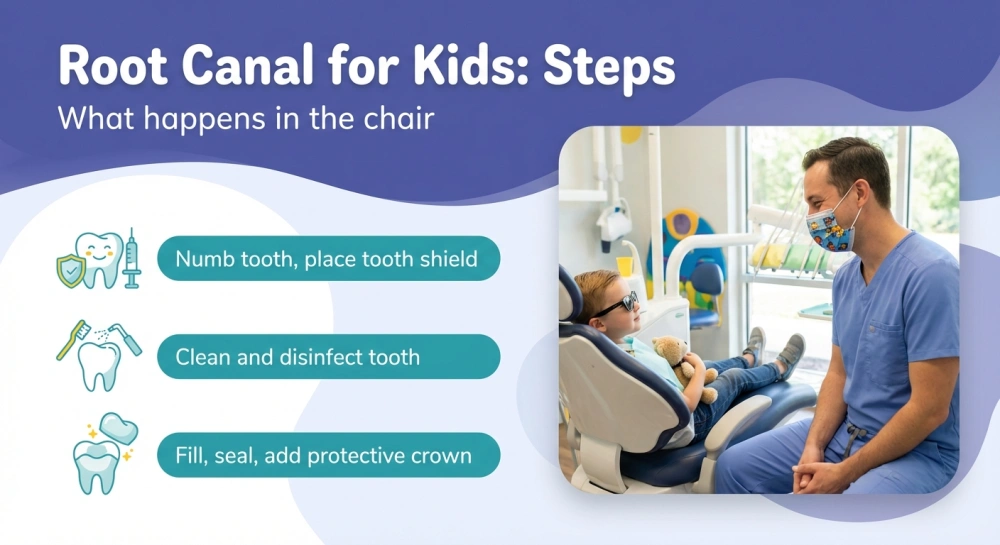
How is a pediatric root canal performed step by step?
Every child and their teeth are all unique, but the overall process they go through usually follows a well-planned sequence that ensures their comfort and safety.
What happens during the initial diagnosis?
Your dentist will ask about symptoms, examine the tooth and surrounding tissues, and take digital X rays only when needed based on national radiographic guidelines that help limit radiation exposure while obtaining essential information for care planning [10]. The dentist will determine whether the pulp is inflamed, irreversibly damaged, or infected, and whether the root is still developing.
How is the tooth numbed and isolated?
Local anesthetic numbs the area. A small protective shield called a rubber dam is placed to keep the tooth dry and free of saliva. This helps prevent contamination and improves the accuracy of treatment [5].
What are the key steps inside the tooth?
- The dentist starts by creating a small access point into the tooth’s pulp chamber, followed by using delicate tools along with sanitizing fluids for thorough cleaning of the area.
- In some cases, vital pulp therapy can be performed if part of the pulp is still healthy. This involves placing a medicated dressing to help with the healing process while allowing the root to continue developing.
- If the infected canal requires the removal of pulp, we fill the now clean canals with a compatible biological material and secure them with sealing agents to ward off any re-infections.
- A sturdy restoration is applied to shield the tooth against fracturing and reinstate its natural function for chewing purposes.
The procedure may differ depending on whether apexogenesis, apexification or regenerative techniques are employed. Your dentist will clarify how each step is specifically designed to help save your child’s young permanent teeth in their unique situation _[1]_ [2]
What should parents expect before during and after treatment?
How should we prepare for the visit?
- Share medical history Tell your dentist about allergies, medications, and health conditions so they can tailor anesthesia and materials safely.
- Discuss comfort preferences Ask about kid friendly sedation dentistry options if your child is anxious so you understand choices and monitoring protocols [6] [7].
- Plan your schedule Some appointments are longer, and regenerative or apexification cases may require follow up visits.
What happens on treatment day?
- Informed consent The dentist reviews the diagnosis, options, benefits, and potential risks and answers your questions before starting care [9].
- Comfort and safety Numbing, isolation, and infection control protocols protect your child and the team throughout the procedure [5] [6].
- Calm environment Many children benefit from simple coping strategies like distraction, tell show do, and short breaks.
What should we do after the appointment?
- Follow instructions Your dentist will provide written guidance for pain relief, diet, and oral hygiene while the area heals.
- Watch for concerns Call if your child has increasing pain, swelling, fever, or a loosening restoration.
- Return for checks Follow up visits confirm healing and continued root development and allow adjustments if needed [1].
What happens during a dental emergency and how fast should we act?
Dental trauma in children requires prompt evaluation because the first hours often determine whether a tooth can be saved. If a permanent tooth is knocked out, gently place it back in the socket if you can, or store it in milk and head to an emergency pediatric dentist right away. For fractures and deep chips, protect any exposed area and seek same day dental emergency care. Timely management guided by established trauma protocols can improve comfort and outcomes [3].
Call your pediatric dentist if your child has swelling, fever, or severe tooth pain that interferes with sleep or eating. Quick attention can control infection and prevent complications.
What pain relief and sedation options are available for kids?
Comfort is a priority, especially when a child is nervous or in pain. Dentists use local anesthesia to numb the tooth and surrounding tissues. For additional relaxation, nitrous oxide may be recommended for cooperative older children, while minimal or moderate sedation may be considered for more anxious patients following strict monitoring guidelines [6] [7].
How is safety maintained during sedation?
- Pre sedation assessment A health evaluation identifies any factors that affect medication choice and monitoring needs [6].
- Continuous monitoring Trained staff monitor breathing, heart rate, and oxygen levels and document recovery until discharge criteria are met [6].
- Parent communication You receive clear pre and post visit instructions, including fasting rules when needed and home observation tips.
How do stainless steel crowns and other restorations protect treated teeth?
After pulp therapy, the tooth often needs extra reinforcement. Stainless steel crowns are strong prefabricated restorations that cover the entire tooth and help prevent fractures in teeth with thin walls. In certain cases, a custom tooth colored restoration may be recommended for front teeth or older children. The choice depends on the tooth location, bite forces, and how much healthy structure remains [1].
For back teeth that absorb heavy chewing, stainless steel crowns have a long record of durability in pediatric dentistry. They are placed in a single visit and can be adapted to fit securely over a treated tooth, helping maintain function while the root continues to mature [1].
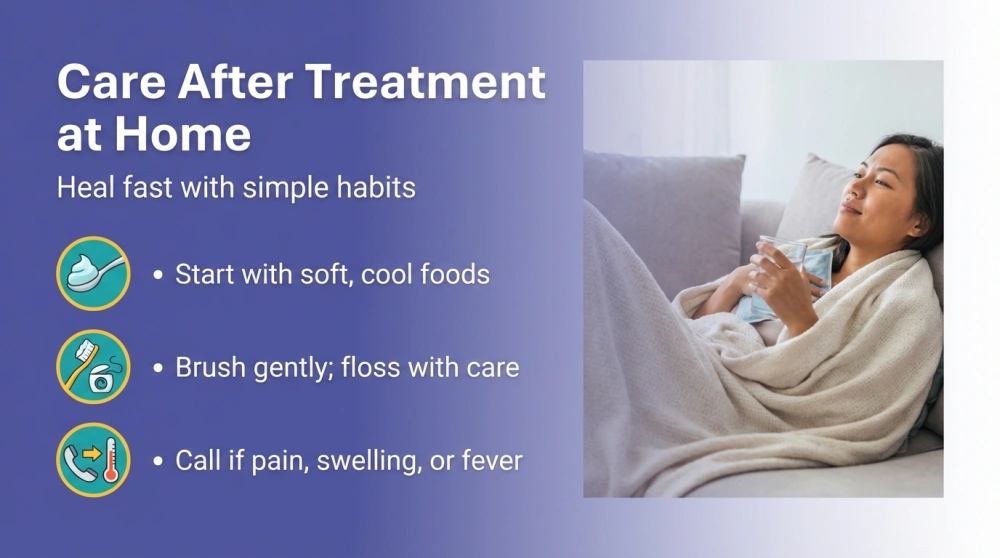
How do we care for a treated tooth at home and between visits?
At home care supports healing and helps your child get back to regular activities quickly.
What should my child eat and drink after treatment?
- Soft foods first Choose yogurt, eggs, and pasta for the first day and avoid hard crunchy items near the treated tooth.
- Hydration without sugar Offer water or milk and limit sodas and sports drinks that can irritate tissues and raise decay risk.
How do we brush and floss safely?
- Gentle brushing Use a soft brush and fluoride toothpaste twice daily, being cautious along the gumline until tenderness subsides.
- Regular flossing Continue careful flossing to remove plaque between teeth and around crowns.
When should we call the office?
- Increasing pain or swelling Worsening symptoms or fever can indicate a persistent infection and should be reported promptly.
- Loose or lost restoration Crowns or fillings that feel loose need timely adjustment to protect the tooth.
What are the risks benefits and success rates for kids?
Like any medical procedure, pediatric root canal treatment carries potential risks such as temporary soreness, sensitivity, restoration issues, or rare persistent infection that may need retreatment. Benefits include pain relief, infection control, and preservation of a natural tooth that supports normal chewing, speech, and jaw growth.
In immature permanent teeth, maintaining vitality through apexogenesis often provides the strongest long term foundation because the root can continue to develop. When vitality is not possible, apexification or regenerative endodontic protocols can stabilize the tooth and allow daily function with routine monitoring. Your dentist will discuss how each option aligns with your child’s diagnosis and goals using guidance from specialty organizations [1] [2] [11].
How do dental insurance and consent work for pediatric endodontic care in California?
Coverage for children’s endodontics varies by plan. Some policies include a portion of the diagnostic visit, X rays, pulp therapy, and restorative care, while others may have waiting periods or frequency limits. It helps to review plan documents and ask your dental team to provide a pre treatment estimate so you understand expected costs and any copayments.
In California, dentists are required to obtain informed consent that explains the diagnosis, proposed treatments, alternatives, potential risks, and expected course of care. Practices maintain complete records and follow state laws and regulations administered by the Dental Board of California [9]. If sedation is part of treatment, the provider must meet additional permit and monitoring requirements [8] [6].
How do California and national guidelines protect your child in the dental office?
Your child’s safety is protected by a combination of infection control standards, radiographic guidelines, and sedation monitoring requirements.
- Infection control Dental teams follow national standards for instrument sterilization, surface disinfection, and safe water to prevent disease transmission [5].
- Judicious X rays Dentists use the lowest exposure needed and only when images will change care decisions, in line with national guidelines [10].
- Sedation permits and monitoring California requires training, equipment, and permits for deeper levels of sedation, with continuous monitoring and documented recovery [8] [6].
How do we prevent future dental injuries and tooth decay in kids?
Prevention supports the long term success of any treated tooth and helps avoid new problems.
Which daily habits matter most?
- Fluoride toothpaste twice a day Brushing with a smear or pea sized amount of fluoride toothpaste by age recommendations helps strengthen enamel and reduce cavities [4].
- Balanced meals and snacks Choose fruits, vegetables, cheese, and nuts and limit sugary drinks that feed cavity causing bacteria [4].
- Regular checkups Routine visits let your dentist monitor healing, apply fluoride varnish, and place sealants when appropriate [4].
How do we reduce injury risk during sports?
- Mouthguards A well fitting mouthguard lowers risk of broken or knocked out teeth in contact and recreational sports. Ask your dentist about options that fit your child’s sport and age.
- Safe play routines Encourage use of protective gear and awareness in skate parks, biking, and playground activities.
How do we choose a pediatric dentist for root canal in Laguna Niguel?
Choosing a provider for root canal for kids involves more than technology. Look for a practice that explains options clearly, welcomes your questions, and follows current pediatric guidelines. Consider experience with apexogenesis, apexification, and regenerative endodontics for immature permanent teeth, and ask how the team supports anxious children with behavior coaching and sedation when appropriate [1] [2] [6].
It can help to ask how the office handles same day dental emergency care, how they coordinate with endodontists when needed, and how they monitor healing over time. Practices that emphasize family education and prevention often see children return to school and activities comfortably and quickly.
Families seeking Kids root canal treatment in Laguna Niguel will find that coordinated care, timely appointments, and clear home instructions make a big difference in comfort and confidence.
Why does Kidz Modern Dentistry focus on saving young permanent teeth for families in Laguna Niguel?
At Kidz Modern Dentistry, our mission is to help children feel safe and supported while we protect their smiles. We serve families across Laguna Niguel, CA and nearby communities with same day emergencies, gentle sedation options, and comprehensive children’s endodontics that align with current pediatric guidelines.
How does our approach guide next steps for your family?
- Clear diagnosis first We explain what we see on clinical exam and digital images, review options like apexogenesis, apexification, and regenerative procedures, and outline a step by step plan you can trust.
- Comfort centered care From tell show do to nitrous oxide and monitored sedation, we tailor comfort strategies so your child can relax while we work efficiently and safely.
- Protection beyond the procedure We recommend restorations such as stainless steel crowns when they offer the best protection for developing teeth and we coach families on home care and prevention.
Where do we operate and how do we support access?
- Local and responsive Our team cares for children in Laguna Niguel, CA with fast scheduling for urgent needs and thoughtful follow up to confirm healing.
- Same day help We reserve time for same day dental emergency care so injuries and toothaches receive timely attention.
- Direct communication Parents have access to qualified professionals who answer questions and coordinate with pediatricians or endodontists when appropriate.
What makes our methodology different?
- Evidence guided protocols We follow pediatric and endodontic best practices for infection control, imaging, and sedation monitoring in line with national and California requirements [5] [6] [8] [10].
- Modern materials We use biocompatible medicaments and sealers chosen for immature permanent teeth and pair them with durable restorations.
- Growth minded planning Our care plans consider how each tooth will develop over time and how to protect it during sports and daily life.
How does our experience translate to results?
- Focused pediatric expertise Our clinicians bring years of combined experience in children’s dentistry with added training to manage complex pulp therapy in growing teeth.
- Real world outcomes We routinely help children return to pain free eating and play while maintaining natural teeth that continue to mature with proper follow up.
- Family education We provide personalized home care plans and check ins that make it easier to keep smiles healthy between visits.
How can you connect with us today?
- Call our team Reach Kidz Modern Dentistry at +1 949 273 0110 to schedule an evaluation or urgent visit.
- Ask about options We can discuss comfort choices, timelines, and how insurance benefits may apply before you come in.
- Start with a gentle exam A simple visit can clarify whether your child needs pediatric root canal treatment now or whether watchful waiting and prevention are the right next steps.
Where can I learn more from reliable sources?
- Pulp Therapy for Primary and Immature Permanent Teeth – American Academy of Pediatric Dentistry
- Regenerative Endodontics – American Association of Endodontists
- Traumatic Dental Injuries – American Academy of Pediatric Dentistry
- Children’s Oral Health – Centers for Disease Control and Prevention
- Summary of Infection Prevention Practices in Dental Settings – Centers for Disease Control and Prevention
- Monitoring and Management of Pediatric Patients During and After Sedation – American Academy of Pediatrics and American Academy of Pediatric Dentistry
- Use of Nitrous Oxide for Pediatric Dental Patients – American Academy of Pediatric Dentistry
- Anesthesia Sedation Permits – Dental Board of California
- Laws and Regulations – Dental Board of California
- Dental Radiographic Examinations Recommendations for Patient Selection and Limiting Radiation Exposure – American Dental Association and Food and Drug Administration
- Root Canals – National Institute of Dental and Craniofacial Research
- Glossary of Endodontic Terms – American Association of Endodontists
Common Questions About This Topic
Find answers to frequently asked questions related to this article.
No FAQs available at this time.
