
- What does a double row of teeth in a child mean?
- Why do shark teeth in kids happen?
- When is a double row of teeth normal and when is it a concern?
- What signs suggest it is time to see a pediatric dentist in Laguna Niguel?
- How does the tooth eruption timeline for kids work?
- Could shark teeth cause crowding or bite problems?
- What should you do at home if a loose baby tooth is not falling out?
- When should a dentist remove a retained baby tooth?
- Is a double row of teeth a pediatric dental emergency?
- What nonsurgical options can help if permanent teeth erupt behind baby teeth?
- What happens during an exam and X rays for shark teeth?
- How do dentists decide between monitoring and extraction for a retained primary tooth?
- What is the procedure like if an extraction for a retained primary tooth is needed?
- How can we make visits easier for anxious kids?
- How can parents help prevent future crowding related to early or late tooth loss?
- What costs, insurance, and consent steps should parents expect in California?
- How can Kidz Modern Dentistry support your family in Laguna Niguel?
- References and resources?
What does a double row of teeth in a child mean?
Seeing two rows of teeth in your child can be surprising and a little unsettling. This common situation is often called shark teeth in kids. It usually happens when a permanent tooth starts to come in behind a baby tooth that has not fallen out yet. The most frequent spot is the lower front teeth in children around ages 5 to 7, and it can also occur in the upper front teeth a little later. Many cases resolve on their own once the baby tooth loosens and comes out as part of the normal eruption sequence [1] [2].
In many children, the baby tooth root gradually dissolves as the permanent tooth develops. If that process is slower or the path of the permanent tooth points slightly behind the baby tooth, the new tooth can appear in a second row. Although the look is dramatic, it is often a normal variation in growth and timing and not a cause for panic [1].
Why do shark teeth in kids happen?
Shark teeth occur for a few common reasons. Understanding why it happens can ease concerns and help you decide next steps.
- Timing differences The permanent tooth may erupt before the baby tooth root has fully resorbed, so the baby tooth does not loosen as quickly [7].
- Eruption path The new tooth can come in slightly behind the baby tooth due to a lingual path of eruption, especially in the lower front area [1].
- Limited space If the jaw is smaller or there is mild crowding, the permanent tooth may find the path of least resistance and erupt behind the baby tooth [7].
- Normal growth variation Eruption timing varies widely among children, and a double row can simply reflect a normal difference in timing [2] [6].
Most of the time, the baby tooth loosens and the permanent tooth slowly moves forward into proper position as your child uses their mouth for chewing and speaking [1].
When is a double row of teeth normal and when is it a concern?
In many kids, this is a normal phase that passes. Still, there are times when an evaluation is a good idea. Consider these general guidelines supported by pediatric dental and medical sources [1] [8]:
- Often normal If the baby tooth becomes wiggly and comes out within a few weeks and your child is comfortable, monitoring is typically fine.
- See a dentist soon If the baby tooth is not loose after several weeks, if there is pain or swelling, or if the permanent tooth continues to advance behind the baby tooth without progress, an evaluation helps clarify next steps.
- Urgent visit signs If there is facial swelling, fever, difficulty swallowing, or trauma to the teeth, contact a pediatric dentist promptly for guidance.
What signs suggest it is time to see a pediatric dentist in Laguna Niguel?
We encourage families to reach out to a Laguna Niguel pediatric dentist if they notice any of the following:
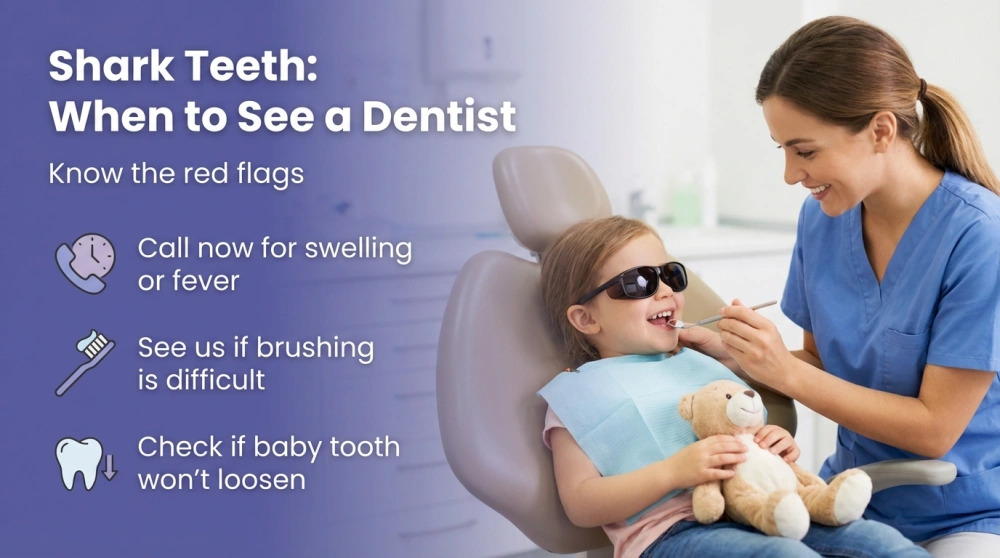
- Persistent lack of mobility The baby tooth is not loosening after several weeks of a visible permanent tooth behind it.
- Discomfort or swelling Your child reports pain, the gums look puffy, or there is bleeding that does not improve.
- Oral hygiene challenges Brushing or flossing is hard due to the second row, which can allow plaque to collect.
- Bite or speech changes Your child seems to bite their lip, cannot close their teeth smoothly, or has new speech concerns.
- Concerns about crowding You notice front teeth are overlapping or rotating as the permanent teeth erupt.
If you are unsure, a quick call to a children’s dentist in Laguna Niguel can help you decide whether a simple check or a same day visit makes sense for your child.
How does the tooth eruption timeline for kids work?
Understanding the tooth eruption timeline helps explain why a double row can show up and when it typically resolves.
- Baby teeth Most children have 20 primary teeth that emerge between about 6 months and 3 years of age [3] [6].
- First permanent teeth The first permanent molars and the lower central incisors often erupt around ages 6 to 7. Upper central incisors usually follow around ages 7 to 8 [2] [6].
- Transition years From about ages 6 through early teens, permanent teeth replace baby teeth in an orderly pattern, though individual timing varies [7].
Because the lower central incisors typically erupt early in the mixed dentition period, this is where shark teeth are most commonly seen. Eruption charts from professional organizations provide helpful age ranges that can reassure families that growth varies and timing can be flexible [2] [6].
Could shark teeth cause crowding or bite problems?
Sometimes a double row is a brief stage and the new tooth migrates forward on its own. In other cases, a narrow jaw, a mismatch between tooth size and arch length, or a rotated baby tooth can contribute to crowding as permanent teeth erupt. Monitoring and early guidance can make a difference. Professional associations recommend an orthodontic evaluation by age 7 to catch developing bite or spacing issues early, even if no treatment is needed right away [4].
During a check, your pediatric dentist may look at spacing, midline position, and the path of eruption. Radiographs, when indicated, provide a precise picture of tooth development and help assess whether there is enough room for the permanent tooth to move into place without intervention [11].
What should you do at home if a loose baby tooth is not falling out?
Home care can support natural exfoliation and keep your child comfortable while you observe progress.
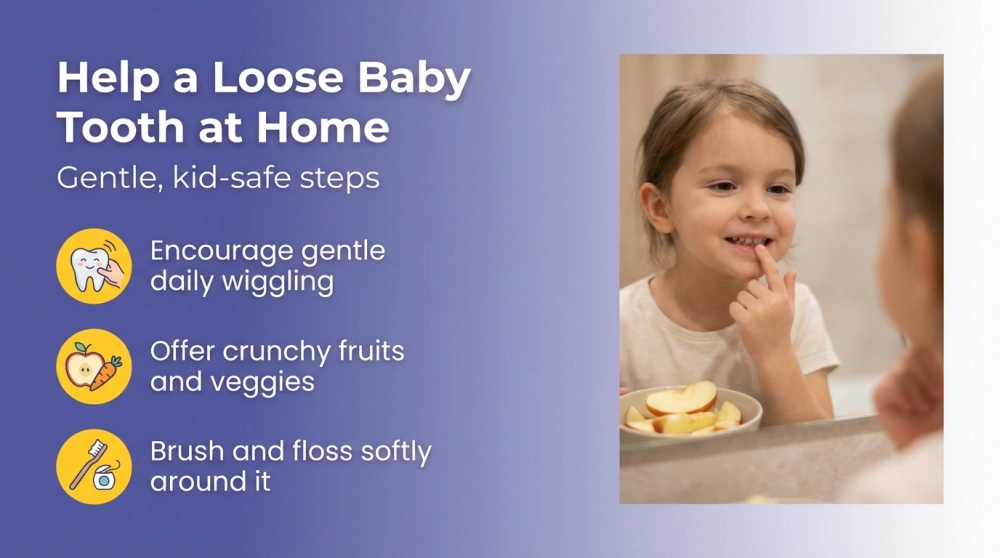
- Encourage gentle wiggling Have your child gently wiggle the loose baby tooth with clean fingers or their tongue a few times each day to stimulate natural loosening.
- Offer crunchy fruits and veggies Biting into crisp foods like apples and carrots may help a wiggly baby tooth loosen further while providing a healthy snack.
- Keep brushing and flossing Focus on thorough but gentle care around the area to prevent plaque buildup and keep gums healthy.
- Avoid risky methods Do not use string or force to pull a baby tooth. If it does not come out with light wiggles, let a pediatric dentist check it first.
- Watch for changes If discomfort increases, the tooth remains firmly in place after several weeks, or the permanent tooth keeps erupting behind it, schedule an evaluation.
When should a dentist remove a retained baby tooth?
There are times when removing a retained primary tooth is appropriate. Your pediatric dentist will consider your child’s comfort, the position and eruption stage of the permanent tooth, and whether crowding is likely.
- Minimal mobility with advanced eruption If a permanent tooth is clearly visible and the baby tooth remains firm for weeks, removal can help the permanent tooth move forward more predictably [1] [7].
- Symptoms or hygiene challenges Pain, swelling, or plaque trapping due to a double row may prompt earlier treatment [8].
- Space management If the arch is crowded and forward movement of the permanent tooth seems unlikely, a timely removal of the baby tooth may reduce long term crowding risk [4].
Pediatric tooth extractions may be recommended when these factors suggest the permanent tooth will benefit from timely space and guidance into position. In many cases this is a brief, routine procedure for children and recovery is quick and comfortable with simple aftercare.
Is a double row of teeth a pediatric dental emergency?
Most shark teeth situations are not true emergencies. However, call a kids’ dentist Laguna Niguel CA promptly if you notice any red flags. A quick professional conversation can help you decide whether your child needs a same day visit.
- Call the dentist now If your child has facial swelling, fever, trauma to the area, or significant pain that disrupts eating or sleeping [8].
- Schedule a timely check If the baby tooth remains firm for weeks after the permanent tooth is visible, or if the double row makes brushing difficult.
- Monitor at home If your child is comfortable, the baby tooth is loosening, and hygiene is manageable, observation with gentle wiggling is often reasonable [1].
What nonsurgical options can help if permanent teeth erupt behind baby teeth?
Many children do not need a procedure. Conservative steps often support natural alignment.
- Watchful waiting Give the baby tooth time to loosen if your child is comfortable and plaque is under control. Many cases resolve without intervention [1].
- Gentle wiggling Encourage your child to wiggle the baby tooth daily to assist natural root resorption.
- Hygiene coaching Focused brushing and flossing around the double row can reduce gum irritation and keep the area clean.
- Early orthodontic check If spacing looks tight, an orthodontic evaluation around age 7 can provide valuable insight even if no treatment is needed immediately [4].
What happens during an exam and X rays for shark teeth?
At a visit, we start with a friendly conversation about what you and your child have noticed, then perform a gentle exam to see how the teeth and gums look. If needed, we may take dental X rays to check the position of the permanent tooth, the stage of the baby tooth root, and the available space in the jaw. Professional bodies recommend that radiographs be used only when they are likely to provide helpful information, and that exposure be kept as low as reasonably achievable using protective measures and modern technology [11] [12].
For most kids, a small number of simple images is enough to guide decisions about monitoring or treatment. Your pediatric dentist will explain the findings in clear, parent friendly language and answer questions about next steps.
How do dentists decide between monitoring and extraction for a retained primary tooth?
Decisions are individualized and based on clinical findings, your child’s comfort, and growth considerations. Here are common factors in the decision process:
- Mobility level A wiggly baby tooth suggests that natural exfoliation is underway and monitoring is reasonable.
- Eruption stage If the permanent tooth is significantly erupted behind the primary tooth with little change over several weeks, removal is more likely to be considered [7].
- Space analysis A quick look at spacing, crowding, and bite helps predict whether the permanent tooth can migrate forward on its own [4].
- Comfort and hygiene Pain, swollen gums, or persistent plaque trapping may tip the balance toward earlier intervention [8].
- Professional guidelines Pediatric and orthodontic organizations provide evidence based guidance that supports timely intervention when indicated and observation when conditions are favorable [14].
What is the procedure like if an extraction for a retained primary tooth is needed?
If your child needs help removing a baby tooth that is not loosening on its own, the procedure is usually quick and gentle. After a thorough explanation and consent, the area is numbed with a small amount of local anesthetic. The baby tooth is then carefully loosened and removed. Children typically feel pressure but not pain. A small piece of gauze is placed to help with initial healing, and most kids return to normal activities the same day.
Aftercare is simple. Your dentist will share child specific instructions such as gentle biting on gauze, choosing soft foods the first day, avoiding sipping through a straw, and keeping the area clean with careful brushing. Over the counter pain relief can be used as directed by your pediatrician. If you have any questions after the visit, your dental team is a resource for support.
Families who need convenient local access to care can find Pediatric tooth extractions in Laguna Niguel with teams experienced in working with children and focused on making visits positive and age appropriate.
How can we make visits easier for anxious kids?
Many children feel nervous about dental care, especially if they remember a wiggly tooth that felt sensitive. Pediatric teams use age appropriate communication, friendly demonstrations, and a calm environment to help kids feel comfortable. Some children do well with simple distraction like music or a favorite story, while others prefer a step by step explanation and the chance to ask questions.
For kids who need extra support, your pediatric dentist can discuss options such as nitrous oxide or other behavior guidance approaches. The decision is individualized based on your child’s health history and comfort level, and your dentist will review the risks, benefits, and alternatives. Professional organizations provide safety guidance for sedation and behavior management to support positive, well monitored experiences for children [12] [14].
How can parents help prevent future crowding related to early or late tooth loss?
While genetics play a role in arch size and tooth size, there are practical steps that help guide healthy development.
- Regular checkups Consistent visits allow your child’s dentist to monitor spacing, eruption, and bite so that small concerns are addressed early [9].
- Orthodontic monitoring An age 7 check with an orthodontist can identify growth patterns and spacing issues early, even when no immediate treatment is needed [4].
- Good oral habits Brushing twice daily with fluoride toothpaste and daily flossing help keep the gums healthy around erupting teeth, which can support natural movement into better alignment [5] [10].
- Prompt attention to problems If a baby tooth is lost too early due to decay or trauma, your dentist may discuss space management options to prevent drifting of neighboring teeth [14].
These steps, combined with watchful observation during the mixed dentition years, help promote a healthy and functional smile as permanent teeth come in.
What costs, insurance, and consent steps should parents expect in California?
Financial and consent questions are common and completely understandable. Coverage for exams, radiographs, and necessary procedures varies by plan. Many dental benefit plans include coverage for necessary care such as exams, X rays, and the removal of a retained primary tooth when clinically indicated. Your dental team can provide a cost estimate based on your plan and discuss payment options.
Before any procedure, you will be informed about the diagnosis, recommended treatment, alternatives, and risks so you can make a confident decision for your child. When behavior guidance or sedation is considered, pediatric practices follow evidence based safety standards from national organizations and comply with California licensing and permitting requirements. These safeguards support careful patient selection, appropriate dosing, continuous monitoring, and emergency readiness [12] [13].
How can Kidz Modern Dentistry support your family in Laguna Niguel?
At Kidz Modern Dentistry, we help families navigate shark teeth in kids with clear explanations, practical home tips, and gentle in office care when needed. Our approach is to listen first, examine carefully, and create a simple plan that fits your child’s needs and your family’s schedule.
- Where we serve We care for children and teens in Laguna Niguel and across Orange County, offering convenient access to a children’s dentist in Laguna Niguel for exams, guidance, and treatment.
- How we help If a baby tooth is not loosening, we discuss options that range from watchful waiting to timely care. We explain how the permanent tooth is developing, what you can expect next, and when a short visit might help the new tooth move into a better position.
- Comfort focused care Our kid friendly team uses age appropriate communication, gentle techniques, and options like nitrous oxide when suitable. We keep parents informed at every step so decisions are clear and comfortable.
- Same day support If your child is uncomfortable or you notice sudden changes, we prioritize same day emergencies whenever our schedule allows so your family can get answers and relief quickly.
- Experience and teamwork Our dentists and clinical team bring years of combined experience in pediatric dental care Orange County families trust. We collaborate with local orthodontists when monitoring spacing or bite is helpful.
- Personalized guidance We create home care plans that include gentle wiggling tips, brushing strategies around a double row, and timelines for follow up checks. If a procedure is recommended, we walk you through each step and aftercare in plain language.
- Clear communication You have direct access to our team for questions by phone at (949) 273 0110. We encourage you to reach out whenever you need reassurance or an appointment time that works for your family.
When treatment is appropriate, we provide Pediatric tooth extractions as a brief, gentle visit with a focus on comfort, safety, and recovery instructions that are easy to follow. You can expect careful explanations, a friendly environment, and support before, during, and after the visit so your child feels confident and cared for.
References and resources?
- Shark Teeth in Children – American Dental Association MouthHealthy
- Tooth Eruption Charts – American Dental Association MouthHealthy
- Teething – MedlinePlus Medical Encyclopedia
- When Should My Child See an Orthodontist – American Association of Orthodontists
- Children’s Teeth and Tooth Care – NHS
- Tooth Eruption Chart – University of Iowa Head and Neck Protocols
- Tooth Eruption – StatPearls – NCBI Bookshelf
- Shark Teeth in Kids – Cleveland Clinic Health Essentials
- Resources for Parents – American Academy of Pediatric Dentistry
- Tooth Decay in Children – National Institute of Dental and Craniofacial Research
- Dental X rays – American Dental Association
- Dental Imaging Safety for Children – Image Gently Alliance
- Laws and Regulations – Dental Board of California
- Oral Health Policies and Best Practices – American Academy of Pediatric Dentistry
Common Questions About This Topic
Find answers to frequently asked questions related to this article.
