
- What makes dental care for children with autism unique in Laguna Niguel, CA?
- How does autism affect oral health and daily dental habits?
- Which sensory factors commonly influence a dental visit for kids with ASD?
- What can parents do before the first appointment to reduce stress?
- How do visual stories and clinic previews help?
- What should you include in a comfort toolkit for your child?
- How does a sensory friendly pediatric clinic adapt the environment?
- How are lights, sounds, and waiting rooms modified?
- Which communication strategies support trust and cooperation?
- What behavior guidance techniques are recommended for children with ASD?
- How do tell show do and positive reinforcement work?
- When are protective stabilization methods considered and how is consent handled?
- When is dental sedation appropriate for kids with ASD, and what are the options?
- What are the differences between nitrous oxide and oral moderate sedation?
- How are safety protocols managed under California regulations?
- How do preventive strategies reduce cavities and gum disease in children with ASD?
- What daily home care adaptations can make brushing and flossing easier?
- Which in office preventive treatments are supported by research?
- How are same day pediatric dental emergencies handled for children with ASD?
- What should families know about insurance, consent, and patient rights in California?
- How do you prepare a visit plan and an emergency plan for your child?
- Why choose a local autism friendly pediatric dentist in Laguna Niguel, CA?
- What questions should you ask your pediatric dentist about ASD dental care?
- What real world scenarios show how supportive care can look?
- How can Kidz Modern Dentistry support your family in Laguna Niguel, CA?
- References
What makes dental care for children with autism unique in Laguna Niguel, CA?
Every child deserves a dental experience that feels calm, respectful, and tuned to their needs. Children on the autism spectrum may process sights, sounds, touch, and routines differently, which can make traditional dental visits challenging. In Laguna Niguel, CA, families often look for a pediatric dentist for autism who understands sensory sensitivities, uses clear communication, and plans visits around each child’s comfort. This approach helps kids build trust and keeps oral health on track, especially because dental problems can progress quickly in growing smiles [8] [10].
The goal is to create a visit that feels predictable and kind. A sensory friendly dental clinic will focus on shorter appointments, flexible scheduling, and tools that reduce overstimulation. This often includes dimmed lights, quiet rooms, and options like sunglasses, weighted lap pads, or noise reducing headphones. It also means clinicians trained in behavioral management dentistry can use stepwise techniques that respect autonomy and reduce anxiety [4].
Families seeking a local partner for care benefit from a team that practices Special needs dentistry with evidence based strategies and trauma informed communication. Over time, consistent positive experiences help children participate more fully in exams, cleanings, and treatments when needed [4].
How does autism affect oral health and daily dental habits?
Autism Spectrum Disorder affects about one in 36 children in the United States, and many experience differences in communication, behavior, and sensory processing that can influence toothbrushing, diet, and dental visits [1] [3]. Studies suggest children with ASD can face higher barriers to routine oral care at home and increased challenges in the dental setting. Some research has found a greater risk of untreated cavities or gum inflammation, likely linked to diet preferences, oral hygiene difficulties, and sensory sensitivities rather than the diagnosis alone [2] [10].
Daily routines like brushing and flossing can be difficult because of texture sensitivities, taste aversions to toothpaste, or discomfort with touch inside the mouth. Additionally, changes in routine or new environments can be stressful, which may impact cooperation during dental exams. Understanding these realities allows the care team and families to plan more successful visits and home care habits together [4].
Which sensory factors commonly influence a dental visit for kids with ASD?
Sensory processing differences are common in autism and might include sensitivity to sounds, bright lights, or certain textures and tastes [3]. In the dental setting, this can show up as discomfort with the overhead light, suction sounds, or the feeling of gloves or instruments. Even the movement of the dental chair can be surprising.
Supportive clinics anticipate these reactions and modify the environment. Examples include quiet rooms, neutral scents, a no rush pace, and a single voice guiding the visit. Letting a child explore items like mirrors or toothbrushes before use, and building in short breaks, can make a big difference in how a child experiences care [4].
What can parents do before the first appointment to reduce stress?
Preparation helps many children feel more confident. Short practice moments at home such as sitting back on a couch while a caregiver gently counts teeth with a soft toothbrush can help build tolerance. Consistency is key, so repeat the same steps in the same order each time.
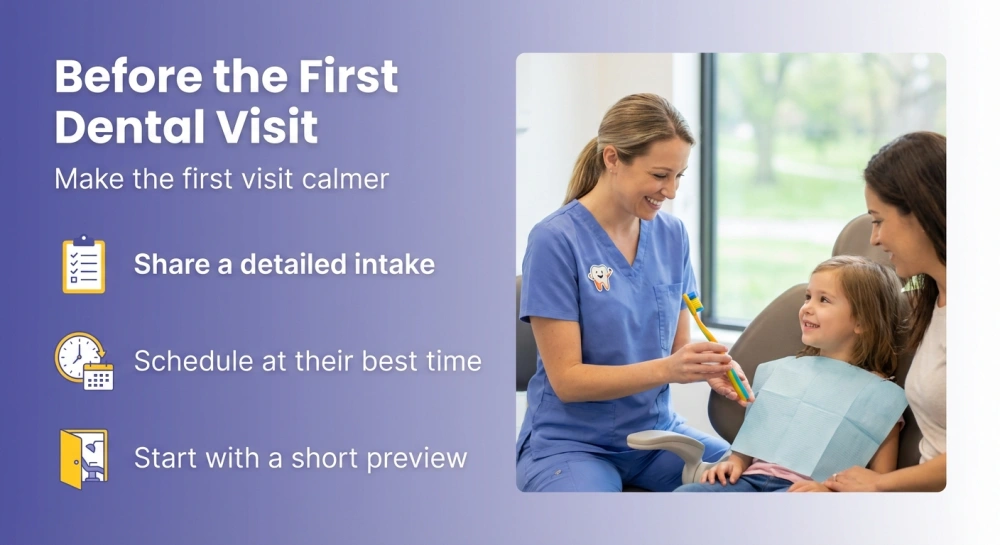
- Share a detailed intake so the team understands your child’s preferences, triggers, reinforcers, communication style, and successful calming strategies [4].
- Schedule at a good time of day when your child is most alert and comfortable to support cooperation.
- Plan a short visit first such as a meet and greet or desensitization visits to build familiarity without pressure.
- Bring comfort items like a favorite toy, visual schedule, or sensory tools that help regulate emotions.
- Use simple language to preview what will happen, and practice a calm breathing routine you can use together.
How do visual stories and clinic previews help?
Visual supports can reduce anxiety by making each step predictable. A social story with real photos of the clinic, the team, the chair, and common tools can help a child see what to expect and rehearse at home. A brief clinic preview or a virtual tour also builds familiarity with the environment. Many families find that a sequence like check in, choose a seat, wear sunglasses, count teeth, and pick a prize builds momentum for success during the first full visit [4].
What should you include in a comfort toolkit for your child?
Your child’s toolkit can travel to every appointment. Include items that support regulation and communication so your child has control over their experience.
- Noise reducing headphones to soften sounds from suction or handpieces.
- Sunglasses or a cap to reduce brightness from lights.
- Chewelry or a chewy tube for safe oral sensory input before or after the visit if this is part of your child’s routine.
- A visual choice board with pictures for yes or no and break please to support autonomy.
- A favorite fidget or small weighted item to focus attention and provide calming input.
- A small blanket or lap pad if deep pressure helps your child relax.
How does a sensory friendly pediatric clinic adapt the environment?
Clinics that routinely serve children with ASD design spaces and workflows that minimize surprises. This begins with staff training in behavior guidance and sensory aware care, scheduling adjustments that avoid crowded waiting areas, and a clear plan for each child before the day of the appointment [4].
Many families are seeking an autism friendly pediatric dentist and a team experienced in special needs dentistry for children. Practices that invest in this care model often collaborate with caregivers, educators, and therapists to align strategies and set shared goals for oral health maintenance.
How are lights, sounds, and waiting rooms modified?
Environmental changes can be simple but powerful. Dimmable lights, curtain shades, and sunglasses manage brightness. Quiet rooms and reduced background noise make it easier to process instructions. Weighted lap options, blankets, or a gentle hand squeeze can provide calming proprioceptive input if your child finds that helpful. Shorter wait times, direct rooming upon arrival, and a practitioner leading with a single calm voice help children focus on one cue at a time [4].
For many families, this style of care is what they hope for when they search for a sensory friendly dental clinic. The emphasis is on steady, stepwise care that respects a child’s signals and celebrates small wins.
Which communication strategies support trust and cooperation?
Clear and respectful communication helps kids know what will happen next. Clinicians trained in behavioral management dentistry frequently use short concrete phrases, visual supports, and first then language. The team may offer structured choices such as choosing a toothbrush color or deciding whether to count top or bottom teeth first. These small decisions give children a sense of control and can improve participation during care [4].
- Use one voice and one step at a time to avoid overload.
- Model and practice before touch so a child knows what a tool looks and feels like.
- Offer predictable breaks between steps to reset.
- Reinforce cooperation with praise or a token system aligned with home strategies.
What behavior guidance techniques are recommended for children with ASD?
The American Academy of Pediatric Dentistry describes a spectrum of approaches that prioritize communication, teach skills, and support coping. These include tell show do, distraction, positive reinforcement, and voice control tailored to the child’s needs. For children who benefit from stepwise acclimation, desensitization visits can build familiarity and tolerance for instruments or procedures over time [4].
Each plan is individualized. Some children thrive with short same day treatment while others do best with brief frequent visits. Coordinating with caregivers to understand successful strategies at home or school helps clinicians mirror familiar approaches in the dental chair [4].
How do tell show do and positive reinforcement work?
Tell show do breaks a procedure into simple steps. First the clinician tells the child what will happen using concrete words. Next they show the item or action on a finger or toothbrush. Then they do the step in the child’s mouth if the child is ready. This format reduces uncertainty and builds mastery. Positive reinforcement acknowledges effort immediately after a desired behavior, such as opening for three seconds or keeping hands on the tummy. Reinforcement can be verbal praise, a sticker, or a token toward a small prize, depending on what motivates your child [4].
When are protective stabilization methods considered and how is consent handled?
Protective stabilization is rarely needed and is considered only when potential benefits outweigh risks, such as when urgent care is necessary and other strategies are not sufficient. If discussed, it is done with transparency, in alignment with professional guidance, and with informed consent from the parent or guardian. Many clinics prefer to explore additional desensitization, caregiver participation, or sedation options first to support safety and comfort [4].
When is dental sedation appropriate for kids with ASD, and what are the options?
Some children with ASD benefit from sedation when anxiety, sensory sensitivities, or the length and complexity of a procedure make awake treatment difficult. Sedation can help a child rest and receive care safely, but it must be planned carefully. Decisions consider the child’s health history, previous dental experiences, and the goals of the visit. Families often ask about dental sedation for kids, and a trained pediatric team will explain benefits, risks, alternatives, and monitoring requirements before any decision is made [5].
Common options include nitrous oxide inhalation, oral moderate sedation, and, for specific cases, general anesthesia in a hospital or accredited surgery center. Monitoring standards, emergency preparedness, and staff training are central to safe care [5].
What are the differences between nitrous oxide and oral moderate sedation?
Nitrous oxide is a mild option delivered through a small nasal mask that can reduce anxiety and enhance comfort during short procedures. It acts quickly and wears off quickly once discontinued. Oral moderate sedation involves medication given by mouth in precise doses tailored to the child’s weight and needs. It requires more preparation, longer observation, and careful monitoring of breathing and circulation during the visit. The choice depends on the child’s response to previous care, the expected length of the procedure, and health considerations reviewed with the dentist and, when indicated, the pediatrician [5].
How are safety protocols managed under California regulations?
California has specific training, permitting, and facility requirements for dentists who provide sedation or anesthesia to children. Teams that offer sedation maintain current permits, equipment checks, and emergency medications, and follow monitoring standards that include continuous observation and documentation throughout the procedure and recovery. Parents can ask to see permits and learn how the team prepares for safety and communication during sedation and after discharge [6] [5].
How do preventive strategies reduce cavities and gum disease in children with ASD?
A strong preventive plan can minimize the need for complex procedures. The AAPD periodicity schedule recommends regular exams, cleanings, fluoride treatments, and individualized risk assessments. For many children with ASD, the plan may include shorter but more frequent visits to reinforce home care skills and reduce anxiety with repetition. Preventive pediatric dentistry strategies work best when a clinic and family communicate often, adjust routines as the child grows, and celebrate achievable goals [8].
Diet counseling, daily fluoride exposure, and early treatment of small cavities are central to prevention. Research also supports the use of fluoride varnish to strengthen enamel and reduce caries risk in primary and permanent teeth, including applications in primary care settings for young children [9] [14].
What daily home care adaptations can make brushing and flossing easier?
Small changes can yield big wins for comfort and consistency. Try one new idea at a time and stick with it for several days before deciding whether it helps. Consider these options to make daily care more successful.
- Use a visual sequence with four to six steps for wash hands, brush top, brush bottom, spit, rinse, and done.
- Choose the right tools such as a compact or silicone bristle brush, an electric brush with a gentle setting, or flossers with a slim handle.
- Adjust flavors and textures with unflavored or mild toothpaste, or a low foam option if tolerated.
- Try positions that feel safe like brushing while your child reclines on a beanbag or sits on your lap facing away for support.
- Use a timer or song for predictability, and praise each completed step rather than waiting until the end.
- Pair with reinforcement such as a sticker chart that leads to a nonfood reward your child chooses.
Which in office preventive treatments are supported by research?
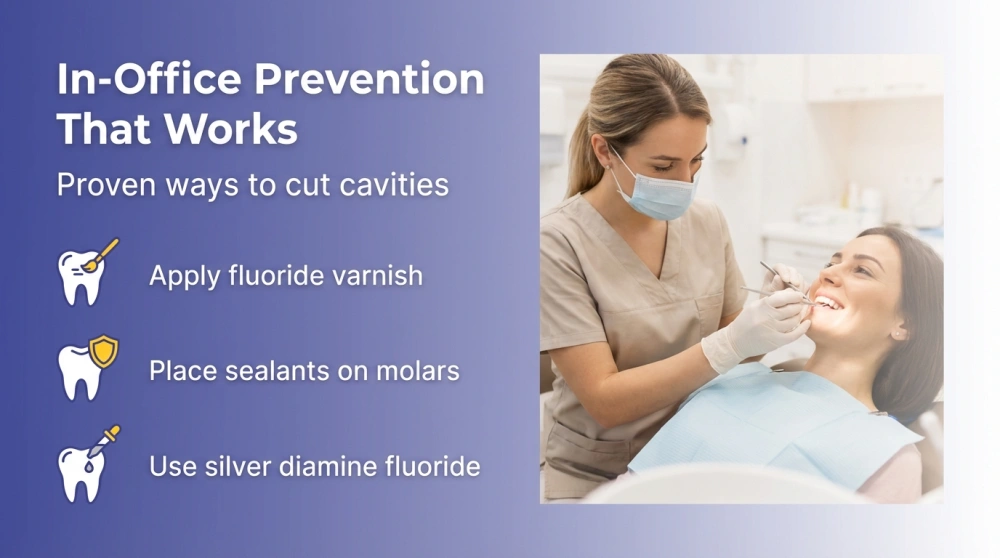
Fluoride varnish strengthens enamel and reduces cavities in both baby and adult teeth, and it is well tolerated by many children with ASD because it applies quickly and sets right away [9]. Sealants protect the grooves of permanent molars where a toothbrush may not reach easily, which is valuable for children who find brushing challenging [8]. For specific lesions, silver diamine fluoride can slow or arrest decay without a drill, which can be a helpful interim approach for children who need more time to build tolerance for traditional procedures [13].
How are same day pediatric dental emergencies handled for children with ASD?
Accidents and toothaches can happen despite our best efforts. A responsive team prepares for urgent visits by offering flexible scheduling, quiet rooms for triage, and clear instructions by phone so families know what to do before arriving. For dental trauma, like a chipped or knocked out tooth, early evaluation supports the best chance for comfort and function. The AAPD provides guidance for managing trauma to baby and adult teeth, which helps teams prioritize pain control, infection prevention, and appropriate follow up care [11].
For families in Orange County, it is reassuring to know same day pediatric dental emergencies are available locally through a Laguna Niguel pediatric dentist who understands sensory needs and communication preferences. When possible, the team will apply the same stepwise, visual, and comfort strategies used during routine visits.
What should families know about insurance, consent, and patient rights in California?
Families have a right to effective communication and reasonable modifications for disability in healthcare settings. Clinics are expected to provide aids and services such as plain language explanations, picture boards, or extra time for instruction when needed. Parents are encouraged to share what helps their child communicate and to ask for these supports during scheduling and check in [7].
When treatment is recommended, the team will explain the diagnosis, options, and expected steps, then obtain informed consent from a parent or guardian. For sedation or specialized procedures, additional written consent and safety checklists are used to support clarity and safety under state and professional standards [5] [6].
How do you prepare a visit plan and an emergency plan for your child?
A simple plan keeps everyone coordinated. Write down your child’s successful strategies for calming, preferred reinforcement, and communication. Share this with the clinic before the appointment and bring a copy with you.
- Before the visit confirm the time of day that works best, request a quiet room or direct rooming, and send your child’s visual schedule to the team.
- During the visit use the same phrases and steps you practiced at home, and pause for short breaks to prevent overload.
- After the visit debrief with your child using visuals to celebrate what went well and update the plan for next time.
- For emergencies keep the office number on your phone, store recent x rays or records if available, and have a small go bag with comfort tools ready.
Why choose a local autism friendly pediatric dentist in Laguna Niguel, CA?
Local care matters because consistent, short visits are often more successful than occasional long ones. Working with a nearby team in Laguna Niguel, CA allows families to schedule brief desensitization visits, pop in for quick fluoride applications, and handle issues early before they become urgent. Local access also makes it easier to coordinate with school and therapy teams when helpful, and to plan future care that fits your child’s growth and changing needs [8].
Parents searching for a pediatric dentist for autism often find that a practice with training in ASD dental care, flexible appointment structures, and a calm environment can make a meaningful difference. When a child knows where they are going and who they will see, the day feels more predictable and more successful.
What questions should you ask your pediatric dentist about ASD dental care?
- How will you adjust the environment to reduce lights, sounds, and waiting time for my child [4]?
- Which behavior guidance strategies will you use, and how can we align them with our home plan [4]?
- Do you offer desensitization visits to build comfort before treatment begins?
- What sedation options are available, and what permits and monitoring protocols do you maintain [5] [6]?
- How do you approach preventive care such as fluoride varnish, sealants, and caries risk assessments [8] [9]?
- How are urgent needs handled if my child has a same day emergency [11]?
What real world scenarios show how supportive care can look?
Consider a child who loves schedules but dislikes unexpected touch. The care team shares a photo based social story in advance and offers a quiet check in directly to a private room. The dentist introduces a counting game and lets the child feel the mirror on a finger before looking in the mouth. After three short steps with breaks, the child earns a token and trades it for a small prize. This first visit builds trust and sets up a successful cleaning at the next appointment.
Another example involves a child with strong sound sensitivities who needs a small filling. A short preparation visit introduces nitrous oxide and a weighted lap option while the dentist models breathing through the nose with a scented mask the child chooses. On the treatment day, the team follows the exact same sequence. The filling is placed comfortably, and the child returns for a celebratory polish visit a few weeks later. These experiences help kids and parents see that progress is possible with the right support [4].
How can Kidz Modern Dentistry support your family in Laguna Niguel, CA?
At Kidz Modern Dentistry, our team cares for children of all abilities with compassion and skill. We serve families across Laguna Niguel and nearby Orange County communities with same day emergencies, kid friendly sedation, and comprehensive preventive and restorative services. Our approach helps families understand next steps at every stage while we tailor visits to match each child’s comfort, communication, and sensory preferences.
- Our service model pairs short, predictable appointments with clear visuals and structured choices so kids know what will happen and when. We collaborate with caregivers to align home and clinic strategies for brushing, reinforcement, and coping [4].
- Sensory aware spaces include quiet rooms, dimmable lights, sunglasses, noise reducing headphones, and flexible check in that moves children directly to their room whenever possible.
- Desensitization visits help children practice taking small steps toward cleanings, X rays, sealants, or fillings, with praise after each success to build confidence over time.
- Sedation options such as nitrous oxide and select oral techniques are available when appropriate, supported by permits, monitoring, and emergency readiness in accordance with professional standards and California regulations [5] [6].
- Preventive focus features risk based recall schedules, fluoride varnish, sealants, nutritional guidance, and motivational coaching to keep everyday habits realistic and achievable [8] [9].
- Emergency responsiveness means we prioritize urgent pediatric needs quickly and calmly, applying the same sensory friendly methods to help children feel safe during unexpected visits [11].
- Personalized access gives families direct communication with our pediatric team for scheduling, preparation tips, and after visit support. We encourage parents to call us at +1 949 273 0110 with questions or to plan a first visit.
Families who value a child centered approach often look for autism friendly care that adapts to preferences, honors autonomy, and builds skills step by step. Our clinicians use structured behavior guidance supported by AAPD recommendations, and we adjust each plan as your child grows. This is the kind of patient centered care many parents expect when they search for Special needs dentistry.
We welcome children who need gradual introductions to care, including those who benefit from visual schedules, quiet rooms, or timing adjustments. If you prefer a trial run before a full exam, we can plan a simple hello visit, then a brief counting visit, and later a cleaning. For families nearby, this kind of flexible planning is easier to maintain over time. Families interested in a local option for services will find that Special needs dentistry in Laguna Niguel supports continuity of care and reduced travel stress.
Our team members continually train in communication and behavior guidance for children with ASD, weaving principles from pediatric dentistry standards into everyday workflows. We believe that steady routines, caregiver partnership, and compassionate pacing help children succeed. If you are exploring ASD dental care, or looking for an autism friendly pediatric dentist in Orange County, we are here to partner with you.
References
- Data and Statistics on Autism Spectrum Disorder – CDC
- Oral health status of children with autism spectrum disorder: A systematic review and meta analysis – PubMed
- Signs and Symptoms of Autism Spectrum Disorder – CDC
- Behavior Guidance for the Pediatric Dental Patient – AAPD
- Monitoring and Management of Pediatric Patients Before, During, and After Sedation – AAPD
- Anesthesia and Sedation Permits – Dental Board of California
- Effective Communication in Healthcare Settings – ADA.gov
- Periodicity of Examination and Preventive Dental Services – AAPD
- Fluoride Varnish: What Parents Need to Know – NIDCR
- Children’s Oral Health Fast Facts – CDC
- Guidelines on Traumatic Dental Injuries – AAPD
- Autism Spectrum Disorder Overview – NIMH
- Silver Diamine Fluoride: Information for Parents and Caregivers – NIDCR
- Prevention of Dental Caries in Children Younger Than Age 5 Years – USPSTF
Common Questions About This Topic
Find answers to frequently asked questions related to this article.
