
- How will technology keep improving pediatric dentistry in 2026 across South Orange County?
- What trends in AI in pediatric dentistry matter for your family in 2026?
- How are lasers helping children feel more comfortable during dental care?
- What does 3D printing change for dental appliances and restorations for kids?
- How will teledentistry for kids support access, triage, and continuity of care?
- Why do digital imaging and intraoral scanners for children make diagnosis and visits smoother?
- Which safety, privacy, and California regulations should parents know about?
- How do modern tools support preventive dental care for children?
- How can you prepare your child for a tech forward dental visit in Laguna Niguel?
- What should you ask a pediatric dentist about new dental technologies?
- Who is Kidz Modern Dentistry and how do we bring these technologies to families in South Orange County?
- Where can you learn more from authoritative sources?
How will technology keep improving pediatric dentistry in 2026 across South Orange County?
Technology is reshaping how children experience dental care, and 2026 will bring even more helpful tools to practices that serve families in Laguna Niguel, Laguna Hills, Aliso Viejo, Mission Viejo, Laguna Beach, and San Juan Capistrano. Parents want visits that are quicker, gentler, and more personalized. The good news is that new systems can help us see early signs of problems, explain options clearly, and complete treatment with greater precision and comfort. From artificial intelligence supported diagnostics to child friendly lasers, teledentistry, and in office 3D printing, these advancements work together to support prevention, ease dental anxiety, and reduce time in the chair.
Children’s oral health needs are unique. Baby teeth and growing jaws change fast, and small problems can become bigger if not managed early. Recent national data show that many children still experience cavities, with some age groups seeing more than half affected by decay at some point, which means parents benefit from tools that catch issues early and make prevention easier to follow at home [1] [2]. Our focus in 2026 is to help you feel informed and confident about how these technologies work and how they may make care more comfortable for your child.
In this guide, we will explain what these tools are, how they help kids, and the questions you can ask at your next visit. We will also summarize the safety standards and California regulations that guide responsible use of these innovations, so families in South Orange County know what to expect and how to make the most of each appointment [3] [4] [5] [6] [7].
What trends in AI in pediatric dentistry matter for your family in 2026?
Artificial intelligence is becoming a reliable assistant in pediatric dentistry. AI tools learn from large sets of clinical images and records to help clinicians identify patterns, such as early changes in enamel or developing bite issues. While your pediatric dentist makes the final decisions, AI can add a helpful second set of eyes, reduce missed findings, and document changes overtime with consistent measurements [9].
How can AI supported diagnostics help find problems earlier?
AI assisted image review can highlight areas for the dentist to evaluate more closely. This may mean noticing tiny areas of demineralization between teeth before a cavity forms or keeping careful track of how a child’s teeth are erupting. Early insights help start small, child friendly steps like targeted fluoride, nutrition counseling, or sealants that lower the risk of future treatment [1] [12].
Can AI make appointments faster and explanations clearer?
AI can organize data from past visits into easy to read visuals that help you and your child understand what is happening and why a recommendation is being made. Having pictures, growth charts, and color coded risk summaries reduces confusion and helps everyone agree on a plan. Research points to broad potential for AI to support detection, planning, and education by assisting, not replacing, clinical judgment [9].
How is privacy protected when AI is used?
Dental teams follow federal privacy rules that govern how health information is stored and shared. Practices that use AI tools in 2026 continue to follow the HIPAA Privacy Rule and related security standards to protect your family’s information, whether data are processed in office or with a trusted vendor [3].
How are lasers helping children feel more comfortable during dental care?
Lasers used in pediatric care can target soft tissues and, in select cases, assist with removal of decay or surface conditioning. For many children this may mean less vibration, less noise, and in some cases a reduced need for local anesthesia compared with traditional tools. The clinical team evaluates when a laser is appropriate and safe for a child’s specific needs, and parents receive clear guidance about benefits and limits before treatment begins.
When might lasers be considered for a child?
Lasers may be considered for soft tissue procedures such as small frenulum releases and gentle contouring, and in certain restorative steps when clinically suitable. The decision depends on a child’s age, medical history, cooperation level, and the tooth involved. The goal is to improve comfort while achieving the same or better clinical result as conventional methods. Parents can ask the dentist to explain how the laser will be used, what a child will see and feel, and what alternatives exist.
What safety steps are taken with lasers for kids?
Safety includes protective eyewear for everyone in the room, careful selection of settings, and attention to soft and hard tissue biology in growing patients. Teams follow training and equipment maintenance schedules and explain the after care plan to minimize irritation and support healing. Your child’s comfort and safety guide every decision.
What does 3D printing change for dental appliances and restorations for kids?
3D printing allows dental teams to create custom devices with high precision. For children, this can include study models, space maintainers, guides for minor procedures, and night mouthguards. A big advantage is the ability to design and produce items in office or through a trusted lab, which can shorten wait times and improve fit. In 2026, many practices combine digital scans with chairside design software so that kids spend less time with impression material and return visits are easier to plan.
How does 3D printing influence fit and comfort for young patients?
Children often have lower tolerance for lengthy procedures. With digital design and printing, the process can be planned around your child’s attention span and comfort. When a device is needed, the team can make small adjustments digitally and reprint rather than repeating multiple physical impressions. This is especially helpful for children with sensory sensitivities or strong gag reflexes.
How are materials and safety addressed with printed devices?
Dental teams choose materials approved for intraoral use and follow sterilization or disinfection guidelines for items that will contact the mouth. United States regulators have published technical considerations for devices made with additive manufacturing, which helps guide how materials are handled and how devices are evaluated for safety and performance before clinical use [8].
How will teledentistry for kids support access, triage, and continuity of care?
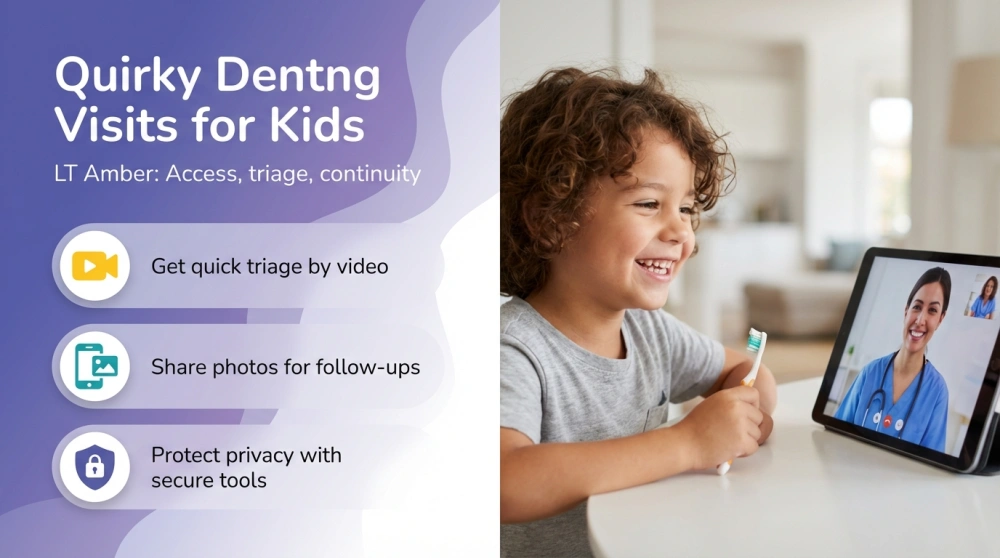
Teledentistry helps families consult with a pediatric dentist from home using secure video or asynchronous photo sharing. While it does not replace hands on exams, it is useful for triage, follow ups, oral hygiene coaching, and monitoring orthodontic guidance between visits. In South Orange County, parents appreciate the ability to get timely advice when a child wakes with a sore gum, loses a filling, or needs help with postoperative care instructions.
What can you expect during a teledentistry visit for a child?
Before the session, a parent typically completes consent and a short questionnaire. During the visit, the dentist reviews symptoms, screens visible areas using a phone camera when possible, and decides whether an in person appointment is needed. Documentation uses standard dental coding that differentiates real time video from store and forward consultations, which supports accurate records and care coordination [7].
What laws and privacy rules guide teledentistry in California?
California law defines telehealth, sets consent expectations, and explains how providers can deliver services across distance while maintaining standard of care. Dental practices also follow federal privacy rules that protect your child’s information during remote visits [4] [3].
Why do digital imaging and intraoral scanners for children make diagnosis and visits smoother?
Digital imaging and intraoral scanning improve the clarity and speed of information. Digital radiography can produce images quickly with dose control features that support careful use in children, and modern sensors are designed to fit small mouths more comfortably. Intraoral scanners capture a 3D model of the teeth and bite without impression trays, which many kids find more comfortable. These tools help plan sealants, evaluate growth, and monitor early areas at risk for cavities without repeatedly placing impression material.
How do teams reduce radiation exposure for kids during imaging?
Dental teams use selection criteria to decide when images are appropriate and choose the type of image that provides necessary information with a low dose. Thyroid collars and child sized settings are used, and image frequency is based on individual risk, not a one size schedule. National and state resources provide guidance for pediatric dose management and safe operation of dental imaging equipment [6] [10] [11].
How do digital scans reduce chair time and retakes for children?
Intraoral scanners reduce the need for remakes due to gagging or imperfect tray impressions. This can shorten total appointment time and make visits more predictable for families balancing school and activities. When combined with 3D printing, a digital scan can be used right away to plan a simple appliance or mouthguard, often reducing the number of appointments needed to complete care.
Which safety, privacy, and California regulations should parents know about?
Parents deserve clear information about how devices and software are used in pediatric settings. In California, several rules and guidance documents support safe, high quality care with modern tools.
- What guides safe operation of dental imaging equipment for children? The California Department of Public Health’s Radiologic Health Branch oversees registration and safe operation of X ray systems, including requirements for quality assurance and staff training in dental offices [6].
- How is privacy protected for digital records and teledentistry? The HIPAA Privacy Rule sets standards for how health information is used and disclosed. Practices select secure platforms, have business associate agreements with vendors, and train staff on data safeguards to protect your family’s information [3].
- What state law applies to telehealth services in dentistry? California’s telehealth statute outlines consent and care delivery requirements that support teledentistry in ways consistent with the standard of care. Parents receive clear information before remote services are provided [4].
- How are pediatric sedation and anesthesia regulated? The Dental Board of California issues anesthesia and sedation permits, defines equipment and monitoring standards, and requires training that reflects the needs of young patients. These safeguards apply whether sedation is minimal, moderate, or deeper, and they support safe care planning for children who benefit from these services [5].
- What about materials and devices made with 3D printing? Federal guidance provides technical considerations for additively manufactured devices that inform material handling, quality control, and device evaluation prior to clinical use [8].
How do modern tools support preventive dental care for children?
Prevention is central to happy, healthy smiles. Technology in 2026 focuses on finding small changes early and giving families practical steps to reduce risk. Digital imaging protocols and caries risk assessments help target sealants and fluoride where they make the most difference. When a child’s scan shows deep grooves, a sealant can be placed before bacteria cause decay. This approach supports daily home care and lowers the chances of needing restorative treatment later [12] [1].
Many families are especially interested in comfort. Intraoral scanners help confirm which teeth are ready for sealants without trays, and visual risk dashboards from AI supported software help parents explain goals to children in simple terms. By connecting the dots between home care, diet, and professional care, a team can personalize reminders and track progress in ways that help kids feel proud of their efforts.
Pediatric preventive dental care is a practical place to see the benefits of these tools working together. When prevention is centered in the treatment plan, families experience clear expectations, fewer surprises, and a strong sense of partnership with the care team.
Families seeking Pediatric preventive dental care in Laguna Niguel can expect a focus on tailored education, comfortable imaging choices, and collaborative planning that fits school and family routines in our South Orange County communities.
How can you prepare your child for a tech forward dental visit in Laguna Niguel?
Kids do best when they know what to expect. Here are simple steps to make modern visits smoother and less stressful for your child.
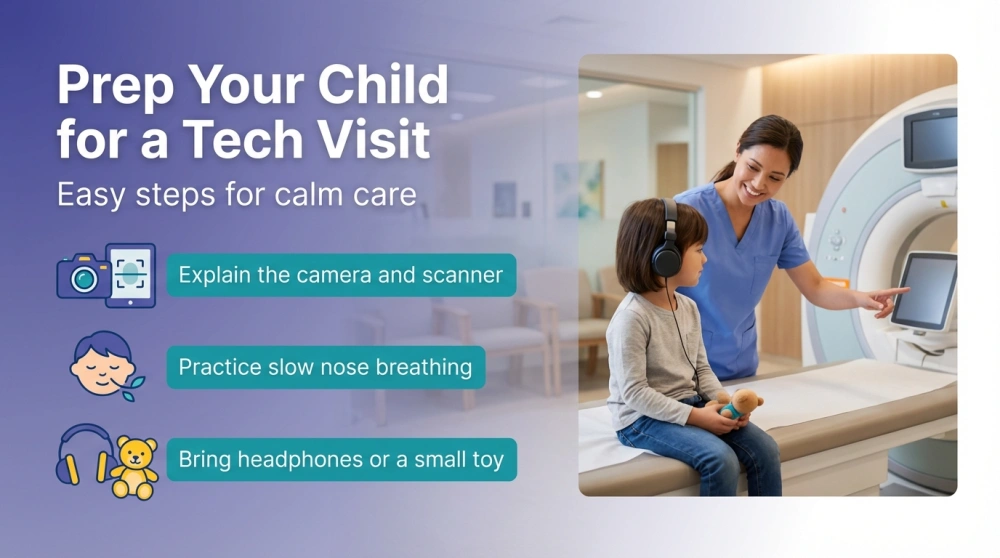
- Talk about what the camera sees Explain that the dentist may use a small camera to take pictures or a gentle scanner that shows a map of their teeth on the screen. Kids love seeing their own smile appear in 3D.
- Practice calm breathing A few slow breaths through the nose can make scans and photos easier. Practice together at home to build confidence.
- Bring comfort items Headphones, a favorite small toy, or a playlist can help children focus on something positive during imaging or simple procedures.
- Schedule wisely Choose a time when your child is well rested and not hungry. Many families prefer morning visits for younger children.
- Share medical updates Tell the team about new medications, recent illnesses, or changes in your child’s health so imaging and care plans can be adjusted as needed.
- Use the portal If your practice offers a secure portal or teledentistry check in, complete forms at home to reduce time in the office.
What should you ask a pediatric dentist about new dental technologies?
Parents are wise to ask questions and make decisions together with the care team. Consider these conversation starters at your next visit.
- How will this tool help my child today Ask how a scanner, laser, or AI assisted review changes the plan or makes care more comfortable or efficient for your child’s situation.
- What are the alternatives If your child is anxious about a device, ask for options and whether waiting or using a different tool is reasonable.
- What safety steps are in place Learn about dose control for imaging, protective eyewear for lasers, and how staff stay trained on new technology.
- How is our data protected Ask how your child’s information is stored and whether teledentistry tools meet privacy standards.
- How will we monitor progress See how digital photos, scans, or AI dashboards will track changes over time so you can celebrate improvements together.
Who is Kidz Modern Dentistry and how do we bring these technologies to families in South Orange County?
Kidz Modern Dentistry serves children and teens across Laguna Niguel, Laguna Hills, Aliso Viejo, Mission Viejo, Laguna Beach, and San Juan Capistrano with a friendly, education first approach. Our team focuses on prevention, comfort, and clear communication so parents feel supported at each step. We offer same day attention for urgent needs when appropriate, gentle options for children who are anxious, and technology that helps us explain findings in everyday language.
How do our services relate to the technologies discussed?
- Comfort centered diagnostics We use child sized digital imaging settings and intraoral cameras to show you exactly what we see, which helps children understand and reduces surprise.
- Efficient digital workflows Digital impressions and in office design tools allow us to create accurate models and simple devices with fewer visits and less time in the chair.
- Accessible guidance Secure teledentistry lets us answer questions, review healing, or offer coaching between appointments when it fits your family’s schedule.
- Thoughtful prevention Our team uses risk based plans that integrate nutrition tips, sealants, and home care coaching tailored to your child’s needs.
Where do we operate and how do we personalize care?
We proudly care for families in South Orange County from our home base in Laguna Niguel. Nearby communities including Aliso Viejo, Laguna Hills, Mission Viejo, Laguna Beach, and San Juan Capistrano are a short drive away. Our visits are paced to your child’s attention span, and we invite you to be part of the conversation so choices feel comfortable and clear.
What is our approach, leadership, and experience?
- Child first philosophy We believe children do best when they feel safe and heard. From the front desk to the operatory, our team uses age appropriate language and positive reinforcement.
- Training and quality Our clinicians pursue ongoing education on pediatric imaging, caries prevention, behavior guidance, and the safe integration of new tools consistent with California regulations and national guidance [5] [6] [7].
- Collaborative planning We explain options and invite your questions so we can decide together on the right next step for your child.
How have families benefited from our methods?
- Fewer surprises Digital visuals help kids and parents see progress, which encourages steady home care and makes appointments feel easier over time.
- Time saved Digital scans and thoughtful scheduling reduce retakes and help busy families complete care in fewer visits.
- Clear next steps Whether your child needs sealants, hygiene coaching, or follow up after an urgent visit, you leave with a plan that fits your routine.
How can you connect with our team for supportive guidance?
If you have questions about new dental technologies for children, our team is ready to help you navigate options that match your goals. You can reach Kidz Modern Dentistry at +1 949 273 0110 to schedule or learn more about services for your child in South Orange County.
Where can you learn more from authoritative sources?
- Oral Health Fast Facts – CDC
- Tooth Decay in Children – National Institute of Dental and Craniofacial Research
- HIPAA Privacy Rule Summary – U.S. Department of Health and Human Services
- Section 2290.5 Telehealth – California Business and Professions Code
- Anesthesia and Sedation Permits – Dental Board of California
- Dental X Ray Program – California Department of Public Health
- Teledentistry Codes D9995 and D9996 – American Dental Association
- Technical Considerations for Additive Manufactured Medical Devices – U.S. Food and Drug Administration
- Artificial Intelligence in Dentistry Current Applications and Future Perspectives – Journal of Dental Research
- Dental Imaging Resources – Image Gently Alliance
- Dental X rays – MedlinePlus
- Pit and Fissure Sealants for Preventing Dental Decay in Permanent Teeth – Cochrane Library
Common Questions About This Topic
Find answers to frequently asked questions related to this article.
