
- What are tongue ties and lip ties?
- How can oral ties affect breastfeeding and bottle feeding?
- What signs might suggest a latch or lactation issue related to oral ties?
- How do pediatric dentists and IBCLCs evaluate feeding and function?
- When is treatment considered and what options are available?
- What is the difference between frenotomy and frenectomy?
- Is laser frenectomy better than scissors?
- How is pain managed during infant procedures?
- What should families expect after a release and how is healing supported?
- Are post release exercises recommended and which focus on function?
- How might tongue tie relate to speech development later on?
- What about airway and sleep concerns sometimes attributed to oral ties?
- What regulations and professional standards apply in California?
- How can families in Laguna Niguel find coordinated support?
- When should you seek urgent help for feeding difficulties?
- How does our pediatric dental clinic support your family in Orange County?
- Where can you find the references for this article?
What are tongue ties and lip ties?
Tongue ties and lip ties describe tight or restrictive bands of tissue called frena that limit natural movement of the tongue or upper lip. The medical term for a tongue tie is ankyloglossia. An upper lip tie refers to a tight maxillary frenum that can restrict how the upper lip lifts. These tissues vary widely from baby to baby. Some are thin and flexible. Others are thicker or attach closer to the tongue tip or gumline. What matters most is not the look alone but how the tissue affects function during feeding and oral development [2] [4] [5].
Prevalence estimates of ankyloglossia vary because definitions and assessment tools differ across studies. Professional bodies note that it likely occurs in a minority of newborns and that many infants with a visible frenum feed well without any procedure [2] [4]. Because of this natural variation, experienced providers focus on the baby and parent experience, a careful functional exam, and a full feeding assessment before recommending any intervention [1] [2].
How can oral ties affect breastfeeding and bottle feeding?
Effective breastfeeding requires a deep, comfortable latch, rhythmic suction, and coordinated swallowing and breathing. A restrictive tongue tie can reduce tongue elevation and extension, which may affect how the nipple and areola are drawn into the mouth. Possible consequences can include maternal nipple pain, prolonged feeds, milk transfer challenges, and frustration for both baby and parent. Upper lip restriction can make it harder for the lip to flange outward, which may also impact latch. These patterns can occur with or without oral ties and are best evaluated with direct observation during a feeding [2] [3].
Short term reductions in maternal nipple pain have been documented after release in select infants, though the degree of improvement in milk transfer can vary. High quality reviews encourage individualized decision making and continued lactation support regardless of whether a procedure is done [3] [1] [2]. Since most families in the United States begin breastfeeding, and challenges are common in the first weeks, timely access to skilled support is especially important [6] [13].
What signs might suggest a latch or lactation issue related to oral ties?

Every feeding journey is unique, and the following signs do not diagnose oral ties on their own. They can, however, prompt a careful assessment by an International Board Certified Lactation Consultant and a pediatric trained dental or medical professional [2] [1]:
- Persistent nipple pain or trauma such as cracking, blanching, or bleeding despite skilled latch help [2].
- Shallow latch or slipping off the breast with difficulty maintaining seal or position [2].
- Clicking sounds during feeding that may signal loss of suction or seal [2].
- Prolonged or very frequent feeds without signs of effective milk transfer [2].
- Gassiness, coughing, or choking during feeds that persist after positional adjustments [2].
- Slow weight gain or poor output when reviewed by your pediatrician and lactation team [2].
- Maternal concerns about supply along with latch difficulties that do not respond to support [13].
Babies can also experience bottle feeding challenges. Signs include leaking milk from the corners of the mouth, prolonged bottle feeds, or preference for specific nipples due to flow or shape. These issues deserve the same thoughtful evaluation and support [2].
How do pediatric dentists and IBCLCs evaluate feeding and function?
Pediatric dentists who work with newborns collaborate closely with IBCLC lactation consultants, pediatricians, and therapists. A quality evaluation begins by listening to your story. We ask about your goals, what has helped so far, and what still feels hard. We observe a feeding when possible, then gently examine the tongue, lips, palate, and jaw for movement, coordination, and comfort. We look at oral reflexes, tongue elevation and lateral movement, cupping, and the ability to extend past the lower gumline. We consider both anatomy and function. Appearance alone is not enough to make a diagnosis or justify a procedure [2] [5].
Team based care is the foundation. IBCLCs are clinicians credentialed through a rigorous international board process to assess latch, positioning, milk transfer, and parent comfort. They guide non procedural strategies that may resolve or significantly improve feeding difficulties. When restrictions are present and conservative care has not met goals, a pediatric trained provider can review procedural options in the context of your feeding plan [9] [2] [1].
When is treatment considered and what options are available?
Treatment decisions are individualized and reflect the severity of functional limitation, family goals, and response to supportive care. Professional guidelines recommend conservative measures first. These include lactation guidance, positional adjustments, nipple shields when indicated, evaluation of milk supply, and paced bottle techniques if supplementing. Close follow up is important. If meaningful challenges persist and a restrictive frenum is contributing, a release procedure may be considered after a shared decision making discussion about potential benefits and risks [1] [2] [3] [5].
Frenectomy is a common term families encounter when researching release procedures. It refers broadly to removing or releasing the restricting tissue to improve motion. Any procedure should be paired with post procedure feeding support to help your baby relearn or reinforce new movement patterns and to support your comfort [2] [3].
What is the difference between frenotomy and frenectomy?
These words are often used interchangeably in everyday conversation. In clinical terms, a frenotomy generally describes a simple snip or incision to release restrictive fibers. A frenectomy can describe a more extensive removal or reshaping of the tissue. For infants, the aim is to free motion enough to support a deep, comfortable latch. Evidence suggests that for select dyads, release can reduce maternal nipple pain in the short term, while improvements in milk transfer can vary and depend on ongoing support and technique. Decisions are best made with your clinical team based on function, not appearance alone [3] [1] [2].
Is laser frenectomy better than scissors?
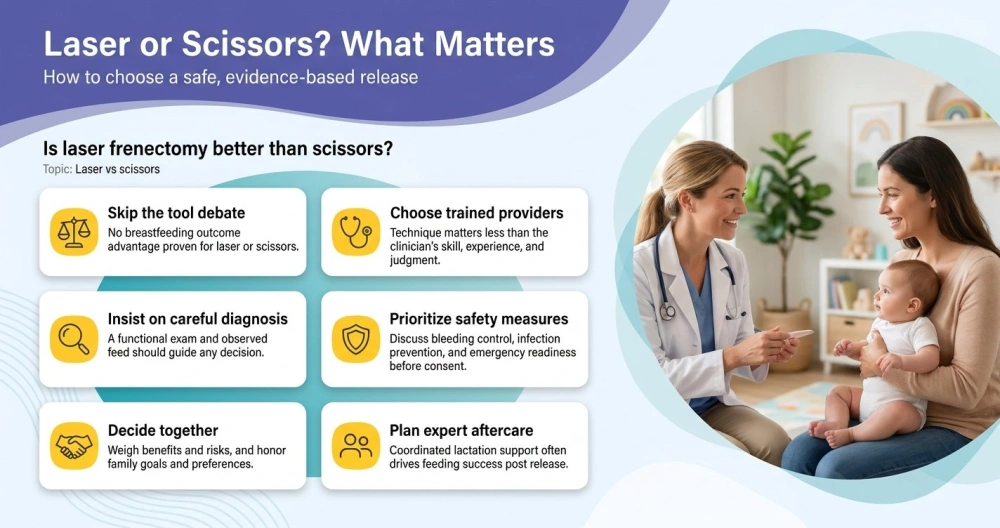
Families often ask whether a laser is better than scissors. Current guidance from pediatric and specialty bodies indicates there is no clear evidence that one method is superior in outcomes for breastfeeding. The choice of technique should reflect provider training, careful diagnosis, safety considerations, and family preferences after a balanced review of benefits and risks. Discussions about method should never overshadow the importance of skilled aftercare and coordinated lactation support, which strongly influence feeding success after any release [1] [5] [4].
How is pain managed during infant procedures?
Comfort is a priority. For many newborns, comfort strategies include swaddling, non nutritive sucking, human milk or sucrose solutions when appropriate, skin to skin contact, and immediate feeding after the procedure. A pediatric trained provider will discuss what is suitable for your baby and coordinate with your pediatrician if additional considerations exist. Topical and local anesthetic choices for very young infants require careful judgment. Parents should receive clear instructions about soothing and feeding after the visit. Evidence supports the use of sucrose for minor procedural pain in newborns as part of a broader comfort plan under clinical guidance [8] [1].
What should families expect after a release and how is healing supported?
After a release, many babies want to feed right away. Your team will support latch positioning and comfort measures in the office when possible. Mild fussiness can occur in the first day or two as your baby adapts to new movement. Gentle lymphatic massage of cheeks and supportive body positioning may be recommended by your lactation or therapy team. Signs of good progress include more comfortable feeds, deeper latch, and improved milk transfer as assessed by your IBCLC and pediatrician. Some infants benefit from short term bottle use or pumping while latch skills improve. Consistent follow up ensures small hurdles do not become bigger stressors [2] [1].
Because healing is an active process, you may notice a soft white or yellow area where tissue is remodeling. This is typically normal granulation tissue. Your provider will explain what to watch for and when to call. Red flag symptoms like fever, refusal to feed, or bleeding that does not stop with gentle pressure need prompt evaluation. Keep your follow up visits, as timely adjustments in positioning and technique often make the biggest difference in outcomes [2].
Are post release exercises recommended and which focus on function?
Opinions on stretches and exercises vary, and guidance has evolved. Current pediatric guidance advises against wound stretching or reopening as a routine practice because evidence is limited and discomfort can be significant. Families should not feel pressured to perform painful wound maneuvers. Instead, focus on functional support such as refined latch positioning, cue based feeding, and gentle oral play guided by your IBCLC and, when indicated, a pediatric experienced speech language pathologist or occupational therapist. The emphasis is on helping your baby use improved mobility during real feeds rather than on wound manipulation [1] [2] [4].
Functional ideas may include cheek support for better seal, paced bottle strategies if supplementing, and playful tongue elevation practice during awake time as guided by your clinical team. Clear follow up plans help keep progress on track and responsive to your baby’s needs [2].
How might tongue tie relate to speech development later on?
Parents often worry about speech. Current consensus indicates that ankyloglossia is not a common cause of speech delay. Some children with a very restricted tongue may have difficulty with specific sounds that require tongue tip elevation or protrusion. If concerns arise after infancy, a targeted evaluation with a pediatric speech language pathologist can determine whether difficulties are related to tongue mobility, motor planning, hearing, or other factors. Decisions about later intervention should be based on a functional speech assessment, not the appearance of the frenum alone [4] [5] [1].
What about airway and sleep concerns sometimes attributed to oral ties?
Claims linking tongue or lip ties directly to airway obstruction or sleep apnea in infants and children remain unproven. Current specialty consensus notes insufficient evidence to assert that oral ties cause sleep disordered breathing or that release treats such conditions. If your child has snoring, labored breathing during sleep, or concerns about apnea, a comprehensive evaluation with your pediatrician and appropriate specialists is recommended. Keeping the focus on evidence based care protects families from unnecessary procedures and ensures attention to conditions with established therapies [4] [1].
What regulations and professional standards apply in California?
In California, licensed dentists may perform soft tissue procedures within the dental scope of practice. Providers must meet state requirements for infection control, maintain appropriate permits for any level of sedation offered, and follow standards of care that include informed consent and documentation. Families can ask about a practice’s training with infant procedures, emergency readiness, and how the team coordinates with pediatricians and lactation professionals. California regulations detail infection control expectations and outline permit processes for anesthesia and sedation [10] [11].
Professional bodies such as the American Academy of Pediatric Dentistry offer policies to guide clinicians in evaluating frenula and making treatment decisions centered on function and family goals. These resources support consistent, safety focused care aligned with current evidence and interprofessional collaboration [5].
How can families in Laguna Niguel find coordinated support?
Feeding challenges can feel overwhelming, especially in the early weeks. In Laguna Niguel and across Orange County, your circle of support often includes an IBCLC for latch and positioning, your pediatrician for growth and well being, and a pediatric dentist for oral function concerns. Many families also benefit from community resources that offer coaching and peer connection. When considering procedures, ask whether the practice partners with IBCLCs, how follow up is structured, and who you can call with questions. A coordinated plan helps prevent mixed messages and keeps you at the center of decisions [9] [13].
If you decide to explore a procedure, it can help to understand what a visit includes, how feeding will be supported right after, and what check ins look like in the first two weeks. Our goal is for you to leave with a clear, personalized roadmap and direct access to your care team between visits. When needed, referrals to therapy partners are arranged to reinforce oral skills and parent comfort.
When should you seek urgent help for feeding difficulties?
Call your pediatrician or seek urgent care if your baby shows signs of dehydration, such as very few wet diapers, a dry mouth, lethargy, or a sunken soft spot. Other red flags include fever, persistent vomiting, or refusal to feed. Parents should also reach out quickly if nipple trauma is worsening, mastitis symptoms develop, or you feel your mental health is suffering due to feeding stress. Prompt attention can stabilize feeding while you and your team decide on next steps that fit your goals [12] [13].
How does our pediatric dental clinic support your family in Orange County?
At Kidz Modern Dentistry in Laguna Niguel, we care for infants and families navigating latch problems, lactation struggles, and questions about oral ties. We start by listening. Your goals set the agenda, whether exclusive breastfeeding, combination feeding, or bottle feeding with comfort and ease. We routinely coordinate with IBCLC lactation consultants and pediatricians so you get consistent advice and a single plan that evolves with your baby’s progress. When oral restrictions contribute to feeding challenges, we discuss procedural and non procedural paths, review benefits and risks in plain language, and explain exactly what the first two weeks after a visit will look like for your family.
Our methodology emphasizes a function first exam, observed feeds when possible, and careful documentation of movement patterns. We use photography and standardized notes to track progress and to communicate clearly with your lactation and medical team. When a release is part of the plan, we pair the procedure with immediate latch support and scheduled follow ups. We value practical education that reflects real life, from how to hold your baby comfortably to what bottle or nipple shapes may support your goals if you are supplementing. We also provide same day emergency availability for urgent infant or child concerns and offer kid friendly sedation options for older pediatric patients when clinically appropriate.
Families often ask about Frenectomy and how it fits into a broader plan. In our practice, any procedure is considered only after a thoughtful evaluation and a collaborative discussion with your IBCLC and pediatrician as needed. We explain tools, comfort strategies, aftercare, and expected timelines in detail so you feel prepared. Our focus is on feeding function and family well being, not on the appearance of a frenum. We will always recommend the least invasive approach that can reasonably meet your goals.
We are proud to support parents across Orange County, including Aliso Viejo, Mission Viejo, and surrounding communities. For families specifically searching for Frenectomy in Laguna Niguel, we welcome you to call us to discuss your situation and learn how a comprehensive team approach might help. Many families tell us that the combination of in office feeding support, clear written plans, and easy access to our team between visits made the biggest difference.
Kidz Modern Dentistry provides comprehensive pediatric dental care for children of all ages. We believe in education, transparency, and gentle care. Our team is committed to innovation and continuous learning. We invest in modern equipment, maintain rigorous safety and infection control standards, and participate in professional education to keep our protocols current. We measure success by your confidence in feeding and your child’s comfort at home. If you are ready to talk through options or schedule an evaluation, call us at +1 949 273 0110. We serve Laguna Niguel and the wider Orange County community with respect for your goals and your family’s unique journey.
Where can you find the references for this article?
- American Academy of Pediatrics addresses rise in tongue tie diagnoses for breastfeeding concerns – American Academy of Pediatrics
- ABM Clinical Protocol 11 Guidelines for the assessment and management of ankyloglossia in breastfeeding dyads Revised 2021 – Academy of Breastfeeding Medicine
- Frenotomy for tongue tie in newborn infants – Cochrane Library
- Clinical Consensus Statement Ankyloglossia in Children – Otolaryngology Head and Neck Surgery
- Policy on Management of the Frenulum in Pediatric Patients – American Academy of Pediatric Dentistry
- Breastfeeding Data and Statistics National Immunization Survey – Centers for Disease Control and Prevention
- Ankyloglossia and Lingual Frenotomy: National Trends in Inpatient Diagnosis and Management in the United States, 1997-2012 – Otolaryngology-Head and Neck Surgery (Walsh et al., 2017)
- Managing pain and discomfort in newborns – Canadian Paediatric Society
- What is an IBCLC – International Board of Lactation Consultant Examiners
- Anesthesia and Sedation Permits – Dental Board of California
- California Code of Regulations Section 1005 Infection Control – Dental Board of California
- Dehydration Overview – MedlinePlus
- Breastfeeding Challenges – American College of Obstetricians and Gynecologists
Common Questions About This Topic
Find answers to frequently asked questions related to this article.
