- What age do toddlers start getting cavities?
- What is early childhood caries and how does it develop?
- When do baby teeth first erupt and why does timing matter?
- What signs of cavities should parents watch for in toddlers?
- What causes toddler cavities and which habits raise risk?
- How common is tooth decay in young children and why is it a concern?
- When should a child have the first dental visit?
- How can you prevent cavities in toddlers at home?
- How do fluoride varnish and supplements help protect toddler teeth?
- Are dental sealants used for toddlers and how do they work?
- What is the safest way to use sippy cups and bottles?
- How do diet and snacks affect tooth decay risk in toddlers?
- What happens during a toddler dental checkup?
- How are cavities in baby teeth treated for young children?
- How does Kidz Modern Dentistry support your family in Laguna Niguel?
- Where can you find the sources and further reading?
What age do toddlers start getting cavities?
Tooth decay can begin soon after the first tooth appears. Many babies cut their first tooth around six months of age, and a cavity can form any time after that when sugars meet cavity causing bacteria on the tooth surface. Early childhood caries is the term for decay in children younger than six years old and it can start in the toddler years if risk factors are present [1] [2].
Parents often ask for a simple age answer. The practical truth is that the risk starts at first tooth eruption, increases with frequent exposure to sugary liquids and foods, and grows further when brushing is inconsistent or fluoride exposure is low [2] [3]. This is why we focus on early habits and regular checkups in the first years of life.
What is early childhood caries and how does it develop?
Early childhood caries is a disease process where mouth bacteria use sugars from food and drinks to produce acids that pull minerals out of tooth enamel. At first you might notice chalky white areas near the gumline that look dull or matte. Without changes in routine or professional care, these spots can progress to brown lesions, holes, and pain. The disease is driven by frequent sugar exposure, accumulation of dental plaque, and time. The longer acids sit on teeth, the more likely a cavity will develop [1] [2].
Caregivers can be part of the solution. Cleaning your child’s teeth, choosing water and tooth friendly snacks, and keeping regular dental appointments all reduce the bacterial activity that leads to decay [2] [3].
When do baby teeth first erupt and why does timing matter?
Most children get their first tooth around six months and continue to erupt new primary teeth until about age two to three. This means toddlers have many new tooth surfaces that need daily care. Newly erupted enamel is not fully mature, so it is more susceptible to acid damage in the early period after eruption. When routines like brushing and fluoride use start early, those new teeth gain protection right away [12] [5].
Because risk begins with the first tooth, we encourage you to build simple rituals early. A soft infant brush with a smear of fluoride toothpaste and a quick nightly routine can make a long term difference [8].
What signs of cavities should parents watch for in toddlers?
Spotting problems early leads to gentler solutions. Watch for these signs and call a pediatric dentist if you notice any of them:
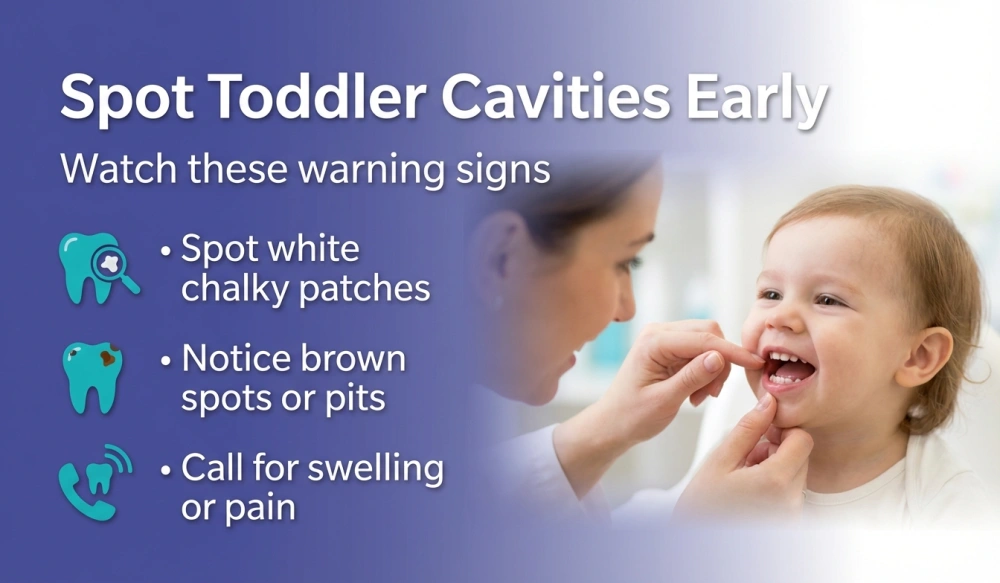
- White or chalky patches near the gums that do not wipe away can be early demineralization [2].
- Brown or dark spots on grooves or along the gumline can signal a cavity [2].
- Changes in eating such as avoiding certain foods or chewing on one side may reflect tooth sensitivity [2].
- Swelling, tenderness, or bleeding around a tooth or the gums needs prompt evaluation [2].
- Bad breath that does not improve with brushing can be a sign of active decay or gingivitis [2].
What causes toddler cavities and which habits raise risk?
Cavities form when bacteria feed on sugars and release acids that weaken enamel. For toddlers, several everyday habits can raise risk:
- Frequent sipping on sugary drinks such as juice, flavored milk, or sports drinks increases the time teeth spend in an acid environment [3].
- Bedtime bottles with anything but water bathe teeth in sugars during sleep when saliva flow is low [1] [9].
- Extended use of sippy cups with sweet liquids encourages all day exposure to sugar rather than brief mealtime exposure [9].
- Limited fluoride exposure reduces the ability to rebuild weakened enamel between meals [5] [4].
- Inconsistent brushing and flossing allows plaque to stay on teeth longer and produce more acids [2].
You can lower risk by making mealtime the main time for any sweet drinks, offering water between meals, brushing twice daily with fluoride toothpaste, and scheduling an early dental visit for personalized guidance [8] [11].
How common is tooth decay in young children and why is it a concern?
Tooth decay is one of the most common chronic conditions of childhood. National data show that many children have experienced caries, and a notable number have untreated decay. Among children ages five to eleven, about one in five have untreated cavities. Many preschool aged children have already experienced decay as well. Untreated cavities can cause pain, infection, and difficulty eating and sleeping, which can affect growth and learning [3] [4] [1].
While the numbers can be concerning, there is strong evidence that early prevention and regular professional care reduce risk. Fluoride varnish, daily use of fluoride toothpaste, and caregiver education all contribute to fewer cavities in young children [4] [7] [5].
When should a child have the first dental visit?
The first dental visit is recommended by the first birthday or within six months after the first tooth erupts. This visit creates a dental home, which is an ongoing relationship that supports preventive care and timely guidance for your family. Early visits allow us to spot risk, coach on brushing and diet, and apply preventive treatments when indicated [11] [5].
Families seeking Pediatric preventive dentistry in Laguna Niguel can establish a dental home close to where they live and learn what to expect at each stage of their child’s growth. Getting started early makes routines easier for everyone [11].
How can you prevent cavities in toddlers at home?
Small daily steps add up. Here are evidence based habits you can put in place right now:
- Brush twice a day with fluoride toothpaste using a smear the size of a grain of rice for children under three and a pea size amount for ages three to six. Help with brushing until your child can tie shoes and reach all surfaces reliably [8].
- Clean between teeth that touch with floss picks or floss to remove plaque where a brush cannot reach [2].
- Offer water between meals and avoid constant sipping on sweet drinks. Save juice for mealtimes if you choose to serve it [3] [9].
- Choose tooth friendly snacks like cheese, yogurt without added sugar, fresh fruit, veggies, and proteins. Limit sticky sweets and frequent grazing [3].
- Schedule regular dental visits to check growth, coach on technique, and apply preventive treatments such as fluoride varnish as indicated [4] [6].
- Use fluoride supplements only when advised after reviewing your home water and total fluoride exposure with your pediatric dentist or pediatrician [4] [5].
- Lift the lip monthly to look for white chalky areas or brown spots and call if anything looks different [2].
Regular visits for Pediatric preventive dentistry help your family tailor all these steps to your child’s needs and comfort. We will talk through brushing tips for toddlers, sippy cup use, diet swaps, and the right timing for in office prevention [11] [5].
How do fluoride varnish and supplements help protect toddler teeth?
Fluoride helps rebuild enamel after acid attacks and makes enamel more resistant to future breakdown. In young children, a clinician can apply fluoride varnish to the teeth quickly and comfortably. The United States Preventive Services Task Force recommends that primary care clinicians apply fluoride varnish to the teeth of all children starting at the eruption of the first tooth and continuing through age five. Fluoride varnish is supported by strong evidence and can be repeated two to four times per year based on risk [4] [6] [7].
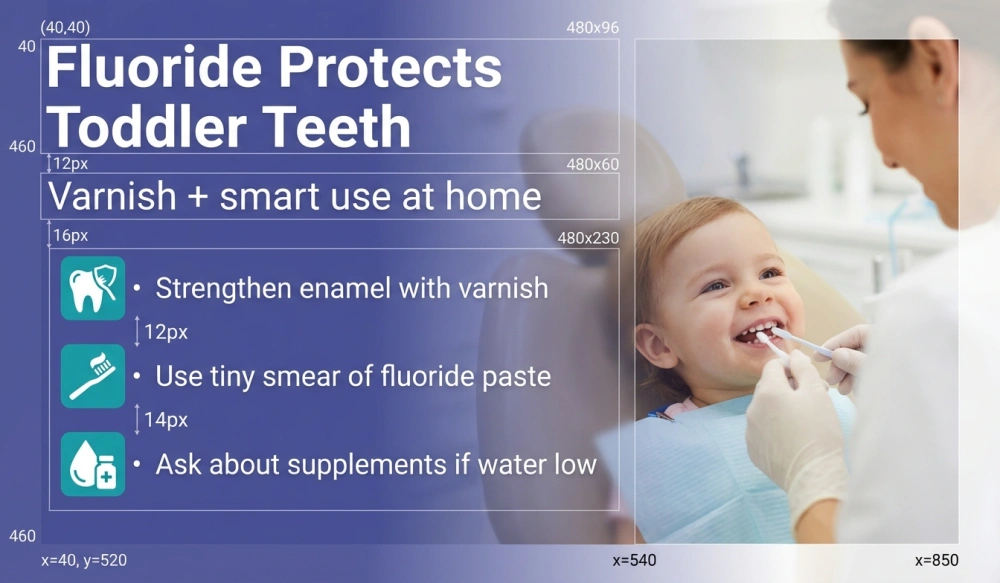
Fluoride supplements may be considered for children who do not have optimally fluoridated drinking water. This decision should be made with your dentist or pediatrician after reviewing your water source and diet to avoid exceeding the recommended total fluoride exposure. Using the right amount of fluoride toothpaste at home and receiving varnish in the office are key parts of prevention for many toddlers [5] [8].
Are dental sealants used for toddlers and how do they work?
Sealants are thin protective coatings placed on the chewing surfaces of back teeth to block food and bacteria from settling into deep grooves. They are most often used for permanent molars in school aged children, but some children at higher risk may benefit from sealants on primary molars as part of a personalized plan. Your pediatric dentist will evaluate whether sealants make sense now or at a later stage. Evidence shows that sealants can prevent cavities on treated surfaces when used appropriately [10] [1].
What is the safest way to use sippy cups and bottles?
Sippy cups and bottles are tools for short transitions, not all day companions. Here are simple steps to lower risk:
- Use water between meals if a cup is needed for comfort or hydration. Save milk and juice for mealtimes [9].
- Avoid putting your child to bed with a bottle unless it has only water. Sugary liquids at bedtime increase the chance of cavities [1] [9].
- Transition away from sippy cups toward an open cup when your child is developmentally ready, often around the second year, to reduce prolonged exposure to sugars [9].
How do diet and snacks affect tooth decay risk in toddlers?
The frequency of sugar exposure matters more than the total amount at one time. Every time sugars meet plaque, bacteria produce acids for about twenty minutes. Frequent snacks or sips restart that clock and raise risk. Choosing whole foods and offering water between meals reduce the number of acid challenges each day. Swapping sticky sweets for options like fresh fruit, yogurt without added sugar, and proteins can support both oral and overall health [3].
For drinks, water and plain milk are the best choices for most toddlers. Sugary beverages add unnecessary sugars and increase cavity risk. Community health resources and your pediatric dentist can help you plan a toddler friendly menu that fits your routine [3] [2].
What happens during a toddler dental checkup?
Your child’s first visits are designed to be gentle, positive, and informative. A typical visit may include these parts:
- Growth and cavity risk review covering diet, brushing, and family history [11].
- Guided brushing and flossing tips with a demonstration for parents and caregivers [5].
- Fluoride varnish application when indicated, which takes only a few minutes [6].
- Visual exam of teeth and gums to look for early changes like white spots [2].
- Images only when needed based on individualized indication, following professional guidelines for safety and necessity [13].
Expect a supportive conversation that answers your questions, sets home habits, and plans the next checkup based on your child’s needs [11].
How are cavities in baby teeth treated for young children?
Treatment depends on the size and location of the cavity and your child’s comfort and cooperation. The goals are to stop the disease process, restore function, and keep visits positive. Options may include:
- Fluoride varnish on early white spot areas to support remineralization when surfaces are intact [5].
- Silver diamine fluoride to arrest certain cavities in a non invasive way, often with a dark stain where the decay is stopped, which can be a useful interim measure for very young children [14].
- Minimally invasive restorations that seal in and remove soft decay while preserving as much healthy tooth as possible [1].
- Tooth colored fillings or pediatric crowns when cavities are larger or on chewing surfaces that need strength [1].
- Pulp therapy for deep decay that approaches the nerve, with the goal of keeping the tooth comfortable and functional until it is ready to fall out naturally [1].
We will always discuss the plan with you and outline choices that fit your child’s health and temperament. When anxiety or very young age makes treatment difficult, safe sedation options may be considered to complete needed care in a calm and controlled setting [11].
How does Kidz Modern Dentistry support your family in Laguna Niguel?
We care for children of all ages with a focus on prevention, comfort, and clear guidance for parents. Our team serves families in Laguna Niguel, CA and nearby communities with same day support for urgent needs, child centered sedation options when appropriate, and comprehensive care that grows with your child.
Our approach begins with education and trust. We take time to learn about your child’s routines, offer hands on brushing coaching, and create an easy to follow plan for home care. We apply evidence based prevention, including fluoride varnish when indicated and advice tailored to your child’s risk level. If treatment is needed, we explain options in plain language and choose gentle techniques that match each child’s comfort and development.
We use modern tools and systems designed for kids. From low stress visits and behavior guidance to options for comfortable care, our goal is a positive experience that encourages lifelong healthy habits. For families looking for Pediatric preventive dentistry in Laguna Niguel, our clinic provides convenient access to prevention focused visits and clear next steps for every stage of growth.
Our clinicians bring years of combined experience in pediatric care and collaborate closely to support children with different needs, including toddlers who are new to the dental office. We have helped many families establish a steady prevention routine that reduces urgent visits and keeps smiles healthy. While every child is unique, consistent care and early visits make a measurable difference.
We welcome questions by phone at +1 949 273 0110 and invite you to schedule an introductory visit if you are ready to set up a dental home for your child in Laguna Niguel, CA. Together, we can plan a practical path for home care, in office prevention, and growth based checkups that support your child’s health and comfort.
Where can you find the sources and further reading?
- Policy on Early Childhood Caries Consequences and Preventive Strategies – American Academy of Pediatric Dentistry
- Early Childhood Tooth Decay Facts – National Institute of Dental and Craniofacial Research
- Children’s Oral Health Basics and Statistics – Centers for Disease Control and Prevention
- Prevention of Dental Caries in Children Younger Than Five Years – USPSTF Recommendation
- Best Practices on Fluoride Therapy – American Academy of Pediatric Dentistry
- Fluoride Varnish Information for Providers – Centers for Disease Control and Prevention
- Topical Fluoride Varnishes for Preventing Dental Caries – Cochrane Review
- Fluoride Toothpaste Use for Young Children – American Dental Association
- Sippy Cups and Your Child’s Teeth – American Academy of Pediatrics HealthyChildren
- Dental Sealants and School Programs – Centers for Disease Control and Prevention
- Policy on the Dental Home – American Academy of Pediatric Dentistry
- Baby Teeth Eruption and Care – American Dental Association MouthHealthy
- Guideline on Prescribing Dental Radiographs for Infants Children and Adolescents – American Academy of Pediatric Dentistry
- Denti-Cal Program for Families – California Department of Health Care Services
- Oral Health Program and Resources – Orange County Health Care Agency
Common Questions About This Topic
Find answers to frequently asked questions related to this article.