- What is silver diamine fluoride for kids?
- How does SDF work to stop tooth decay?
- When might a pediatric dentist recommend SDF for your child?
- What are the main benefits and limitations parents should know?
- Is SDF safe for children and what side effects are possible?
- Why does SDF cause black staining on cavities?
- What should you expect during an SDF appointment?
- How does SDF compare to fillings and crowns for baby teeth?
- How much does SDF cost and is it covered by insurance in California?
- How can you prepare your child and make the visit easier?
- What happens after SDF and how do you care for treated teeth?
- Can SDF help children with special health care needs?
- Who is not a good candidate for SDF?
- What should families in Laguna Niguel CA know about local standards and regulations?
- How does Kidz Modern Dentistry support your family with SDF in Laguna Niguel?
- Which resources and references were used for this guide?
What is silver diamine fluoride for kids?
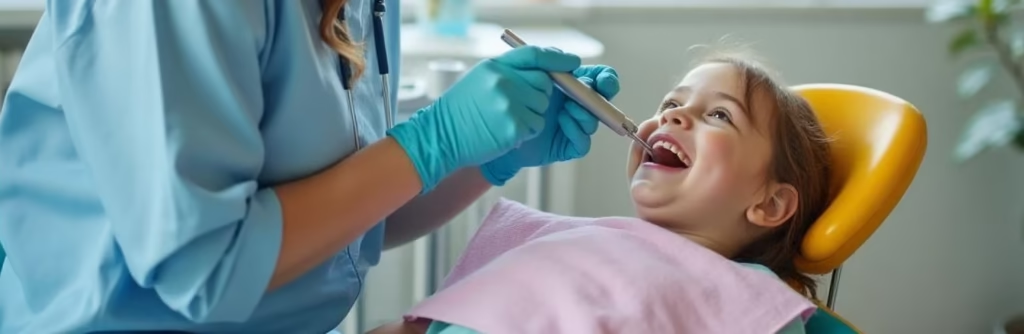
Silver diamine fluoride is a topical liquid used by dentists to help stop the progression of early tooth decay in children without drilling. It contains silver, which fights bacteria, and fluoride, which helps strengthen tooth enamel. This option can be helpful for young children who feel anxious about dental procedures or have cavities that are still small and accessible on the surface of the tooth [1] [2] [3].
Parents often ask where this treatment fits compared with traditional fillings. It is best thought of as a way to halt active decay so that pain and infection risks are reduced and future care can be planned at the right time for your child. You may also see this therapy referred to by its initials SDF, or by the procedure code used by dental offices for documentation and insurance purposes. In many care plans, SDF is used to stabilize a tooth today and a small restoration can be placed later when your child is more comfortable in the dental chair [2] [3].
Many families discover SDF while searching for gentler approaches to care. If you are exploring minimally invasive options, you are not alone. National surveys show that tooth decay remains one of the most common chronic conditions in children, which is why pediatric dentists continue to expand prevention and early intervention strategies that do not require shots or drilling [7] [8].
When you see the term Silver diamine fluoride for kids, it refers specifically to this child friendly use of SDF to arrest decay in baby and early permanent teeth where appropriate.
How does SDF work to stop tooth decay?
SDF works in two primary ways. First, the silver component targets cariogenic bacteria in the cavity lesion, helping reduce the bacterial activity that drives decay. Second, the fluoride component promotes remineralization, which strengthens the tooth structure around the lesion and increases resistance to future acid attacks. Together, these actions can harden the softened dentin in a decayed area and slow or stop the lesion from getting larger [6] [11].
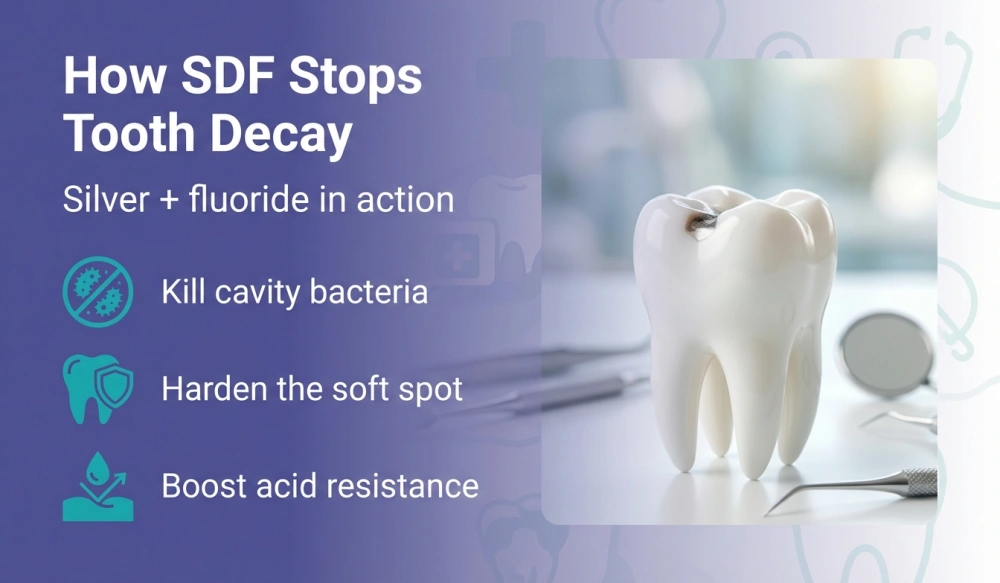
Researchers have shown that SDF can form a protective layer that increases surface hardness of affected dentin. The silver can also interact with bacterial enzymes, limiting their function, while fluoride supports the formation of fluorapatite like mineral that is more acid resistant. When combined with good daily brushing, professional fluoride varnish where indicated, and diet changes to cut down on frequent sugary snacks and drinks, SDF can be a strong part of a prevention forward plan [2] [6] [11].
Importantly, SDF does not magically rebuild a tooth. It arrests decay in many cases, which means the soft area becomes hard and inactive, but the original hole or discoloration may remain. Your dentist may later add a simple filling to rebuild shape and make the area easier to clean if needed [2] [3].
When might a pediatric dentist recommend SDF for your child?
We typically look at SDF when a cavity is small to moderate, located on a surface that we can easily reach, and when a noninvasive approach would help your child succeed in care. It is also commonly considered as an interim step when a child is very young, has difficulty cooperating, or has special health care needs that make traditional drilling challenging right now. It can also be used to stop decay on hard to restore areas on baby teeth that are close to naturally falling out, reducing the need for more extensive treatment [2] [3].
Other times SDF is recommended include when your family needs time to coordinate more comprehensive care, such as sedation or hospital dentistry, or when there are multiple early lesions and we want to quickly halt disease progression before planning restorative steps. Your dentist will carefully examine each tooth, discuss goals with you, and make a recommendation tailored to your child’s age, risk level, and comfort [3].
What are the main benefits and limitations parents should know?
Like any treatment decision, SDF comes with pros and cons. Understanding these together helps you make a confident choice.
- Noninvasive care SDF is applied with a small brush, which avoids shots and drilling in many cases [2] [3].
- High rates of arrest for early lesions Systematic reviews report strong evidence that SDF can arrest many active caries lesions on primary teeth, especially when reapplied periodically as part of ongoing care [5] [6].
- Rapid disease control SDF can be placed quickly to halt progression across multiple teeth during one visit, buying time to plan further steps where needed [2].
- Child centered approach Reducing invasive procedures often lowers anxiety and can help build positive dental experiences for the future [13].
- Black staining on treated decay A successfully arrested lesion typically turns black, which is expected and is a cosmetic consideration on front teeth [3] [6].
- Not a structural repair SDF does not rebuild missing tooth structure, so a filling may still be recommended later to restore shape or improve cleaning if indicated [2].
- Follow up is essential Ongoing checkups and possible reapplication are part of the plan to keep lesions inactive over time [2] [3].
Is SDF safe for children and what side effects are possible?
Current evidence supports the safety of SDF in pediatric dentistry when used as directed by a licensed dentist. The most common effects are localized and temporary, such as a mild taste, temporary staining on the skin if it contacts the liquid during application, and the expected black staining of the decayed area itself as it arrests. These skin marks fade over days. Gum tissue may show a temporary white or brown spot at the contact site that resolves. Severe reactions are rare. Children with a known sensitivity or allergy to silver or other components should not receive SDF [3] [6].
SDF has long been used in other countries and is cleared in the United States for use to reduce dentin hypersensitivity. Dentists use their professional judgment to apply it to arrest caries based on evidence and guidelines from professional organizations that review the data. This is considered an accepted use in pediatric settings following informed consent with parents or guardians. Your dentist will review risks, benefits, and alternatives with you before treatment [1] [2] [3].
Why does SDF cause black staining on cavities?
The dark color you see after treatment indicates that the lesion has been chemically changed and is no longer active. The silver in SDF reacts within the decayed dentin, forming silver compounds that appear black. Healthy enamel does not stain in the same way, though areas with porous decay will darken as they harden. While this color change is often acceptable on back teeth, parents may choose a different approach on front teeth if appearance is a priority. Your dentist can also discuss options to mask the color with a small tooth colored restoration later, once the lesion is arrested and stable [3] [6] [11].
What should you expect during an SDF appointment?
The appointment is usually short and child friendly. We begin by reviewing your child’s history and confirming that SDF is appropriate that day. We isolate the tooth, dry the surface, and apply a tiny amount of SDF with a small brush for about one minute. Areas that should not be exposed are protected, and any excess is removed. In many evidence based protocols, SDF is reapplied at a follow up visit to improve the chance that the lesion remains arrested. You will see the color change develop over the next day or two as the area hardens [4] [2] [3].
Children generally tolerate the process well. We keep communication simple, practice tell show do, and keep the appointment calm and efficient. You can help by bringing your child’s favorite small comfort item, using positive wording, and planning a low stress day around the visit [13].
How does SDF compare to fillings and crowns for baby teeth?
SDF and fillings have different goals. SDF aims to arrest disease while being minimally invasive. Fillings and crowns remove infected tooth structure and rebuild shape and function. On some teeth, SDF can delay or reduce the need for drilling, especially if a tooth is close to natural exfoliation. On others, structural repair with a filling or pediatric crown may still be the best way to restore chewing strength and cleanliness. Dentists sometimes use SDF first and place a restoration later for a technique commonly called silver modified atraumatic restorative treatment. This staged plan can be especially helpful for children who are becoming more comfortable with dental visits over time [2] [3].
When deciding between SDF versus a filling right now, we look at lesion size and location, risk of progression, your child’s comfort and cooperation, and your family’s goals. Together we can choose a path that protects health while setting your child up for positive experiences in care [2] [3].
How much does SDF cost and is it covered by insurance in California?
Costs can vary by office and the number of teeth involved. SDF has its own procedure code that dental offices use when submitting to insurance, which helps plans identify this service. Coverage depends on your specific policy and your child’s clinical needs. Some plans cover SDF for children when it is used to arrest cavities, while others may apply different rules. The best first step is to contact your dental office so they can verify benefits and provide an estimate before treatment [10].
Families in California can also ask about public program benefits and plan specific policies for SDF since coverage can differ by insurer and region. Your dental team can review options with you and help you understand any out of pocket costs in advance [10].
How can you prepare your child and make the visit easier?
A little preparation goes a long way in helping your child feel comfortable. Keep explanations simple and positive. You might say we are going to paint vitamins for teeth to make them stronger. If your child has worries, acknowledge them and explain that you can stop and take breaks. Bring a small comfort item and plan a familiar routine before and after the appointment. Let us know what works well for your child at medical visits so we can personalize our approach [13].
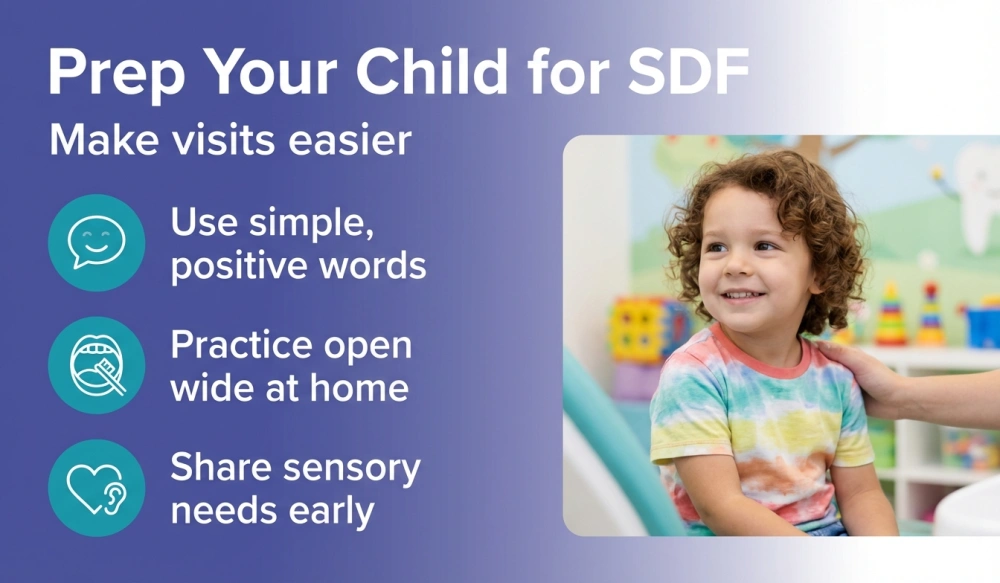
- Use clear and kind language Keep it short and upbeat, and avoid focusing on fears [13].
- Practice open wide at home A simple mirror game can help build confidence [13].
- Plan a calm day Choose a time when your child is usually well rested and fed [13].
- Share sensory preferences Tell us about light, sound, or taste sensitivities so we can adapt [13].
What happens after SDF and how do you care for treated teeth?
After SDF, avoid brushing the treated area for the rest of the day unless your dentist gives different instructions. Starting the next day, resume normal brushing with a fluoride toothpaste twice daily. Limit frequent snacks and sugary drinks to support healing and reduce new decay risk. Keep your follow up visits, since reapplication can improve long term arrest for many lesions and allows us to monitor progress. Contact the office right away if your child experiences unusual discomfort or if you notice changes that worry you [2] [4].
We will check the treated spots at the next appointment. Signs of success include a firm texture when gently probed and a stable dark color on the previously soft area. If a lesion remains soft or shows signs of activity, we can reapply SDF or discuss a restoration if indicated. Our shared goal is to keep your child comfortable and their smile healthy as they grow [2] [3].
Can SDF help children with special health care needs?
Yes, SDF can be a valuable tool for children with special health care needs, especially when we want to minimize invasive care and shorten appointments. By quickly arresting active decay on accessible areas, we can often reduce discomfort and infection risk while we plan additional steps at a pace that suits your child. We coordinate closely with caregivers to tailor communication, scheduling, and sensory supports for successful visits. Behavior guidance strategies, caregiver presence, and simple coping tools are part of our approach, with more advanced options available if needed for future restorative care [13] [3].
Who is not a good candidate for SDF?
SDF is not right for every situation. Your child might not be a candidate if they have a known sensitivity to silver or other SDF components, if there are large cavities that require structural repair to restore function, or if there are signs of pulp involvement or infection. On highly visible front teeth where appearance is the top priority, parents may prefer a tooth colored restoration rather than the expected dark color after SDF. Your dentist will examine the tooth, review x rays when appropriate, and discuss the full range of options with you [3] [2].
What should families in Laguna Niguel CA know about local standards and regulations?
In California, licensed dentists provide SDF as part of comprehensive caries management guided by evidence and professional standards. The American Dental Association and the American Academy of Pediatric Dentistry publish guidance on when and how SDF may be used to arrest decay in children. Dentists obtain informed consent, document the application using the appropriate procedure code, and schedule follow up to monitor outcomes. Your local pediatric dentist in Laguna Niguel follows these standards so families can feel confident that care decisions align with current best practices [1] [2] [3] [10].
If you are looking for Silver diamine fluoride for kids in Laguna Niguel, ask your pediatric dentist about how they use SDF within a prevention first philosophy and how they coordinate care if additional treatment is needed later.
How does Kidz Modern Dentistry support your family with SDF in Laguna Niguel?
At Kidz Modern Dentistry in Laguna Niguel, CA, we provide prevention focused, gentle care for children of all ages. Our team uses SDF thoughtfully as part of a broader plan that includes regular checkups, coaching on home care, fluoride varnish where indicated, and minimally invasive restorative options when needed. We are here to help you understand what SDF can do, where it fits, and how to plan next steps for your child’s comfort and health.
Families choose us because we combine a calm, child centered experience with clear communication. We offer same day help for urgent concerns, and we are happy to coordinate care if a staged plan is best for your child. If you prefer to avoid drilling on small early lesions, we can discuss how SDF may help you meet that goal while keeping safety and long term health at the center of decisions.
- Personalized treatment plans We assess each tooth, explain choices in plain language, and align care with your child’s comfort and your goals.
- Minimally invasive philosophy We prioritize strategies like SDF, sealants, and small restorations to preserve healthy tooth structure whenever appropriate.
- Kid friendly environment Gentle behavior guidance, tell show do, and positive reinforcement help visits feel predictable and calm.
- Skilled clinical team Our pediatric focused clinicians bring years of combined experience in caries risk assessment, early intervention, and restorative dentistry.
- Clear financial guidance We help you verify benefits and provide estimates before treatment so costs are transparent and manageable.
We also support families who are exploring broader options, from simple preventive steps to restorations and crowns when a structural repair is needed. If your child benefits from a phased approach, we can use SDF first to stabilize decay, then schedule a small filling later when your child is ready. For children with special health care needs, our team adapts visits to fit sensory preferences and communication styles, and we coordinate with your medical providers where helpful.
Our service area includes Laguna Niguel and neighboring communities in South Orange County. Call us at +1 949 273 0110 to talk with our friendly team about scheduling, benefits questions, or how we use Silver diamine fluoride for kids in everyday care plans.
If you are ready to learn whether SDF could help your child, we invite you to schedule an exam and conversation. We will review images when appropriate, map out options, and decide together on a plan that feels right for your family’s needs and values. Laguna Niguel Silver diamine fluoride for kids is one of several tools we use to keep smiles healthy with as little disruption as possible.
Which resources and references were used for this guide?
- Silver Diamine Fluoride – American Dental Association
- Evidence based clinical practice guideline on nonrestorative treatments for caries management – Journal of the American Dental Association
- Use of Silver Diamine Fluoride for Pediatric Dental Patients – American Academy of Pediatric Dentistry
- Clinical Protocol for Caries Arrest Using Silver Diamine Fluoride – UCSF School of Dentistry
- Clinical Trials of Silver Diamine Fluoride in Arresting Caries – Caries Research
- Silver diamine fluoride treatment considerations in children – Journal of the American Dental Association via PubMed Central
- Children’s Oral Health – Centers for Disease Control and Prevention
- Dental Caries in Children Ages 2 to 11 – National Institute of Dental and Craniofacial Research
- Mechanisms of Silver Diamine Fluoride in Arresting Caries – International Dental Journal via PubMed Central
- CDT Code D1354 Interim caries arresting medicament application – American Dental Association
- Antibacterial effects and mechanisms of silver ions – Journal article via PubMed Central
- Behavior Guidance for the Pediatric Dental Patient – American Academy of Pediatric Dentistry
Common Questions About This Topic
Find answers to frequently asked questions related to this article.