- What are kids dental X rays and why might they be needed?
- When do children typically get their first dental X rays?
- How often should children get dental X rays?
- Which types of dental X rays are used for kids?
- How do we keep radiation as low as possible for children?
- What do national and California guidelines say about kids dental X rays?
- How can parents tell if their child might need X rays now?
- What happens during a kids dental X ray visit?
- What special situations change X ray needs for kids?
- What questions should you ask your pediatric dentist about X rays?
- How do digital X rays compare to traditional film for children?
- What myths and facts should parents know about kids dental X rays?
- Why choose Kidz Modern Dentistry for pediatric imaging in Laguna Niguel California?
- References
What are kids dental X rays and why might they be needed?
Kids dental X rays are pictures of the teeth and jaws that help us see areas we cannot view during an exam. In growing children, X rays can reveal early cavities between teeth, evaluate enamel development, check the fit and health of dental fillings, and monitor how adult teeth are forming beneath the gums. We take them only when the benefits of the information we gain outweigh the small risks that come with any imaging that uses ionizing radiation. National recommendations from dental and medical authorities emphasize that X rays should be prescribed based on the child, the specific clinical question, and caries risk rather than a fixed calendar schedule [1] [2].
Across CA parents often ask when children need their first images and how often to repeat them. The short answer is that it depends on your child’s age, teeth touching patterns, cavity history, and risk factors such as diet, fluoride exposure, and oral hygiene. Professional guidelines provide suggested intervals that pediatric dentists tailor to the individual child [1] [2].
When do children typically get their first dental X rays?
Most children get their first dental X rays when their back teeth touch and the spaces between them can no longer be seen during a visual exam. For many kids this occurs in the preschool or early elementary years, although the exact age varies. The goal is to detect hidden cavities between teeth before they cause pain or infection. If the teeth are not touching or if there are obvious gaps, X rays may not be necessary at that time.
Guidance from national organizations advises that the first radiographs for young children are appropriate when clinical findings suggest decay or when the dentist needs additional information to make a diagnosis, plan treatment, or monitor development. This means the decision is individualized. The American Academy of Pediatric Dentistry provides best practices that help clinicians weigh risk and benefit for each child [2] [8].
What if my child is very young or anxious?
If your child is very young, anxious, or has special health care needs, we focus first on comfort and cooperation. We may begin with an exam and photos and delay imaging until your child is ready, unless there is an urgent concern such as pain, swelling, or trauma that requires immediate information. We use gentle positioning, child sized sensors, and easy step by step instructions to make the experience positive.
What if the dentist suspects decay but my child’s teeth are not touching?
When teeth do not contact, we can often see between them without X rays. If there are signs of decay on the chewing surfaces or along the gumline, we may still recommend targeted images to check the extent of the problem. The guiding principle is to obtain only the views that directly inform the diagnosis and care plan [1] [2].
How often should children get dental X rays?
There is no one size fits all schedule. The ADA and FDA selection criteria outline suggested intervals for bitewing images that check for cavities between teeth, based on caries risk and dentition stage. Children with signs of decay or high risk may need bitewing images about every 6 to 12 months, while those with low risk may need them every 12 to 24 months or longer. Adolescents often follow similar intervals, adjusted by cavity risk and clinical findings [1] [9].
Families in Laguna Niguel CA often ask whether digital imaging changes frequency. The frequency depends on risk and clinical need rather than technology. Digital systems do support lower doses and better image management, which helps us minimize repeat exposures and apply the as low as reasonably achievable approach consistently [2] [3] [4].
What determines whether my child is high risk or low risk for cavities?
We use caries risk assessment tools and a thorough history to guide recommendations. Factors include past cavities, visible plaque, enamel defects, diet high in fermentable carbohydrates, limited fluoride exposure, dry mouth from medications or medical conditions, and socioeconomic considerations. The AAPD provides an evidence based caries risk assessment tool that helps standardize this process for infants, children, and adolescents [8].
Can we lengthen the interval if my child never has cavities?
Yes, when a child is at low risk and shows no signs of disease, we often increase the time between bitewing images. This respects the principle of keeping exposures to a minimum while still monitoring health. The dentist will explain the rationale for extending or shortening intervals based on your child’s status at each visit [1] [2].
Which types of dental X rays are used for kids?
Different image types answer different questions. Your dentist will prescribe the views that best address your child’s needs and avoid unnecessary images [1] [2].
What are bitewing images and when are they used for children?
Bitewings show the crowns of the upper and lower back teeth at the same time. We use them to detect cavities between teeth and to check the fit of existing fillings or crowns. They are commonly recommended once contact occurs between molars and premolars, with intervals based on caries risk and clinical findings [1].
What are periapical images and when might a child need them?
Periapical images show the entire tooth from crown to root tip and the surrounding bone. We use them to evaluate specific problems such as deep cavities, infection, trauma to a tooth, or anomalies in root development. They are prescribed for specific teeth and not taken routinely without a diagnostic reason [2].
What is a panoramic image and when is it helpful for a child?
A panoramic image provides a broad view of the jaws, developing teeth, and surrounding structures. It can be helpful for evaluating growth and development, missing or extra teeth, jaw pathology, and trauma. Your dentist may suggest a panoramic view at certain developmental stages or for orthodontic planning if it will change care decisions [2].
What about cone beam CT for children?
Cone beam computed tomography provides three dimensional detail and is reserved for specific situations where it will clearly influence treatment, such as complex tooth impactions, certain jaw pathologies, or complicated trauma. Because it involves higher dose than routine intraoral or panoramic images, it is not used for screening and is prescribed only when the benefits outweigh the risks in the context of the clinical question [11].
How do we keep radiation as low as possible for children?
Children are more sensitive to ionizing radiation and have more years ahead for potential effects to appear. That is why we follow the as low as reasonably achievable principle and prescribe imaging only when it helps us answer a clinical question that benefits your child’s health [4] [10].
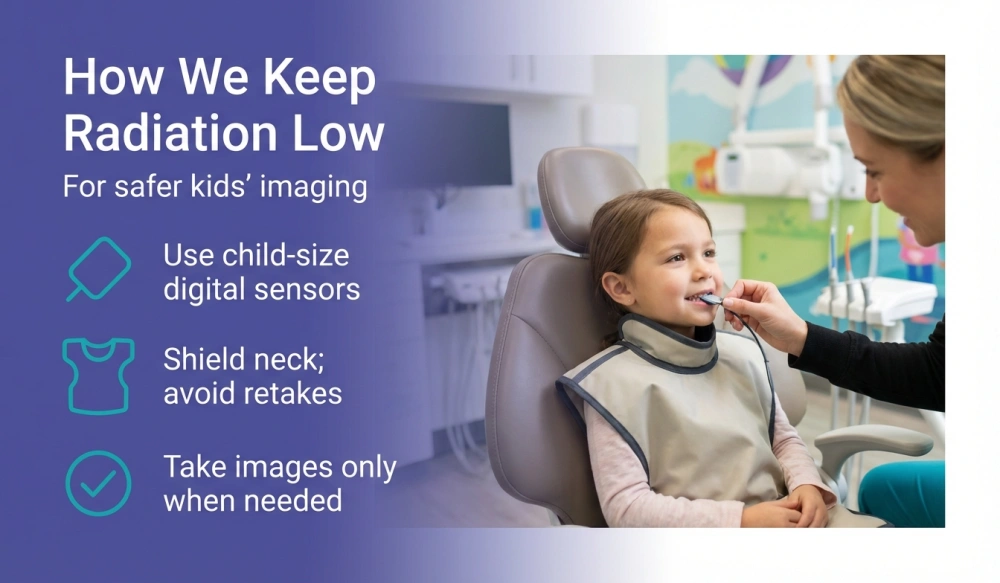
Which practical steps reduce exposure during kids dental imaging?
- Use of digital sensors We use modern digital receptors that require less radiation than traditional film while producing high quality images that can be enhanced without retaking them [3] [9].
- Rectangular collimation We limit the X ray beam to the size of the sensor, which reduces exposure compared with round collimation as recommended by pediatric and radiation protection guidelines [2] [3].
- Thyroid protection and safe positioning We use thyroid collars and position children carefully to avoid retakes and protect sensitive tissues in accordance with pediatric best practices and state requirements [2] [6].
- Individualized prescription We do not follow a preset schedule. Each image is prescribed to answer a diagnostic question for your child at that visit, which prevents unnecessary exposures [1].
- Quality assurance We calibrate and maintain our equipment and follow documented procedures to keep image quality high and exposures low, consistent with national recommendations and California oversight [3] [6].
How small is a dental X ray dose compared with everyday background radiation?
Everyone is exposed to natural background radiation from the environment over time. In the United States, the average person receives a few millisieverts per year from natural and man made sources combined, with variation by location and lifestyle. Pediatric dental images contribute only a small fraction of that amount and are prescribed only when the benefits for diagnosis and care justify their use [12] [9].
What does ALARA mean for my child’s visit?
As low as reasonably achievable means we use the lowest exposure settings that still produce a diagnostic image and we avoid any image that does not directly inform care. This principle guides our choice of receptors, collimation, shielding, and image frequency for every child [4].
What do national and California guidelines say about kids dental X rays?
Nationally, the ADA and FDA joint recommendations and the AAPD best practices advise that dental images for children be based on caries risk, clinical findings, and the diagnostic question. They recommend using digital receptors when available, rectangular collimation, thyroid collars for children, and careful technique to avoid retakes. They also emphasize that imaging should never be routine or automatic [1] [2] [9].
In California, dental X ray equipment must be registered, and facilities are subject to state oversight through the Radiologic Health Branch of the California Department of Public Health. Practices must maintain quality assurance programs, follow safe operating procedures, and ensure that operators have appropriate training and documentation. These protections help ensure that children receive carefully controlled, high quality imaging when it is needed [6].
How do guidelines apply to orthodontic and panoramic imaging in California?
For growth and orthodontic evaluations, panoramic images and other views are ordered only if they inform diagnosis or treatment planning. This aligns with national recommendations and California safety requirements. When a three dimensional study such as cone beam CT is considered, the dentist documents the diagnostic question, uses child sized settings, and limits the field of view to the area of interest [2] [11] [6].
How can parents tell if their child might need X rays now?
It can be hard to know whether your child needs images between routine checkups. Here are signs that usually prompt a closer look with the dentist’s guidance:
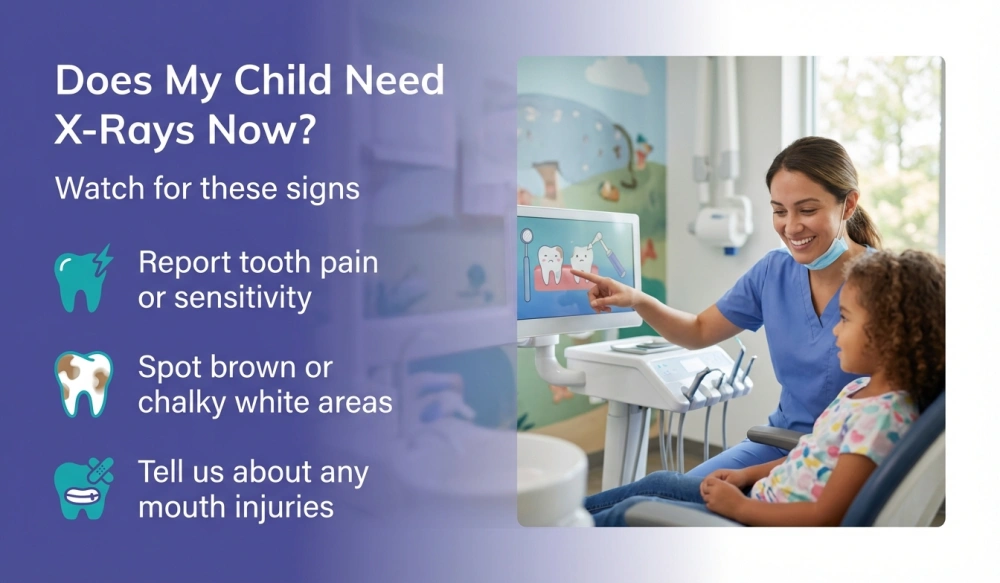
- Tooth pain or sensitivity New pain, especially when chewing or with cold, can signal a cavity or infection that may need an image to evaluate depth or spread [1].
- Visible spots or staining Brown or white chalky spots can indicate early decay that may not be fully visible without a bitewing image [2].
- History of rapid cavities Children who have had multiple cavities may need shorter intervals because disease can progress quickly between teeth [1] [8].
- Dental trauma A fall or blow to the mouth often requires targeted images to assess root health, fractures, or displacement [2].
- Development concerns Delayed tooth eruption, extra or missing teeth, or bite changes may call for panoramic or targeted periapical images [2].
Tooth decay remains one of the most common chronic conditions in childhood. National data show that more than half of children ages 6 to 8 have had a cavity in their baby teeth, and more than half of adolescents have had decay in their permanent teeth. Early detection with appropriate imaging helps avoid pain and emergency treatment [5].
What happens during a kids dental X ray visit?
We make the process simple and comfortable. A trained team member explains each step in kid friendly language, shows the child the sensor or camera, and practices the bite position before taking a picture. We use small child sized sensors or plates and place them gently. Most images take only a second to capture.
How can parents help their child prepare?
- Use simple positive words Tell your child the dentist will take pictures of their teeth to help keep them healthy. Avoid words that might create worry.
- Practice open wide at home A quick practice with a clean spoon can help your child understand how the sensor will feel.
- Schedule thoughtfully Choose a time when your child is well rested and not hungry for the best cooperation.
- Bring comfort items A favorite small toy or song can make the visit smoother.
What if my child gags easily?
We have techniques to minimize gagging, including careful placement, distraction, and using smaller sensors. If needed, we can stage images over multiple visits or use alternative views that still provide diagnostic information while keeping your child comfortable.
What special situations change X ray needs for kids?
Some conditions call for tailored imaging plans. The guiding principle remains to answer the clinical question with the fewest and lowest dose images.
How does orthodontic planning affect imaging?
Orthodontic evaluations may include panoramic images to review tooth development and position. Additional images are prescribed only if they change the treatment plan. When a three dimensional view is necessary, we limit the field of view and use child appropriate settings in line with FDA considerations for dental cone beam CT [11].
How is imaging handled after dental injuries?
Trauma often requires targeted periapical images to check for fractures, root changes, or tooth displacement. Follow up images at specific intervals may be needed to monitor healing, with timing guided by clinical signs and professional recommendations [2].
What about children with special health care needs?
For children with special health care needs, we adapt imaging to their abilities and comfort. Strategies include shorter visits, caregiver assistance, desensitization, and alternative views. The AAPD encourages individualized planning to obtain only the images that directly support health and safety for each child [2].
What questions should you ask your pediatric dentist about X rays?
Open conversations help you feel confident about the care plan. Consider asking:
- What decision will this image help you make Understanding the clinical question shows why the image matters.
- Are there alternatives to this image Sometimes a different view or simply watchful waiting is appropriate.
- How do you tailor exposure for children Ask about digital sensors, rectangular collimation, thyroid protection, and retake policies.
- How does my child’s cavity risk affect frequency Learn how risk assessment informs the recommended interval.
- How do state rules influence your imaging practices Your dentist should be able to explain equipment registration, training, and safety procedures required in California [6].
How do digital X rays compare to traditional film for children?
Digital systems are the standard in many pediatric practices because they support lower exposure settings, immediate image review, and enhancements that improve diagnostic confidence without retakes. Evidence from radiation protection and pediatric guidelines notes that digital receptors generally require less dose than D speed film while maintaining or improving image quality. Digital systems also integrate with electronic records, which streamlines secure storage and sharing when needed for referrals [3] [2] [9].
Do digital systems eliminate radiation risk entirely?
No imaging that uses ionizing radiation is risk free, and children are more sensitive than adults. The goal is to keep exposures as low as reasonably achievable and to take images only when information is needed for diagnosis or treatment planning. National organizations stress that the decision to image should be individualized and justified each time [4] [10] [1].
What myths and facts should parents know about kids dental X rays?
Is it true that children should get X rays at every checkup?
No. There is no fixed schedule for all children. Professional guidelines recommend imaging only when it will affect diagnosis or care. Frequency varies by cavity risk, age, and findings at the visit [1] [2].
Is the dose from a dental X ray large compared with normal background radiation?
No. Pediatric dental images contribute a small fraction compared with the background radiation people receive over time. Even so, we carefully limit each exposure and avoid unnecessary images to respect the as low as reasonably achievable principle [12] [9].
Will my child always need a panoramic image?
No. Panoramic images are not routine. They are prescribed when the dentist needs a broad view for development, missing or extra teeth, jaw concerns, or specific treatment planning. If the information is not needed, the image is not taken [2].
Do more images always mean better care?
More images do not equal better care. Better care means the right images at the right time with the lowest reasonable exposure. This is the foundation of pediatric imaging best practices and is supported by national safety initiatives for children [2] [7].
Why choose Kidz Modern Dentistry for pediatric imaging in Laguna Niguel California?
At Kidz Modern Dentistry, we focus on education, comfort, and evidence based imaging for children of all ages. We serve families in Laguna Niguel and nearby communities in Orange County with compassionate care that respects your child’s health and your peace of mind. If you have questions about when kids need X rays, how often, or how we keep doses low with digital imaging and careful technique, our team is ready to help at +1 949 273 0110.
How do our services make next steps clear for parents?
- Personalized imaging plans We align every image with a specific diagnostic question so you understand why and how it guides care.
- Transparent risk communication We explain benefits and risks in plain language and share how we minimize exposure at every visit.
- Kid friendly experience From small sensors to gentle positioning and short appointments, we make imaging comfortable for children.
Where do we operate and who performs your child’s imaging?
- Local access in Laguna Niguel Our practice serves families across the community and neighboring areas of Orange County.
- Qualified pediatric team Your child’s imaging is performed by trained dental professionals who follow California safety requirements and national best practices [6] [2].
What is our approach to keeping radiation low while maintaining diagnostic quality?
- Digital receptors and rectangular collimation We pair modern sensors with beam limitation to reduce exposure and prevent retakes [3] [2].
- Child specific exposure settings We set X ray parameters based on your child’s size and the area imaged, in alignment with ALARA [4].
- Quality control and maintenance We follow documented procedures and routine checks to keep equipment performing at its best, consistent with California oversight [6].
Do we use proprietary tools or processes that help children cooperate?
- Comfort first workflow We use a stepwise practice approach where children can see, touch, and practice with the sensor before the first picture, which helps reduce gagging and anxiety.
- Retake prevention protocol We review positioning on a live preview and coach gentle breathing so one picture is all we need in most cases.
What experience and results can families expect?
- Comprehensive pediatric focus Our team provides full spectrum pediatric care that includes imaging for prevention, restorative needs, orthodontic evaluations, and emergencies.
- Proven track record Parents often report that their child’s first images at our office were easier than expected, and many children complete a bitewing set in minutes with no retakes needed.
- Direct access to your dentist Your pediatric dentist reviews images with you in the room, answers questions clearly, and maps out next steps so you leave with confidence.
We welcome calls if you would like to discuss whether your child may need images before the next visit. You can reach us at +1 949 273 0110. If you prefer, we can also coordinate with your child’s physician or specialist when a medical condition affects imaging choices or timing.
When you are choosing a pediatric dentist, access and trust matter. We are proud to support families in Laguna Niguel and surrounding neighborhoods with careful, child centered imaging and complete pediatric dental care. Our approach reflects national guidelines and California requirements, with a commitment to clear communication and comfort at every step.
References
- Dental Radiographic Examinations Recommendations for Patient Selection and Limiting Radiation Exposure – U.S. Food and Drug Administration
- Prescribing Dental Radiographs for Infants Children Adolescents and Individuals with Special Health Care Needs – American Academy of Pediatric Dentistry
- Report No. 145 Radiation Protection in Dentistry and Oral and Maxillofacial Imaging – National Council on Radiation Protection and Measurements
- ALARA As Low As Reasonably Achievable – U.S. Nuclear Regulatory Commission
- Children’s Oral Health Facts – Centers for Disease Control and Prevention
- Dental Facilities X ray Program Information – California Department of Public Health Radiologic Health Branch
- Dental Imaging Resources for Children – Image Gently Alliance
- Caries Risk Assessment Best Practices – American Academy of Pediatric Dentistry
- Dental Radiographic Examinations Oral Health Topic – American Dental Association
- Radiation Risks and Pediatric CT Scans – National Cancer Institute
- Dental Cone Beam Computed Tomography – U.S. Food and Drug Administration
- Report No. 160 Ionizing Radiation Exposure of the Population of the United States – National Council on Radiation Protection and Measurements
Common Questions About This Topic
Find answers to frequently asked questions related to this article.