- What should parents know about the right age for braces?
- Why does oral health come before braces?
- When should kids get an orthodontic evaluation and what happens during the visit?
- Which signs suggest a child might need braces or early orthodontic care?
- What early orthodontic treatments might a pediatric dentist or orthodontist recommend?
- How long do braces take for children and teens?
- How much do braces for kids cost and how can families plan?
- What California and local standards help protect children receiving orthodontic care?
- How can parents support healthy teeth before, during, and after braces?
- How does Kidz Modern Dentistry support pediatric orthodontics in Laguna Niguel?
- What references and resources were used for this article?
What should parents know about the right age for braces?
Knowing when to start braces for kids can feel confusing. Many parents ask about the best age for braces, what age kids usually start treatment, and whether an early orthodontic evaluation is necessary. A straightforward way to decide is to separate timing into two parts. First, an early look at jaw growth and bite allows a specialist to monitor changes and guide growth when needed. Second, full braces are often started when most permanent teeth are in, typically during the early teen years. The American Association of Orthodontists recommends that every child receive an orthodontic checkup by age 7. This does not mean braces at age 7. It means an expert can spot developing issues and advise if treatment now or later would be beneficial [1].
For many families in Laguna Niguel, CA, the first goal is a healthy mouth. Brushing, flossing, dental cleanings, and cavity prevention make any orthodontic treatment smoother and safer. If we find bite problems such as crossbite, crowding, or deep overbite, we discuss if observation is all that is needed or if interceptive care could make future treatment simpler [2], [9].
Why does oral health come before braces?
Healthy gums and clean teeth are the foundation for successful pediatric orthodontics. Braces and aligners only work well if the teeth and gums are free of active disease. That is why pediatric dentists focus on prevention and early treatment of cavities and gingivitis before planning orthodontic appliances.
Tooth decay remains one of the most common chronic conditions of childhood, which is why we emphasize fluoride, sealants when appropriate, home care habits, and regular checkups before and during orthodontic treatment [7], [8]. This helps reduce risks like white spot lesions and gum inflammation around brackets and wires.
What everyday steps protect teeth before a child starts braces?
- Consistent brushing and flossing Children should brush twice daily with a fluoride toothpaste and clean between teeth once daily. These habits help set the stage for smooth orthodontic visits [8].
- Fluoride exposure Fluoride strengthens enamel and reduces risk of decay. Your pediatric dentist may recommend professional fluoride applications and guidance on home fluoride products [8].
- Smart snack choices Limiting sugary snacks and beverages supports enamel and gum health. Balanced meals and water as the main drink help protect teeth [7].
- Routine cleanings and exams Professional cleanings remove plaque and tartar in hard to reach areas, and regular exams track oral growth and dental development [7].
When should kids get an orthodontic evaluation and what happens during the visit?
The AAO advises that children have their first orthodontic evaluation by age 7. At that age, most kids have a mix of baby and permanent teeth, so a pediatric dentist or orthodontist can check how the bite is developing and whether jaw growth is balanced [1]. The goal of this early look is guidance, not necessarily treatment.
At the evaluation, we review medical and dental history, perform a clinical exam, assess jaw relationships, look at spacing or crowding, and discuss habits such as thumb sucking. If imaging is needed, we use the lowest radiation dose possible and only when it helps decision making. Your child’s safety and comfort remain the priority [5].
What is the AAO age 7 recommendation and why does it matter?
By age 7, permanent incisors and first molars have typically erupted. This timing allows clinicians to spot concerns such as anterior crossbite, posterior crossbite, early crowding, open bite, deep bite, and asymmetries. Early detection can mean simpler options and fewer complications later, though many children only need observation at this age [1], [2].
What is the difference between an orthodontic evaluation and treatment?
An evaluation is a diagnostic visit. We gather information, talk about growth patterns, and outline whether to observe or plan steps now or in the future. Treatment begins only if benefits clearly outweigh risks and if timing aligns with your child’s growth and dental development [2], [4].
What happens if the evaluation finds no immediate concerns?
If everything looks good, we simply continue routine checkups and periodic growth assessments. Orthodontic monitoring helps track changes and identify the best moment to act if a problem emerges during growth. This approach is evidence supported and child centered [2], [9].
Many families appreciate ongoing Orthodontic monitoring, because it supports timely decisions and avoids unnecessary treatment. It is one of the most effective ways to plan for the best age for braces while keeping oral health first [2].
Which signs suggest a child might need braces or early orthodontic care?
Some bite and spacing issues are visible to parents, while others are subtle. If you notice any of the following, consider an orthodontic evaluation age 7 or sooner if a problem seems urgent.
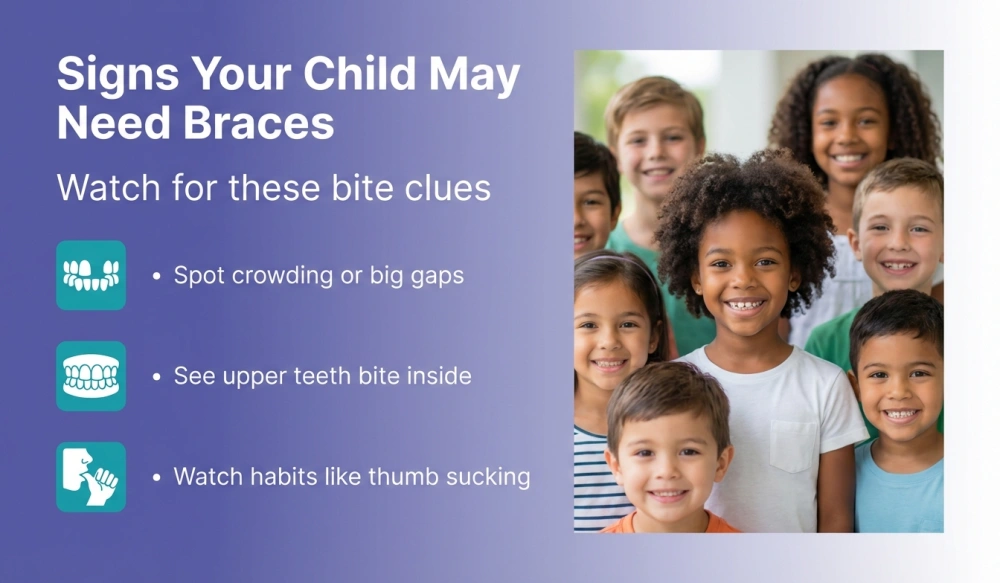
What are common signs kids need braces or early guidance?
- Crowding or spacing Overlapping teeth, visible crowding, or large gaps can signal a bite that needs guidance as the jaws grow [9].
- Crossbite Upper teeth that bite inside the lower teeth can affect growth and wear patterns. Early assessment may reduce future complexity [9].
- Overbite or deep bite Front teeth that overlap significantly may benefit from observation or phased treatment depending on severity and growth [2].
- Open bite Front teeth that do not touch when biting can be related to habits or growth patterns and may require interceptive care [9].
- Mouth breathing or snoring While many causes are not dental, these can affect jaw posture and should be discussed during evaluation [9].
- Thumb or finger sucking Prolonged habits can influence bite and palate shape. Early habit counseling can be very helpful [9].
- Early or late loss of baby teeth Timing and sequence of tooth loss influence space and alignment. Space maintainers can preserve room for permanent teeth when appropriate [9].
What early orthodontic treatments might a pediatric dentist or orthodontist recommend?
Early or interceptive orthodontic treatment is sometimes called phase 1 orthodontics. The goal is to guide jaw growth, create space for incoming permanent teeth, correct crossbites, and reduce risks of injury or long term complications. Many children do not need early treatment, but for those who do, the focus is conservative, targeted care based on clinical evidence [2], [9].
What is interceptive orthodontics or phase 1 treatment?
Interceptive orthodontics refers to short, focused treatments in the mixed dentition. Common aims include expansion for crossbite, limited braces to align select front teeth, habit appliances for thumb sucking, and space maintenance after early tooth loss. The intent is to simplify or shorten future comprehensive treatment, not necessarily to finish every detail at this early stage [2], [9].
When is a palatal expander considered for kids?
Palatal expansion can address narrow upper jaws and crossbite. In growing children, expansion can improve the relationship between upper and lower teeth and create space that may help with crowding. Decisions are individualized and based on growth, severity, and timing [9].
How do habit appliances help with thumb sucking or similar habits?
Habit appliances are designed to discourage thumb or finger sucking that persists beyond the toddler years. By reducing the habit, these appliances can support normal bite development and reduce the chance of open bite or crossbite [9].
What imaging is used safely for kids during orthodontic planning?
Dental imaging helps evaluate tooth position, roots, and jaw relationships. For children, clinicians use the lowest dose needed for clear diagnosis and follow protocols that emphasize dose limitation and careful selection. The Food and Drug Administration provides parent friendly guidance about dental X rays and safety [5]. Dental teams also use infection prevention standards that protect patients and staff during all procedures and imaging [6].
When it supports decision making, Orthodontic monitoring in Laguna Niguel can include periodic clinical checks and selective imaging. The focus is to gather just enough information to guide care while prioritizing safety and comfort [5], [6].
How long do braces take for children and teens?
The braces timeline for children varies. For many kids, comprehensive treatment begins in the early teen years when most permanent teeth are present. Typical treatment can range from about 18 to 30 months depending on the bite, growth, cooperation with elastic wear, oral hygiene, and specific goals. Early or phase 1 care, when needed, is usually shorter and more focused, often lasting several months to a year, followed by a growth observation period and then the decision about comprehensive treatment later [2], [4].
What are the usual stages of braces for kids?
- Assessment and planning Clinical exam, records if needed, and a clear plan that aligns with growth and oral health status [2].
- Active alignment Brackets and wires gradually move teeth into better positions. Visits track progress and make adjustments [4].
- Bite detailing Elastics or additional steps refine how teeth fit together for function and comfort [4].
- Retention Retainers maintain the result while gums and bone adapt to new tooth positions [3].
Can teens use clear aligners instead of braces?
Clear aligners for teens can be a good option for certain cases. Aligners are removable, which makes brushing and flossing easier, but they require consistent wear to work well. Suitability depends on bite complexity, growth stage, and the teen’s ability to follow instructions. An orthodontist can help decide if aligners, braces, or a combination is the right choice [2], [8].
Why are retainers after braces essential?
Retainers prevent teeth from drifting back to their original positions after active movement. Wearing retainers as instructed supports long term stability and helps protect the investment of time and effort made during treatment [3].
How much do braces for kids cost and how can families plan?
The cost of braces for kids can vary based on bite complexity, type of appliance, length of treatment, and follow up needs. Fees can also differ by region and by the specific materials used. Your pediatric dentist and orthodontic partners will provide a written plan and estimate after completing a thorough exam and records.
What factors influence the cost of braces for kids?
- Type of appliance Conventional brackets, self ligating brackets, or clear aligners can have different fee structures [4], [8].
- Treatment length and complexity Longer care and more complex bite correction typically increase cost [4].
- Two phase or interceptive needs If early treatment occurs before comprehensive care, there may be separate phases and fees [2].
- Retention and follow up Retainers and post treatment visits are part of maintaining results [3].
How can families use insurance, HSA, or FSA for orthodontic care?
Many dental benefit plans cover a portion of orthodontic services for children, often with lifetime maximums. Flexible spending accounts and health savings accounts can typically be used for qualified orthodontic expenses. Families can review plan details, track receipts, and coordinate timing to make the most of available benefits [14].
What California and local standards help protect children receiving orthodontic care?
Parents in Laguna Niguel and across Orange County can feel reassured that dental care is governed by state and national standards designed for safety and quality. Practices follow infection prevention protocols, imaging safety guidelines, and professional standards for diagnosis and treatment.
Which professional and regulatory bodies guide pediatric orthodontic care in California?
- State licensure and oversight The Dental Board of California oversees licensure and enforces the Dental Practice Act, which sets standards for care and professional conduct [11].
- Radiation safety The California Department of Public Health Radiologic Health Branch provides rules on registration, inspection, and safe operation of dental imaging equipment [12].
- National guidance Federal resources from the Food and Drug Administration and Centers for Disease Control and Prevention inform imaging safety and infection prevention practices that clinics implement every day [5], [6].
How do imaging and infection control protocols protect kids during orthodontic care?
- Selective imaging X rays are taken only when they will change care decisions, using the lowest dose needed for diagnosis [5].
- Protective measures Clinics follow evidence based infection control procedures to maintain a safe environment for children and families [6].
- Transparent communication Families are informed about why imaging is recommended and how safety measures are applied during visits [5], [6].
How can parents support healthy teeth before, during, and after braces?
Healthy routines make orthodontic treatment smoother and more comfortable. Parents play a key role in helping kids keep up with hygiene, food choices, and habits that protect enamel and gums.
What daily home care steps are most important during braces?
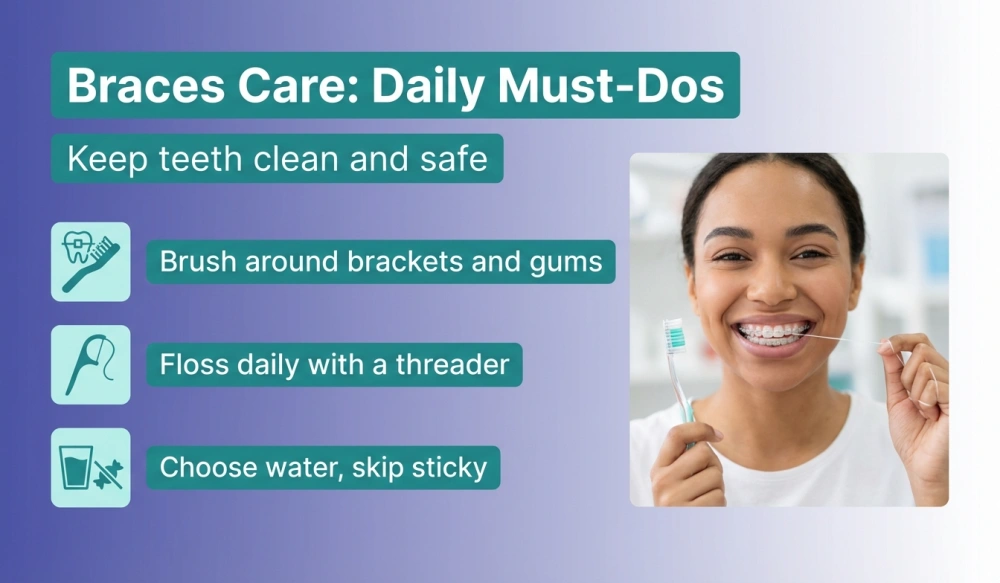
- Thorough brushing Angle the brush along the gumline and around brackets and wires. Electric toothbrushes can help some kids clean more effectively [8].
- Daily flossing Floss threaders or interdental cleaners make it easier to clean under wires and between teeth [8].
- Fluoride support Fluoride toothpaste and mouthrinse can help prevent white spot lesions during orthodontic treatment [8].
- Food choices Minimizing sticky and hard foods reduces breakage and helps avoid plaque buildup. Water is the best drink for teeth [7].
How do fluoride and sealants fit into orthodontic care for kids?
Fluoride strengthens enamel and reduces cavity risk. Sealants protect chewing surfaces of molars. These measures, combined with brushing and flossing, lower the chance of decay around brackets and in deep grooves [7], [8], [13].
When are space maintainers useful after early tooth loss?
If a baby tooth is lost early, a space maintainer can hold space for the permanent successor and reduce the chance of crowding. This is a common part of pediatric orthodontic planning and is tailored to tooth location and timing [9].
What should you do if a braces wire pokes or a bracket loosens?
If a wire or bracket is irritating the cheek or lip, placing orthodontic wax over the sharp area often helps until the clinic can make a repair. Call your dental team for guidance. Same day visits are common for small orthodontic emergencies, and prompt attention helps keep treatment on track [4].
How does Kidz Modern Dentistry support pediatric orthodontics in Laguna Niguel?
At Kidz Modern Dentistry, we care for children of all ages in Laguna Niguel, CA with a warm, family centered approach. Our pediatric team emphasizes education, prevention, and clear communication so you always know the next step. We coordinate closely with trusted orthodontic partners for timing, records, and treatment planning, and we keep the focus on comfort and health at every visit.
- Comprehensive pediatric care We provide routine checkups, cleanings, fluoride, sealants when indicated, cavity care, and gentle guidance on diet and home hygiene that supports orthodontic success.
- Growth and bite guidance We help families understand the best age for braces, what age kids often start treatment, and how early orthodontic evaluation supports long term outcomes without rushing care.
- Comfort focused visits From kid friendly communication to sedation options when appropriate, our team works to make dental visits positive and low stress for children and parents alike.
- Same day support If your child has an urgent dental need, we offer same day emergency care and clear follow up instructions to keep them comfortable and safe.
- Collaborative planning We coordinate with pediatric orthodontists in Orange County to align timing, share records, and support smooth transitions between observation and active treatment.
- Personalized communication Parents receive direct access to qualified professionals who explain options and answer questions with empathy and detail.
- Local commitment We are part of the Laguna Niguel community and serve families across nearby neighborhoods in Orange County with attentive, reliable pediatric dentistry.
If you are planning an early orthodontic evaluation, we can help you map out a smart timeline and monitor growth while keeping dental health first. Our pediatric team supports your child with preventive care, clear aligners education for teens, guidance on retainers after braces, and practical help with home hygiene. To schedule or ask a question, please call +1 949 273 0110.
What references and resources were used for this article?
- Your Child’s First Orthodontic Check Up – American Association of Orthodontists
- Early Orthodontic Treatment – American Association of Orthodontists
- Retainers After Orthodontic Treatment – American Association of Orthodontists
- Braces and Retainers Overview – MedlinePlus
- Dental X Rays: A Tool for Diagnosis and Treatment – U.S. Food and Drug Administration
- Infection Prevention in Dental Settings – Centers for Disease Control and Prevention
- Dental Caries Facts for Children – Centers for Disease Control and Prevention
- Fluoride Information for Families – National Institute of Dental and Craniofacial Research
- Management of the Developing Dentition and Occlusion – American Academy of Pediatric Dentistry
- Braces Information for Parents – American Dental Association
- Consumer and Licensee Information – Dental Board of California
- Radiologic Health Branch for California – California Department of Public Health
- Community Water Fluoridation Overview – Centers for Disease Control and Prevention
- Medical and Dental Expenses Publication 502 – Internal Revenue Service
Common Questions About This Topic
Find answers to frequently asked questions related to this article.