- What do white spots, chalky areas, and uneven tooth color on kids teeth mean?
- What are the most common causes of white spot lesions in children?
- How can you tell the difference among common enamel changes at home?
- When should you see a pediatric dentist for white spots?
- What treatments can improve white spots and chalky teeth in kids?
- What can you do at home to help prevent new white spots?
- How do local water and regulations in Orange County affect fluoride and fluorosis risk?
- What questions should you ask during a pediatric dental exam about white spots?
- How strong is the evidence for the treatments discussed?
- How does Kidz Modern Dentistry support families dealing with white spots and chalky teeth?
- References
What do white spots, chalky areas, and uneven tooth color on kids teeth mean?
White spots on kids teeth, chalky teeth in children, and uneven tooth color in kids can be confusing and worrisome. These changes often show up as bright white patches, creamy or brownish areas, or a patchwork of lighter and darker enamel. In many cases, these are early signs of changes in the mineral content of enamel. Sometimes they reflect completely preventable changes like early tooth decay that can be reversed. Other times they are developmental enamel defects that occurred while teeth were forming and need tailored care and protection.
Across the country, tooth decay affects many children, and early spots can be the first visible stage on smooth tooth surfaces before a cavity forms. Starting care early helps stop damage and protect a child’s smile over time [1]. The good news is that pediatric dentists have gentle, child friendly ways to evaluate and support your child through a customized plan.
As we look at the causes and solutions, we will use plain language and clear steps you can take at home and with your pediatric dentist. We will also point out when to seek care if you live in Laguna Niguel, Laguna Hills, Aliso Viejo, Mission Viejo, Laguna Beach, or San Juan Capistrano so you know what to expect locally.
Pediatric preventive dentistry focuses on understanding a child’s unique risk for enamel changes, choosing the right daily care, and planning in office support that reduces sensitivity and protects developing teeth [2] [3].
What are the most common causes of white spot lesions in children?
Several conditions can lead to white spot lesions or chalky enamel in kids. Some are early and reversible. Others are developmental and require protection and sometimes cosmetic improvement. Here are common reasons and how they differ.
Is early tooth decay a cause of white spots?
Yes. Early stage tooth decay demineralizes the enamel surface, creating matte, chalky, or bright white patches. These spots often appear near the gumline or around plaque prone areas where brushing is difficult. At this earliest stage, no cavity has formed yet, and the process can often be halted or reversed with improved daily care and professional fluoride therapy [2] [4].
What is enamel hypoplasia in children?
Enamel hypoplasia is a developmental defect where the enamel layer is thinner or has pits and grooves because it did not form completely. Causes may include early childhood illness, nutritional deficiencies, or disturbances during tooth development. These areas look chalky or irregular and can be more sensitive and more likely to develop cavities if not protected [1]. Because the enamel is structurally different, enamel hypoplasia benefits from protective strategies like sealants, fluoride varnish, and careful monitoring [2] [3].
What is dental fluorosis and how does it look?
Dental fluorosis forms while enamel is developing if total fluoride exposure was higher than needed. Most cases in the United States are mild and appear as faint white streaks or specks. Moderate or severe cases show more obvious white areas, brownish spots, and surface texture changes. Fluorosis has become more commonly observed in adolescents, but most cases are mild and do not affect function [6] [7].
What is molar incisor hypomineralization MIH?
Molar incisor hypomineralization is a developmental condition where the first permanent molars and often the front permanent incisors erupt with chalky, sensitive enamel that chips easily. MIH occurs around the world and can affect a notable percentage of school aged children, so early diagnosis and a prevention first plan are important for comfort and durability [14].
Could trauma, illness, or high fevers cause color or texture changes?
Yes. Enamel is laid down in early childhood. High fevers, certain illnesses, or injuries to baby teeth can affect how enamel forms in the permanent teeth developing underneath. The result can be a localized white or yellow brown spot or an area of thinner enamel. Your pediatric dentist will review medical history to determine the likely cause and choose the best protective and cosmetic steps [1].
Can diet, dry mouth, or mouth breathing contribute to white spots?
Frequent exposure to sugary drinks, juice, sports drinks, or sticky snacks fuels acid producing plaque. Dry mouth from reduced saliva or mouth breathing reduces natural tooth protection. Together these factors can tip the balance toward demineralization and early lesions. Addressing these daily habits is part of a complete prevention plan [4].
Are braces or orthodontic appliances linked with white spots?
Fixed braces create more places for plaque to hide, which can lead to white spot lesions if cleaning is not meticulous. Children with brackets benefit from focused home care coaching and professional support during orthodontic treatment to keep enamel healthy [15].
How can you tell the difference among common enamel changes at home?
It is hard to make a firm diagnosis at home, and a pediatric dentist should confirm. That said, some patterns can help you know what to ask about.
- Early decay Often matte, chalky white patches near the gumline or around plaque prone areas that may feel rough.
- Mild fluorosis Symmetrical faint white lines or flecks on multiple teeth of similar age.
- Enamel hypoplasia Irregular pits, grooves, or a single well defined spot that differs from neighboring enamel in thickness or sheen.
- MIH Chalky, creamy white to yellow brown patches on first permanent molars and incisors, with sensitivity to cold or brushing.
- Post orthodontic spots White areas where plaque sat around brackets after braces, often in a ring or rectangular outline.
If a spot is new, growing, sensitive, or located near the gumline, schedule a pediatric dental exam promptly so your team can take steps to stop progression and support remineralization [2] [4].
When should you see a pediatric dentist for white spots?
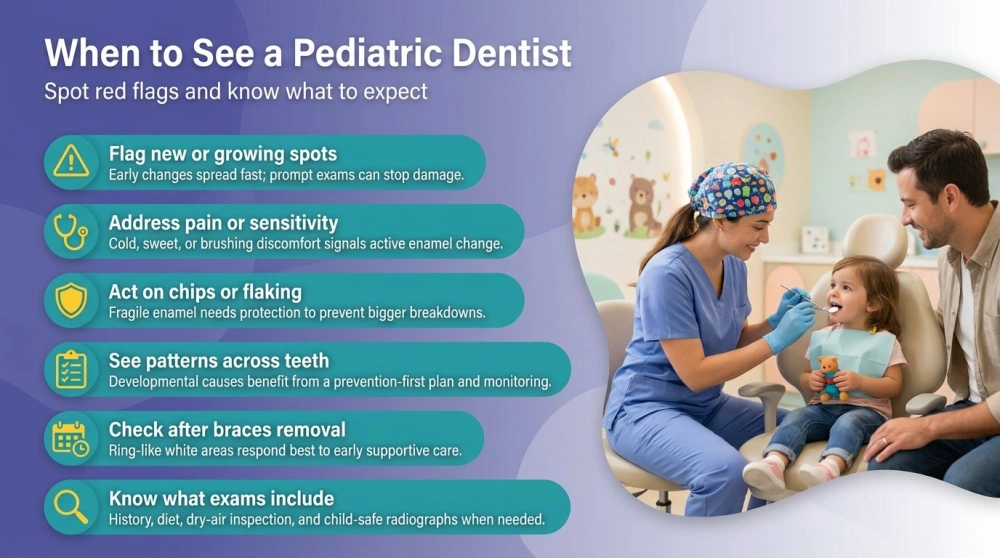
Reach out to a pediatric dentist if you notice any of the following:
- New or expanding patches Any new white, chalky, or brown spot should be assessed.
- Sensitivity or pain Cold, sweet, or brushing discomfort suggests active changes.
- Chipping or flaking enamel Fragile enamel needs protection to avoid larger breakdown.
- Multiple affected teeth A pattern across teeth that formed at the same time points to a developmental cause that benefits from a prevention first plan.
- After braces If you see ring like white areas after bracket removal, prompt supportive care can improve appearance and strength.
During a pediatric dental exam, your dentist will review medical and dental history, assess diet and daily care, examine teeth under good lighting, and use tools like dry air to see subtle changes. In certain cases, radiographs may help assess areas between teeth, following safe, child specific guidelines [1].
What treatments can improve white spots and chalky teeth in kids?
The right plan is personalized. Pediatric dentists choose the least invasive options that stabilize enamel, reduce sensitivity, and improve appearance when appropriate. Here are common approaches and when they are considered.
What is remineralization and how is it used?
Remineralization restores minerals to early demineralized enamel. At home, this starts with daily use of fluoride toothpaste and excellent brushing and flossing. In the office, dentists may apply professional fluoride varnish at regular intervals. The goal is to harden the enamel surface and stop early lesions from progressing [2] [4].
What is fluoride varnish and when is it recommended?
Fluoride varnish is a quick, child friendly coating painted onto teeth that sets immediately. It is safe and well studied for reducing caries risk in children and is often applied two to four times per year based on risk level [2]. When white spot lesions are detected early, varnish supports remineralization and pairs well with home care coaching.
What are dental sealants and how do they help?
Sealants are thin protective coatings placed on the grooves of back teeth to block food and bacteria. They are strongly supported by evidence for preventing cavities in permanent molars. For children with enamel defects or high risk, sealants can be part of a prevention plan tailored to each child [3] [11].
What is ICON resin infiltration and when is it used?
ICON resin infiltration is a minimally invasive treatment used to blend and stabilize certain white spot lesions. After careful preparation of the tooth surface, a low viscosity resin seeps into the porous enamel, altering how light reflects and helping the spot blend with surrounding enamel while supporting the enamel structure. Evidence supports resin infiltration for masking some white spot lesions and for managing certain noncavitated caries on smooth and proximal surfaces, particularly after orthodontic treatment, when criteria are met [12].
Are microabrasion or whitening safe options for kids?
Enamel microabrasion gently removes a very thin superficial layer for select superficial spots. For older teens with stable enamel, supervised whitening may be discussed when appropriate. Decisions depend on age, enamel thickness, and the specific diagnosis. Your pediatric dentist will recommend treatments that are conservative and age appropriate.
When are fillings, resin restorations, or pediatric crowns considered?
If a lesion has progressed beyond the enamel surface or if enamel is too weak to protect the tooth, a restoration may be needed. Tooth colored fillings can repair localized defects. For larger defects, especially in molars affected by MIH or severe hypoplasia, pediatric crowns can protect the entire chewing surface and improve comfort and function [3].
How can sensitivity from MIH or hypomineralized enamel be reduced?
Children with MIH often feel sensitivity to cold air, brushing, or sweet foods. Varnish applications, desensitizing agents, sealants, and protective restorations help reduce discomfort. Stepwise care and coaching around gentle brushing improve tolerance. Your dentist will reassess regularly to adjust the plan as your child grows [14].
When is silver diamine fluoride considered?
Silver diamine fluoride is a liquid applied to halt active caries in certain situations. It can be helpful for very young children, children with special health care needs, or for areas where immediate traditional treatment is not feasible. It darkens the arrested area as it inactivates decay, and your dentist will discuss cosmetic considerations and future restorative options [13].
What can you do at home to help prevent new white spots?
A steady routine is the foundation of cavity prevention for children and helps reduce the risk of new white spot lesions. Small, consistent steps make the biggest difference.
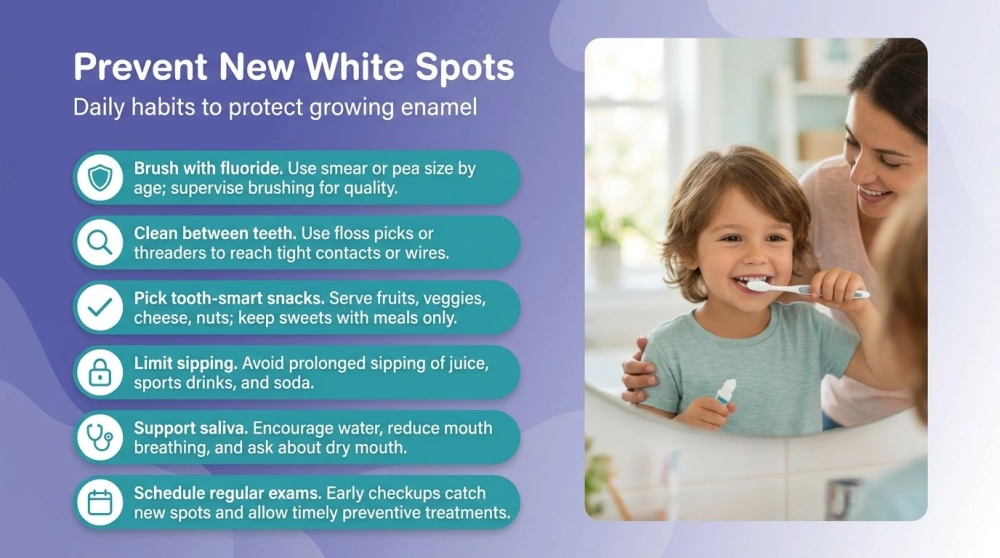
- Brush twice daily with fluoride toothpaste Use a smear for under age three and a pea size amount for ages three to six, unless otherwise directed by your dentist. Help or supervise brushing until your child can clean well on their own [2].
- Clean between teeth daily Use floss picks or floss threaders for tight contacts or around orthodontic wires.
- Rinse and spit after sugary snacks Water helps clear acids between meals.
- Choose tooth friendly snacks Emphasize fruits, vegetables, cheese, nuts, and plain yogurt. Reserve sweets for mealtimes.
- Limit sipping Avoid prolonged sipping of juice, sports drinks, or sweetened beverages. Choose water as the default drink.
- Support saliva Encourage water, reduce mouth breathing when possible, and ask your dentist about strategies if dry mouth is a concern.
- Schedule regular pediatric dental exams Consistent visits allow early detection and supportive treatments when needed [1] [2].
Families in Laguna Niguel, Laguna Hills, Aliso Viejo, Mission Viejo, Laguna Beach, and San Juan Capistrano can also check local water information and ask about supplemental fluoride when appropriate. Your pediatric dentist can help balance benefits and avoid excess fluoride exposure during the years when enamel is forming [5] [6] [7].
Laguna Niguel Pediatric preventive dentistry supports healthy routines, risk assessment, and age specific in office care that meets your child where they are. This includes guidance for kids with braces, for children with special health care needs, and for families navigating busy schedules.
How do local water and regulations in Orange County affect fluoride and fluorosis risk?
Understanding how fluoride is managed locally helps you make informed choices for your child.
What do federal agencies recommend for fluoride levels?
The United States Public Health Service recommends a fluoride level of 0.7 milligrams per liter in community water systems to help prevent tooth decay while minimizing the risk of fluorosis during tooth development [8]. The United States Environmental Protection Agency sets a maximum contaminant level goal of 4.0 milligrams per liter to protect against potential health effects and provides a secondary standard of 2.0 milligrams per liter to reduce the chance of cosmetic fluorosis. These federal standards guide water providers and inform community decisions [9].
What does California regulate for community water fluoridation?
In California, oversight of drinking water systems, including community water fluoridation programs, rests with the State Water Resources Control Board. The state follows federal guidelines and provides program guidance and public reporting to support consistent, safe operations [10]. Many communities in Orange County monitor and adjust fluoride levels to align with the United States Public Health Service recommendation [5] [8].
How can families in Laguna Niguel and nearby cities check fluoride in their water?
You can review your local water quality report or contact your water provider to confirm current fluoride levels. The CDC provides national information on community water fluoridation, and California’s State Water Resources Control Board shares state specific program details [5] [10]. If you use well water or bottled water, ask your pediatric dentist about testing or appropriate fluoride sources to support enamel without exceeding recommended exposure during early childhood [2] [6].
What questions should you ask during a pediatric dental exam about white spots?
Bringing focused questions to your child’s visit helps you get clear next steps. Consider asking:
- What is the most likely diagnosis Early decay, enamel hypoplasia, fluorosis, or MIH?
- Is the area active or stable How can we monitor progression at home between visits?
- What are our first line options Remineralization, fluoride varnish, sealants, or resin infiltration?
- What home care routines matter most now Brushing technique, toothpaste amount, flossing, and snack planning?
- How often should we return What interval makes sense for my child’s risk level?
- Are radiographs needed If so, what is the benefit today for diagnosing or monitoring?
- What should we know about local water and fluoride Are there any special considerations for our family?
- What are the signs to call sooner Sensitivity changes, color changes, chipping, or pain?
How strong is the evidence for the treatments discussed?
Parents deserve clear, science based guidance. The recommendations pediatric dentists make for white spot lesions and chalky areas are grounded in peer reviewed research and professional guidelines.
- Fluoride therapy AAPD best practices support fluoride toothpaste and office applied fluoride varnish to reduce caries risk in children and support remineralization of early lesions [2].
- Sealants AAPD and Cochrane reviews show sealants prevent decay on permanent molars and can be part of protecting high risk or developmentally affected enamel [3] [11].
- Resin infiltration Cochrane evidence supports resin infiltration for some noncavitated lesions and for masking select white spots when criteria are met, especially after orthodontics [12].
- Silver diamine fluoride Systematic reviews demonstrate that SDF can arrest active caries in primary teeth and can be a useful option in behavior guidance or when conventional care must be staged [13].
- MIH care Research recognizes MIH as a prevalent condition requiring a prevention first approach, desensitization, and protective restorations when needed [14].
- Orthodontic risk Studies show an elevated risk of white spot lesions around brackets when plaque control is difficult, underscoring the value of coaching and preventive measures during treatment [15].
When your child’s dentist recommends a plan, it reflects a balance of current evidence, your child’s age and comfort, and the simplest approach that protects tooth structure first.
How does Kidz Modern Dentistry support families dealing with white spots and chalky teeth?
We believe that parents do their best when they have clear steps and a caring team. At Kidz Modern Dentistry, we help families in Laguna Niguel and our neighboring communities of Laguna Hills, Aliso Viejo, Mission Viejo, Laguna Beach, and San Juan Capistrano understand why white spots appear and what to do next. Our pediatric dentists focus on gentle, practical care that fits your child’s age, comfort level, and daily routine.
Here is how we approach this topic in a way that is reassuring and actionable for you and your child.
- Clear diagnosis We start with a careful pediatric dental exam to determine whether a spot is early decay, fluorosis, enamel hypoplasia, MIH, or staining. We explain findings in plain language and map out priorities together.
- Stepwise prevention We personalize home care coaching, fluoride toothpaste use, and diet planning. In the office, we offer fluoride varnish, sealants, and resin infiltration when appropriate, with a prevention first mindset supported by leading guidelines [2] [3] [12].
- Comfort focused visits We provide kid friendly support and, when needed, sedation options that help anxious children complete necessary care calmly and safely.
- Minimally invasive choices When blending white spots or stabilizing enamel, we use conservative techniques first. If a tooth needs a restoration, we discuss tooth colored options and pediatric crowns based on durability and comfort.
- Orthodontic partnership If your child has or will have braces, we coordinate care and coaching to reduce white spot risk before, during, and after orthodontic treatment.
- Same day help If a tooth chips or becomes sensitive, we offer same day emergency availability to keep your child comfortable.
- Family communication You receive a clear home plan and direct access to our team for questions between visits.
Our team has years of combined experience serving children of all ages. We are proud to support parents across Orange County with practical education and care. If you live nearby and want a thoughtful plan for white spots, chalky areas, or uneven tooth color, call us at +1 949 273 0110 to schedule a pediatric dental exam. Pediatric preventive dentistry in Laguna Niguel is a natural fit for families who want to understand causes, make confident daily choices, and use simple in office treatments when helpful.
We welcome families from Laguna Niguel, Laguna Hills, Aliso Viejo, Mission Viejo, Laguna Beach, and San Juan Capistrano. From first visits to teen checkups, our approach is designed to make dental care a positive experience for your child.
References
- Dental Caries in Children – National Institute of Dental and Craniofacial Research
- Fluoride Therapy – American Academy of Pediatric Dentistry
- Dental Sealants – American Academy of Pediatric Dentistry
- Nonrestorative Treatments for Caries Lesions Guideline – PubMed
- Community Water Fluoridation Basics – Centers for Disease Control and Prevention
- Dental Fluorosis – Centers for Disease Control and Prevention
- Prevalence of Dental Fluorosis in the United States 2011 to 2014 – National Center for Health Statistics
- U.S. Public Health Service Recommendation for Fluoride Concentration in Drinking Water – Public Health Reports
- National Primary Drinking Water Regulations – United States Environmental Protection Agency
- Community Water Fluoridation – State Water Resources Control Board
- Pit and Fissure Sealants for Preventing Dental Decay – Cochrane Library
- Resin Infiltration for Managing Noncavitated Caries Lesions – Cochrane Library
- Clinical Trials of Silver Diamine Fluoride for Arresting Caries – Journal of Dental Research
- Global Prevalence of Molar Incisor Hypomineralization – Journal of Dentistry
- Incidence and Severity of White Spot Lesions During Fixed Orthodontic Treatment – Orthodontics and Craniofacial Research
Common Questions About This Topic
Find answers to frequently asked questions related to this article.