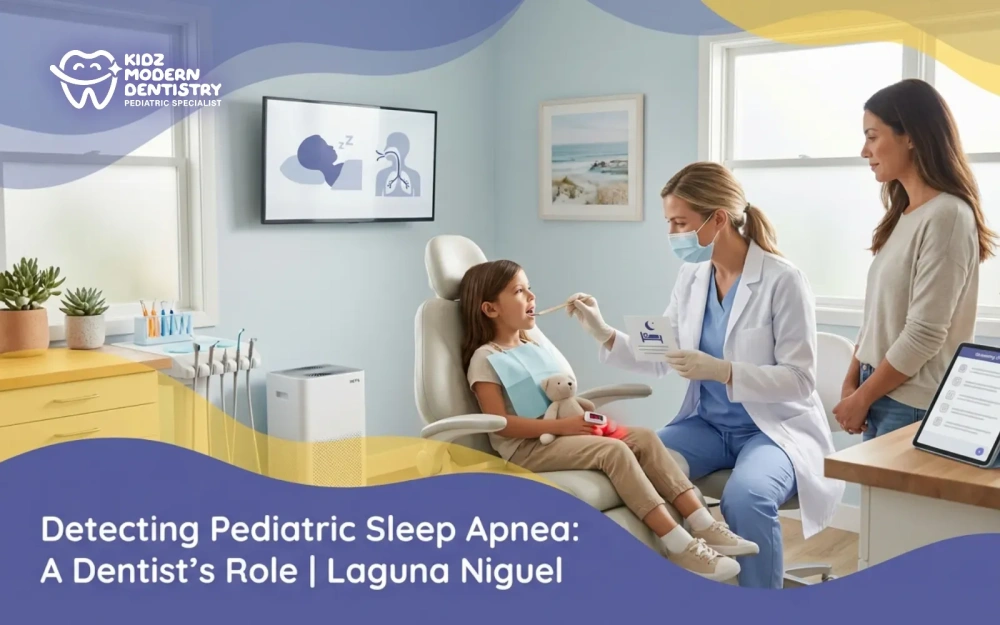
- What is pediatric sleep apnea and why might a dentist notice the signs?
- Which signs of sleep apnea in kids should parents and dentists watch for?
- How do pediatric dentists screen for sleep disordered breathing during routine visits?
- When should a dentist refer a child for a sleep study or to an ENT?
- What treatment options might be discussed after a diagnosis?
- How does pediatric sleep apnea affect behavior, learning, and growth?
- What standards and regulations guide dentist screening for pediatric sleep apnea in California?
- How can parents track symptoms and prepare for a pediatric sleep study?
- What questions should you ask your pediatric dentist about sleep concerns?
- How does Kidz Modern Dentistry approach airway focused care for children?
- Where can you find reputable references and resources?
What is pediatric sleep apnea and why might a dentist notice the signs?
Pediatric sleep apnea is a sleep related breathing disorder in which a child has repeated partial or complete pauses in breathing during sleep. In children, the most common type is obstructive sleep apnea, where the airway becomes narrowed or blocked during sleep. Many families first hear about this concern from a dental visit because dentists routinely examine the mouth, jaws, tongue, palate, and tonsillar area, and they ask about sleep, breathing, and daytime behavior as part of preventive care. Pediatric obstructive sleep apnea is estimated to affect roughly 1 to 5 percent of children, and habitual snoring is even more common, so it is important to pay attention to symptoms even when a child seems healthy otherwise [1].
Unlike adults, children with sleep apnea may not always appear sleepy. They may show behavioral or learning challenges, growth issues, bedwetting, or morning headaches. Because regular dental checkups offer a consistent view of a child’s oral growth and airway related features, dentists are well positioned to screen and guide families toward appropriate medical evaluation when needed [2][3].
Which signs of sleep apnea in kids should parents and dentists watch for?
Breathing and sleep symptoms can be subtle, and they often overlap with common childhood concerns. You know your child best, so trust your observations and share them with your pediatric dentist and pediatrician. Look for the following patterns and note their frequency and severity over several weeks.
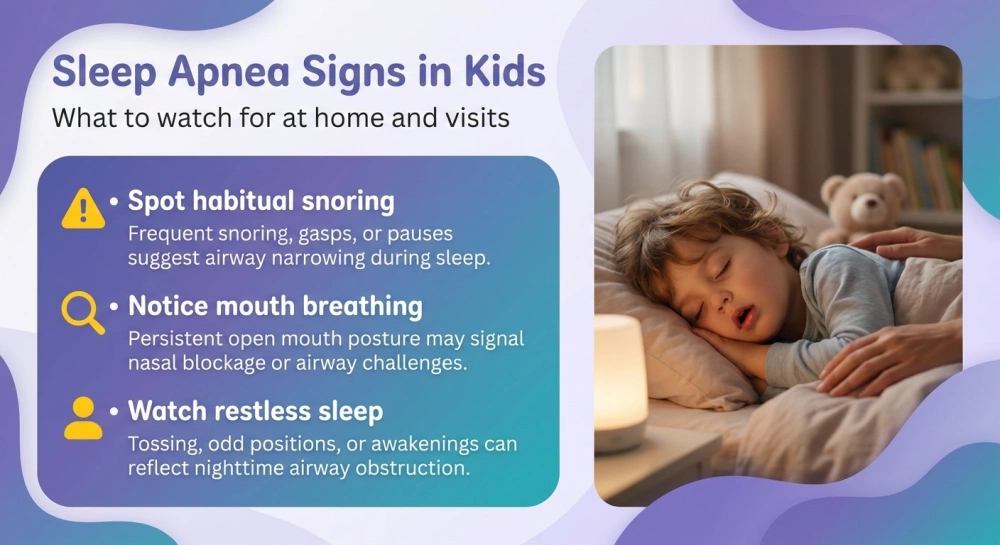
- Habitual snoring Snoring three or more nights per week, gasping, or audible pauses in breathing during sleep can indicate airway narrowing [1].
- Mouth breathing in kids Persistent open mouth posture during the day or at night may signal nasal obstruction or airway challenges [2].
- Restless sleep Tossing and turning, unusual sleep positions such as neck extended or sitting up, or frequent awakenings may occur with airway obstruction [1].
- Bedwetting and sleep apnea Nighttime enuresis beyond expected developmental stages can be associated with sleep disordered breathing in some children [1].
- Daytime behavior or learning issues ADHD like symptoms, difficulty concentrating, irritability, or mood changes can be linked with poor sleep quality in children [1][11].
- Morning headaches or dry mouth These may reflect disrupted sleep or mouth breathing overnight [6].
- Enlarged tonsils and adenoids Visible tonsillar enlargement or a history of frequent throat infections can contribute to airway narrowing [6][5].
- Growth concerns Poor weight gain or slow growth can be seen in some children with significant sleep disordered breathing [1].
- Dental and facial growth findings A high arched palate, crossbite, or narrow upper jaw may be associated with reduced nasal space and airway dimensions [2].
Not every child with these signs has sleep apnea, and some children with sleep apnea have few outward symptoms. That is why a combination of parental observations, clinical screening, and medical testing is often used to reach a diagnosis [1][10].
How do pediatric dentists screen for sleep disordered breathing during routine visits?
Pediatric dentists integrate airway and sleep screening into routine preventive care. During Kids dental checkups, the team can observe oral structures, ask targeted questions, and document changes over time. Here is what that typically includes.
- Targeted sleep and breathing questions We ask about snoring, witnessed pauses, gasping, mouth breathing, restless sleep, morning headaches, and daytime behavior concerns. We also ask about nasal allergies and recurrent throat infections [2][3].
- Airway focused oral examination We look at tonsillar area visibility, tongue posture and mobility, palate shape and width, dental wear patterns, and bite relationships that may reflect airway or habit related influences [2].
- Growth and development tracking We monitor changes in jaw development, tooth eruption, and occlusion. A narrow palate or crossbite may prompt a conversation about growth guidance with your orthodontic partners [2].
- Risk factor review We discuss family history, allergies, asthma, and weight related risks. Excess body weight can increase the risk of obstructive sleep apnea in children, so we encourage healthy lifestyle support in coordination with your pediatrician [8][6].
- Documentation and collaboration Detailed notes and letters support communication with your pediatrician, sleep medicine specialist, or otolaryngologist when referral is appropriate [2][3].
Screening in the dental setting does not diagnose sleep apnea. The gold standard test for diagnosis is an overnight, attended pediatric sleep study called polysomnography, performed in a sleep laboratory with pediatric protocols [1][10]. Home sleep apnea testing devices used for adults are not recommended for children because they do not reliably measure pediatric breathing events and sleep stages [4].
When should a dentist refer a child for a sleep study or to an ENT?
Referral decisions are based on a combination of your report, clinical findings, and known risk factors. A pediatric dentist recommends medical evaluation when any of the following are present.
- Frequent snoring or witnessed pauses Snoring most nights, gasping, or pauses observed by caregivers are strong reasons to seek sleep medicine evaluation [1].
- Significant tonsillar enlargement Large tonsils with symptoms of obstruction may prompt referral to an ear, nose, and throat specialist for assessment of adenoids and tonsils [5].
- Behavior or learning concerns with sleep red flags ADHD like symptoms or school challenges in combination with snoring or poor sleep quality should be considered for evaluation [1][11].
- Comorbid conditions that raise risk Obesity, craniofacial conditions, neuromuscular disorders, and certain genetic syndromes increase risk and warrant prompt testing if symptoms are present [1][6].
- Dental findings plus parental concern A narrow palate or crossbite together with parental reports of disrupted sleep is enough to justify collaborative referral, even if daytime sleepiness is not obvious [2][10].
Your pediatric dentist can give you a referral letter that summarizes dental findings and your observations. That letter helps the sleep medicine team tailor the pediatric sleep study and guides the otolaryngologist in assessing the upper airway [2][5].
What treatment options might be discussed after a diagnosis?
Therapy is individualized based on test results, the child’s age, anatomy, and any contributing conditions. Your medical and dental teams work together to identify options that are safe and evidence based. The approaches below are commonly discussed.
- Adenotonsillectomy For many children with obstructive sleep apnea and enlarged tonsils or adenoids, surgical removal of these tissues is a first line treatment that can improve breathing and sleep quality [1][5].
- Positive airway pressure therapy Continuous or bilevel positive airway pressure therapy can be prescribed by a sleep specialist for children who still have airway obstruction after surgery or who are not surgical candidates. Careful pediatric acclimation and family support improve success [6].
- Allergy and nasal care Managing allergic rhinitis or chronic nasal congestion with the pediatrician can reduce nasal resistance and improve sleep in some children [6].
- Orthodontic and growth guidance Orthodontists may address narrow palate or crossbite to improve nasal airflow and orofacial growth. Your dental team coordinates timing and evaluates benefits as part of a multidisciplinary plan [2].
- Myofunctional therapy Focused exercises led by trained providers may support healthier tongue posture, nasal breathing habits, and lip seal. Evidence for children is evolving, and it is often considered as an adjunct rather than a stand alone treatment [3].
- Weight and lifestyle support For children with excess body weight, family based nutrition and activity strategies guided by the pediatrician can reduce sleep apnea severity and support overall health [8][6].
Children continue to grow and change, so follow up after any intervention is important. Your child’s team will recommend repeat clinical checks and, when indicated, repeat polysomnography to confirm improvement [1][10].
How does pediatric sleep apnea affect behavior, learning, and growth?
Even when total sleep time seems adequate, repeated breathing disruptions fragment sleep architecture and reduce restorative sleep. In children, that may look less like drowsiness and more like hyperactivity, emotional lability, or difficulty paying attention. Students may struggle with planning, memory, and classroom engagement, which can improve when sleep quality improves [1][11].
Growth can also be affected. Interrupted sleep disrupts normal hormone patterns that guide growth and appetite regulation. Some children may have poor weight gain while others may gain excess weight, which can in turn worsen airway obstruction. Addressing sleep and healthy routines together is often part of comprehensive care [1][8].
If your child has an ADHD diagnosis or ADHD like symptoms and also snores or breathes through the mouth at night, consider discussing a sleep evaluation with your pediatrician. Treating sleep disordered breathing can reduce daytime symptoms for some children, though it is not a substitute for ADHD specific care when that diagnosis is present [1].
What standards and regulations guide dentist screening for pediatric sleep apnea in California?
Dentists in California practice under the California Dental Practice Act, which defines the scope of dental practice, including examination, evaluation, and diagnosis of conditions of the oral cavity and associated structures, as well as referral to appropriate medical professionals when issues extend beyond dental treatment. The Dental Board of California publishes current statutes and regulations and points to relevant sections of the Business and Professions Code [10][12].
For pediatric sleep apnea, dentists follow professional guidelines from pediatric and sleep organizations when screening and collaborating.
- American Academy of Pediatrics guidance The AAP guideline outlines risk factors, symptoms, and recommended use of overnight polysomnography for diagnosis, and it recognizes adenotonsillectomy as a common first line intervention for children with adenotonsillar hypertrophy [1].
- American Academy of Sleep Medicine recommendations The AASM emphasizes that home sleep apnea testing devices are not recommended for children and that pediatric polysomnography in a sleep lab is the standard for diagnosis [4][10].
- American Academy of Otolaryngology Head and Neck Surgery These guidelines address evaluation and surgical considerations for tonsillectomy in children with sleep disordered breathing [5].
- American Academy of Pediatric Dentistry policies AAPD policies support dental screening for sleep related breathing disorders, documentation of findings, and coordination with physicians and specialists for diagnosis and treatment planning [2][3].
There is no federal recommendation for universal screening of asymptomatic children by a specific tool, and the United States Preventive Services Task Force does not currently issue a pediatric screening recommendation for sleep apnea. Its adult statement highlights uncertainty even in adults who do not report symptoms. In pediatrics, clinicians rely on clinical judgment, caregiver reports, and established guidelines to determine when a sleep study is appropriate [7][1].
For any child who may need sedation during dental care, AAP and AAPD sedation guidelines require careful pre visit evaluation. That evaluation includes screening for conditions like sleep apnea that can increase sedation risk, along with continuous monitoring, appropriate training, and emergency readiness for the team [9].
How can parents track symptoms and prepare for a pediatric sleep study?
Your observations at home are essential. Consider keeping a simple sleep and breathing diary for two to three weeks. Share notes with your pediatric dentist, pediatrician, and any specialists you see.
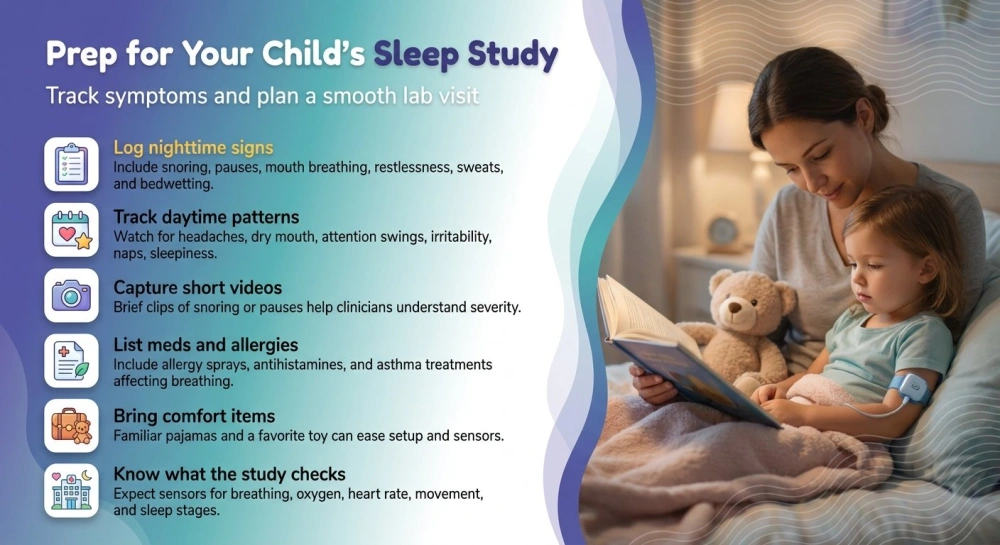
- Record nighttime observations Note snoring nights, pauses or gasps, mouth breathing, restlessness, night sweats, and bedwetting episodes. Include time to bed and wake time.
- Track daytime patterns Watch for morning headaches, dry mouth, attention or mood challenges, and naps or increased sleepiness.
- Capture short videos If safe and appropriate, a brief audio or video clip of snoring or pauses can help your medical team understand what you are seeing.
- List medications and allergies Include allergy medicines, nasal sprays, or asthma treatments that might affect breathing.
- Bring comfort items to the sleep lab If your child is scheduled for an overnight study, ask the lab what to bring. Familiar pajamas and a favorite stuffed animal often help.
During a pediatric sleep study, sensors measure breathing, oxygen levels, heart rate, movement, and sleep stages. Trained technologists follow pediatric protocols tailored to a child’s needs. Your sleep specialist will interpret the results and explain next steps [10][6].
What questions should you ask your pediatric dentist about sleep concerns?
Use your visit to get practical guidance and to coordinate care with your child’s medical providers. Consider asking the following.
- Do you see signs that could relate to airway or sleep in my child’s mouth or bite Ask about tonsillar area visibility, palate shape, tongue posture, and any wear or bite features.
- What symptoms at home are most important to track right now Clarify which observations will help your team decide whether to refer for a sleep study.
- Should we see a sleep specialist or ENT first Your dentist can advise based on clinical findings and your child’s history.
- How do you coordinate with our pediatrician and specialists Communication helps ensure consistent recommendations and follow up.
- Could orthodontic evaluation be helpful If palate or bite findings are present, early orthodontic evaluation may be part of a comprehensive plan.
- How do you approach sedation if my child is at risk for sleep apnea Ask about screening, monitoring, and safety protocols that follow pediatric guidance [9].
For families who want a local starting point, Kids dental checkups in Laguna Niguel can include simple screening questions and an airway focused oral exam that inform whether to involve your pediatrician, a sleep specialist, or an ENT next.
How does Kidz Modern Dentistry approach airway focused care for children?
At Kidz Modern Dentistry, we serve families in Laguna Niguel, CA and nearby communities with preventive, restorative, and specialized pediatric care that includes attention to airway health. Sleep and breathing are integral to a child’s growth and well being, so our team incorporates screening, education, and collaborative referrals into routine visits.
How do our services relate to pediatric sleep apnea and help you plan next steps?
We listen to your concerns, ask targeted sleep questions, and examine oral and facial growth patterns that may relate to airway challenges. If we identify red flags for pediatric sleep apnea, we coordinate with your pediatrician and refer to sleep medicine or ENT specialists for diagnostic testing and medical evaluation guided by established pediatric and sleep guidelines [1][4][5].
Where do we operate and how can you reach us?
We are based in Laguna Niguel, CA and welcome families from surrounding South Orange County. You can reach our team at +1 949 273 0110 to schedule a visit or to discuss your concerns about snoring, mouth breathing, or sleep.
What is our approach or methodology for airway focused dentistry?
- Preventive focus We integrate sleep and breathing questions into routine checkups and track growth over time so that potential issues are identified early and addressed collaboratively.
- Evidence guided protocols Our screening, documentation, and referral processes align with pediatric and sleep medicine guidance to support safe, coordinated care [1][2][4].
- Collaborative care We communicate with pediatricians, ENTs, sleep physicians, and orthodontists so your family receives consistent recommendations.
- Comfort centered visits We offer child friendly sedation options when appropriate and follow strict pediatric sedation safety guidelines that include careful pre visit screening for sleep related risk [9].
Do we use any proprietary tools or processes?
We maintain standardized sleep and airway screening forms, growth tracking templates, and referral letters that summarize relevant findings for your medical team. These tools keep everyone aligned on next steps and follow up timelines.
How do leadership, innovation, and experience shape our care?
Our pediatric dentists and clinical team pursue ongoing education in pediatric airway health, sleep screening, and growth guidance. We continually update our protocols to reflect current pediatric and sleep medicine recommendations, which helps families navigate decisions with clarity.
Can we share examples of successful coordination and benefits to patients?
- Improved sleep with coordinated referral Children with habitual snoring and enlarged tonsils have undergone timely ENT referral and, when recommended, adenotonsillectomy, followed by improved sleep and daytime behavior as reported by families [1][5].
- Growth and orthodontic collaboration When a narrow palate or crossbite is identified, early orthodontic evaluation and growth guidance have been coordinated to support nasal breathing and healthy development as part of a multidisciplinary plan [2].
What personalized service and access to qualified professionals can families expect?
You will meet directly with our pediatric dentists and experienced hygienists to discuss observations, review findings, and plan referrals. We share written summaries and connect you with pediatric sleep centers and ENT practices convenient to Laguna Niguel, CA.
What is our track record, service areas, and experience?
Our team brings years of combined pediatric dental experience to families across Laguna Niguel and South Orange County. We provide same day emergency support, gentle sedation when appropriate, and comprehensive oral health care for children of all ages. We aim to make every visit positive while keeping a close eye on the connections between oral health, breathing, and sleep.
If you are looking for guidance on where to start, we are here to help you understand options and coordinate with your child’s medical providers. Together, we can address concerns early and support healthy growth.
Where can you find reputable references and resources?
- Diagnosis and management of childhood obstructive sleep apnea syndrome – Pediatrics via PubMed
- Policy on Sleep Related Breathing Disorders – American Academy of Pediatric Dentistry
- Policy on Obstructive Sleep Apnea – American Academy of Pediatric Dentistry
- Home sleep apnea testing is not recommended for children – American Academy of Sleep Medicine
- Tonsillectomy in Children Clinical Practice Guideline Update – American Academy of Otolaryngology Head and Neck Surgery
- Sleep Apnea – National Heart, Lung, and Blood Institute
- Obstructive Sleep Apnea in Adults Screening – United States Preventive Services Task Force
- Childhood Obesity Facts – Centers for Disease Control and Prevention
- Guidelines for Monitoring and Management of Pediatric Patients Before, During, and After Sedation – Pediatrics via PubMed
- Respiratory indications for polysomnography in children – Journal of Clinical Sleep Medicine via PubMed
- Sleep and Children Basics – Centers for Disease Control and Prevention
- California Business and Professions Code Section 1625 Dentistry – California Legislature
Common Questions About This Topic
Find answers to frequently asked questions related to this article.
